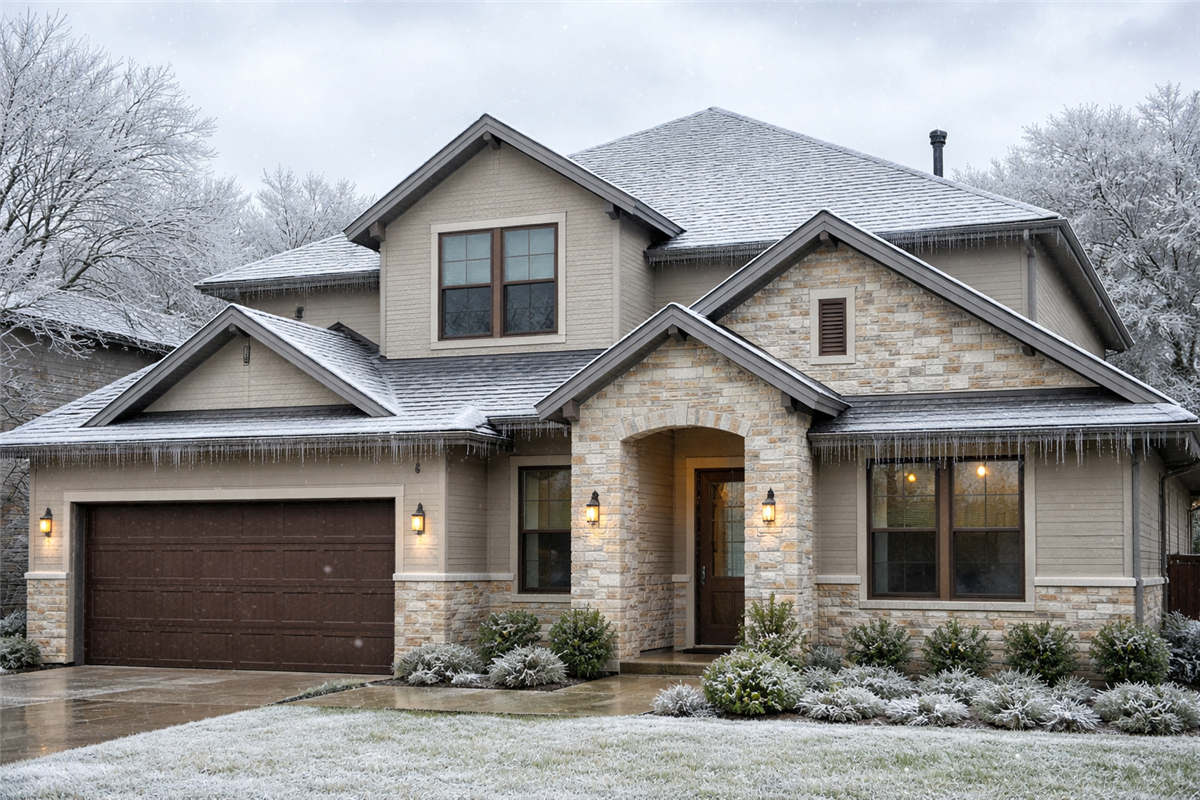
Winter storms can be hard on roofing systems. Ice events, freezing rain, and sudden temperature swings create conditions that many Central Texas roofs rarely face. Even a properly installed roof in good condition can develop issues after severe winter weather.
Understanding how winter storm damage happens, what is normal, and when replacement is truly necessary helps homeowners make informed decisions and avoid unnecessary repairs.
Let’s break it down.
Why Winter Storms Can Cause Roof Leaks Even on Good Roofs
Many homeowners assume a roof leak means the roof failed or was installed incorrectly. In reality, winter conditions create unique risks that affect even newer roofing systems.
Ice buildup allows water to move differently than during normal rainstorms. Instead of shedding quickly, frozen water can sit on the roof surface, expand, and work its way into small gaps.
Common causes of winter-related leaks include:
• Ice dams that push water underneath shingles
• Frozen moisture entering flashing areas
• Expansion from freezing that shifts sealants
• Sudden freeze and thaw cycles weakening vulnerable areas
When temperatures rise and ice melts, trapped water may find its way into the home, creating leaks that appear suddenly even if the roof was previously performing well.
Where Winter Storm Damage Most Often Occurs
Winter-related leaks rarely happen across the entire roof system. Instead, they typically appear at technical transition points where multiple materials meet.
The most common problem areas include:
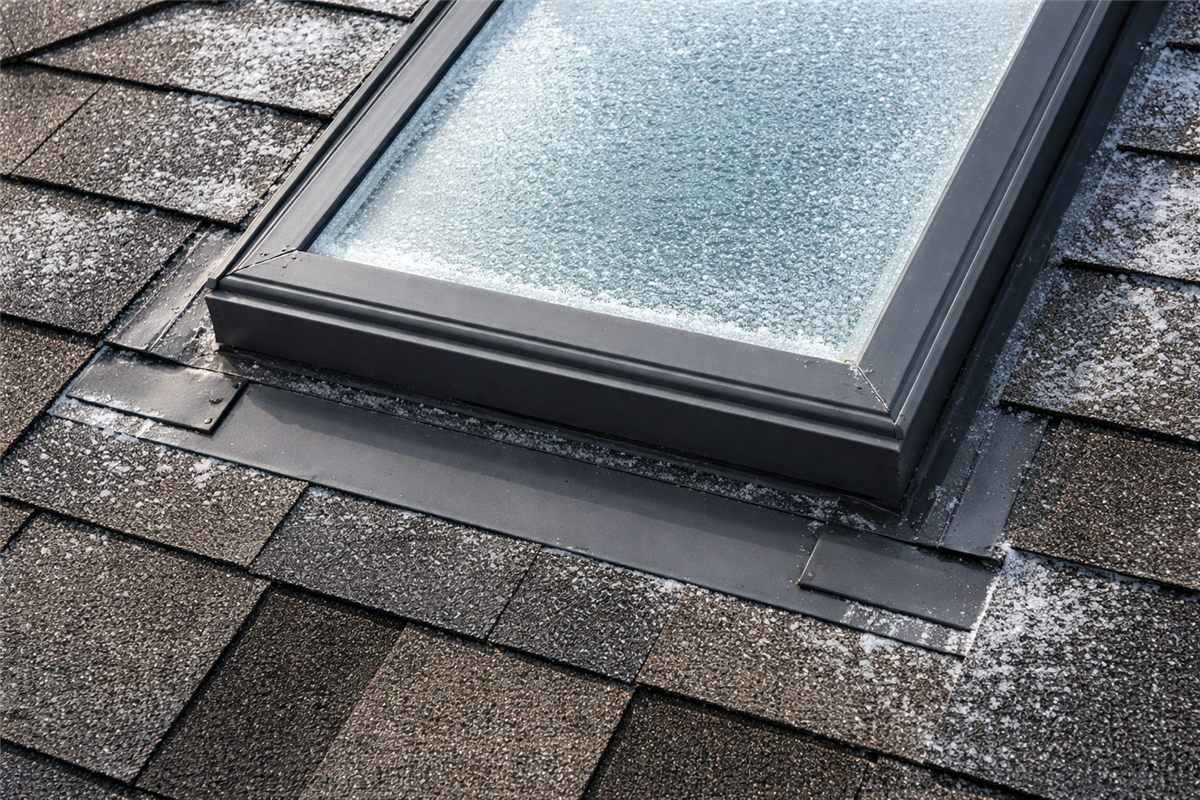
Skylights and Roof Penetrations
Skylights require precise flashing and sealing to prevent water intrusion. Ice buildup around skylights can force moisture underneath protective layers. Once frozen water expands, it may shift flashing or compromise sealants.
After thawing, these areas can leak even if the rest of the roof remains intact.
Chimneys and Flashing Details
Chimney flashing is another common vulnerability. Ice accumulation and temperature expansion can create small gaps that allow water infiltration.
Roof Valleys
Valleys channel large volumes of water. During freezing conditions, water flow slows and ice may form, allowing moisture to back up beneath shingles.
A Leak Does Not Automatically Mean Full Roof Replacement
One of the most important things Central Texas homeowners should understand is this:
A leak after a winter storm does not automatically mean the entire roof failed.
In many cases, the solution may be limited to targeted repairs such as:
• Resealing or replacing flashing
• Resetting or resealing skylights
• Addressing localized shingle damage
• Correcting minor sealing issues around penetrations
Unfortunately, winter storms often bring opportunistic contractors who recommend full replacements without clear evidence of widespread failure.
A single isolated leak rarely justifies replacing an entire roof system.
Red Flags to Watch For After Storm Damage
If you recently replaced your roof and develop a leak following a winter event, the first step should always be contacting the original contractor if possible.
If another contractor immediately recommends full replacement, homeowners should slow down and ask questions.
Watch for these warning signs:
• No clear explanation of the failure
• Lack of photos or physical evidence
• General statements like “the whole roof is bad” without specifics
• Pressure to sign quickly
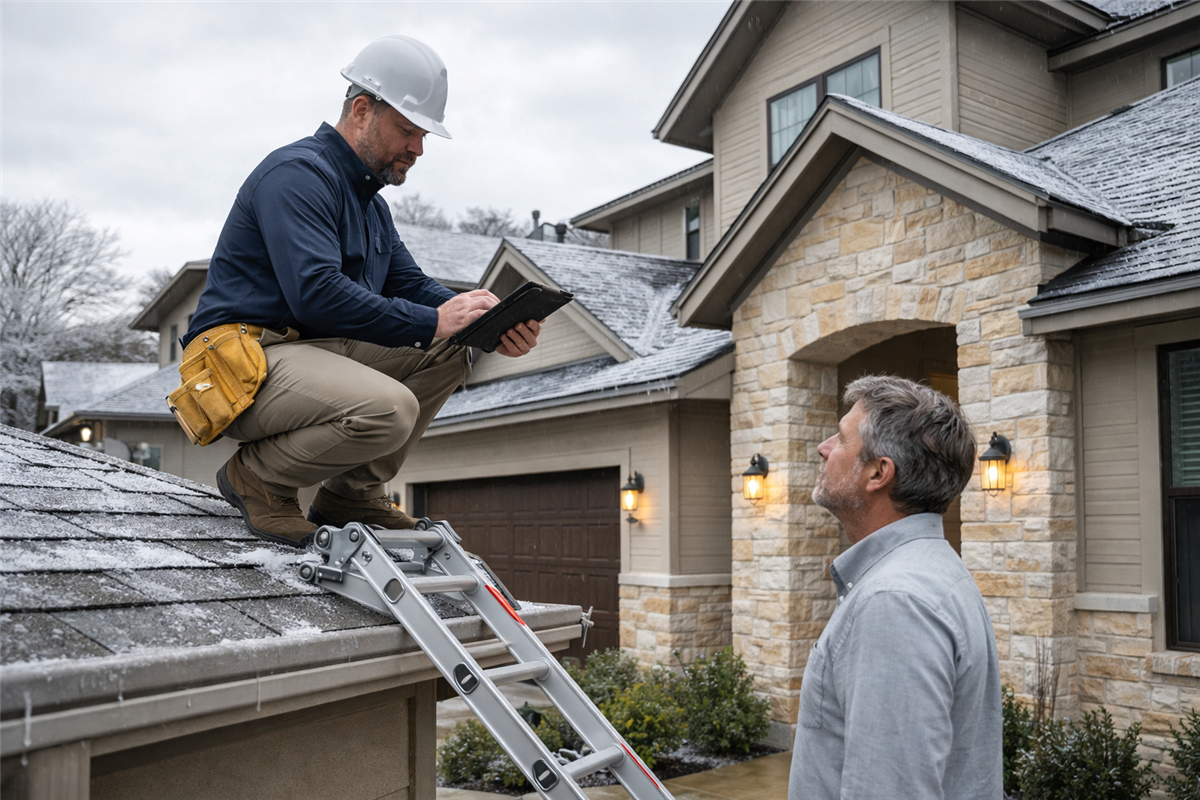
A reputable contractor should provide detailed diagnostics, explain why a repair or replacement is necessary, and show clear documentation of any damage.
Why Repairs May Not Be Immediate After Ice Storms
Another reality of winter damage is that permanent repairs may not be possible right away.
Active ice buildup creates safety hazards and can prevent proper sealing or installation.
In some cases, contractors may recommend:
• Temporary mitigation or monitoring
• Interior protection measures
• Waiting until temperatures rise for safe repair conditions
This approach protects both the homeowner and the integrity of the repair work.
Best Practices for Central Texas Homeowners After Winter Storms
Taking a measured approach helps avoid unnecessary costs and ensures accurate diagnosis.
Recommended steps include:
• Avoid panic. Many winter leaks are localized and repairable.
• Work with licensed, established contractors with strong local history.
• Read reviews carefully and look for consistent long-term feedback.
• Verify BBB standing and overall reputation.
• Seek a second or third opinion if recommendations feel aggressive or unclear.
Winter storm damage requires careful inspection, not assumptions.
How Central Texas Roofing Systems Handle Ice and Cold Weather
Although Central Texas does not experience frequent snow or ice compared to northern climates, occasional winter storms still create stress on roofing systems.
Quality materials like GAF and Owens Corning shingles, when installed correctly, are designed to withstand temperature changes and normal weather exposure. However, ice-related conditions are unique because they slow water flow and allow moisture to remain in contact with vulnerable areas longer than usual.
This makes proper flashing installation, ventilation, and sealing details especially important.
Why Accurate Diagnosis Saves Money
Rushing into a full roof replacement without proper inspection can lead to unnecessary expense.
Many winter storm leaks involve:
• Isolated flashing failures
• Minor sealant issues
• Expansion-related gaps
Addressing these early prevents larger problems while avoiding unnecessary replacements.
A careful, evidence-based inspection ensures homeowners only invest in what is truly needed.
Why Work with JP Exteriors
JP Exteriors serves Austin, San Antonio, Hill Country communities, and all of Central Texas with professional roofing inspections and repair solutions.
Homeowners choose JP Exteriors because:
• Nearly 30 years of exterior remodeling experience
• BBB A+ rating and 350+ five-star Google reviews
• Expertise in both retail and insurance roofing
• Experience diagnosing complex roof issues including skylights and penetrations
• Transparent communication and detailed inspections
Our goal is accurate diagnosis and long-term solutions, not unnecessary replacements.
Ready for a Roof Inspection After a Winter Storm?
Online ranges are a starting point. True pricing requires measuring your home and reviewing site conditions.
Contact JP Exteriors for a free roof consultation and personalized estimate.
Book a free, no-pressure consultation: Schedule Now
See real local projects for inspiration: Project Gallery
Ask about financing options: Financing Info
Referral Rewards and Financing Options
JP Exteriors helps Austin homeowners plan outdoor kitchens that fit their property and lifestyle.
• Flexible financing options are available for outdoor kitchens and backyard projects
• Referral rewards let homeowners earn incentives for recommending JP Exteriors to friends or neighbors
When you refer a friend or neighbor for siding, roofing, or window replacement, you can earn up to $250 through the JP Exteriors Referral Program.
Check out our recent blog: How Much Does Siding Replacement Cost in Austin and Central Texas?
FAQ: Winter Storm Roof Damage
Can ice storms damage a roof even if it is new?
Yes. Ice buildup can force water into vulnerable areas like flashing or skylights, causing localized leaks without indicating full roof failure.
Should I file an insurance claim immediately after a leak?
Not always. A professional inspection should determine the extent of damage before filing a claim.
How do I know if my roof needs replacement or just repair?
Look for widespread shingle damage or structural issues. Isolated leaks often indicate repairable problems rather than full replacement.
Why might repairs need to wait until ice melts?
Ice creates safety risks and prevents proper sealing. Permanent repairs are typically completed once conditions improve.
Subscribe to JP Exteriors's Blog






Comments