Composite decking has earned a reputation as the low-maintenance alternative to traditional wood, and there's a lot of truth to that. You don't have to sand it every few years. You generally don't need to stain or seal it. Modern capped composite decking resists fading, staining, moisture, and everyday wear far better than most traditional wood decks. But "maintenance-free" doesn't mean "never needs attention."
If you're considering a composite deck in Austin or Central Texas, there are a few things the sales brochure may not emphasize: shaded boards can still develop mold or mildew, dirt and pollen can build up over time, and a dark-colored deck sitting in direct July sun can get surprisingly hot underfoot. Here are some of the most common composite-deck myths, and what homeowners should actually expect.
Myth #1: Composite Decking Is Completely Maintenance-Free
This is probably the biggest misconception out there. Composite decking is better described as low-maintenance, not maintenance-free. With a quality composite product, you generally aren't dealing with the recurring sanding, staining, painting, and sealing that comes with a traditional wood deck — that's one of the main reasons homeowners choose composite in the first place. But the surface still gets dirty. Dust, pollen, leaves, food, mud, and other debris accumulate in the texture of the boards over time, and manufacturers like Trex recommend routine cleaning with soap, water, and a soft-bristle brush for many of their decking products. Think of it this way: you don't maintain composite decking to keep it structurally alive — you clean it to keep it looking good and to prevent surface buildup. For most homeowners, that's a much easier maintenance schedule than wood, but it isn't zero maintenance.
Myth #2: Capped Composite Can't Grow Mold
A protective cap is a major improvement in composite decking technology, but it isn't a force field against everything that grows outdoors. Mold and mildew can still appear when dirt, pollen, moisture, and organic debris sit on the surface long enough. Trex specifically notes that mold can feed on the biofilm created when debris like pollen and dirt remains on decking, and regular cleaning helps remove that food source before it becomes a problem.
This is particularly relevant in Austin because of how shaded decks behave differently than sun-exposed ones. A deck underneath mature trees, next to a fence, beneath a covered patio, or on the north side of a home can stay damp considerably longer than a deck getting full afternoon sun. That creates a genuinely different maintenance environment — you may notice green or dark discoloration, organic buildup in the board texture, leaves and pollen collecting between boards, damp areas that don't dry quickly, or mold and mildew appearing consistently in the shaded spots. That doesn't necessarily mean the decking material is defective — sometimes the environment around the deck is simply the bigger factor. Good drainage, appropriate board spacing, airflow, and occasional cleaning all matter more in a shaded setting than they would in full sun.
Myth #3: Composite Decking Doesn't Get Hot
This one deserves special attention in Texas. Composite decking can absolutely get hot in direct summer sun — that's not unique to composite either, since wood, concrete, asphalt, and other outdoor surfaces all heat up under intense sunlight. But homeowners should think seriously about color and sun exposure before choosing their decking. Darker boards generally absorb more solar energy and can feel noticeably hotter underfoot than lighter-colored boards, which is exactly why Trex recommends considering lighter colors or heat-mitigating decking options for hotter climates and heavily sun-exposed areas. That means a beautiful dark-brown deck can look fantastic as a showroom sample and feel very different when you're standing on it barefoot in the middle of an Austin afternoon in July.
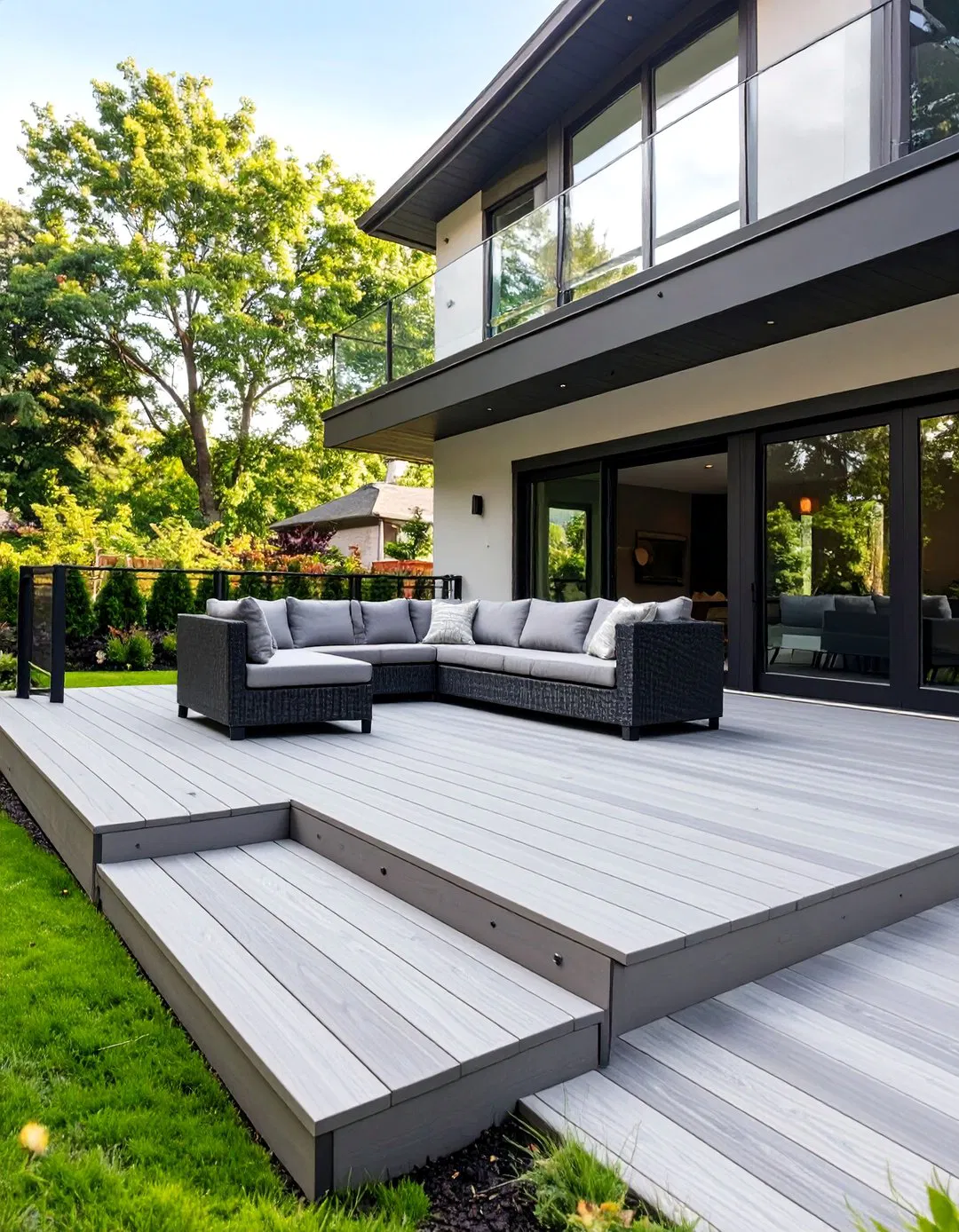
So how hot can it actually get?
There isn't one honest number that applies to every composite deck. Surface temperature depends on air temperature, direct sunlight, deck orientation, cloud cover, shade, board color, the specific product's construction, time of day, and the surrounding surfaces. Even heat-mitigating composite products can still get hot in direct sun — Trex, for example, states that its SunComfortable technology can reduce heat buildup by up to 35°F compared to its original boards in laboratory testing, but it's equally clear that those products can still get hot under intense sun and heat, especially in darker colors. The practical takeaway: if barefoot comfort matters to you, don't choose your deck color based solely on a small sample inside an air-conditioned showroom. Ask specifically what that color will actually feel like in full summer sun.
Myth #4: Every Composite Deck Performs the Same
"Composite decking" describes a whole category, not one specific product. There are real differences between manufacturers and product lines — some boards have protective outer caps, some don't; resistance to scratching, staining, fading, and mold varies significantly; and some products are specifically engineered with heat-mitigating technology while others aren't. Installation details matter just as much. A deck's real-world performance depends on more than the board you select — the framing, joist spacing, drainage, ventilation, fasteners, board spacing, stairs, railings, and overall design all contribute to how the finished project actually performs. That's exactly why comparing decks strictly by price per square foot leaves out a lot of important information.
Myth #5: Composite Decking Never Needs to Be Cleaned
It doesn't need the same maintenance as a wood deck, but it absolutely still gets dirty. Think about what happens to an outdoor deck across a full year: spring brings pollen and tree debris, summer brings food, drinks, dust, dirt, and heavy foot traffic, fall brings leaves and organic debris, and winter brings moisture and accumulated grime. A simple cleaning routine goes a long way toward keeping composite decking looking good year-round. For many Trex products, the manufacturer's care instructions recommend starting with a hose, warm soapy water, and a soft-bristle brush — though cleaning methods can vary by product and generation, so it's worth following the specific manufacturer's instructions rather than a generic routine. And don't assume more pressure is always better: some composite products can actually be damaged by aggressive pressure washing or improper cleaning techniques, which is why the manufacturer's care guide should be the starting point, not a guess.
Myth #6: A Composite Deck Doesn't Need Shade
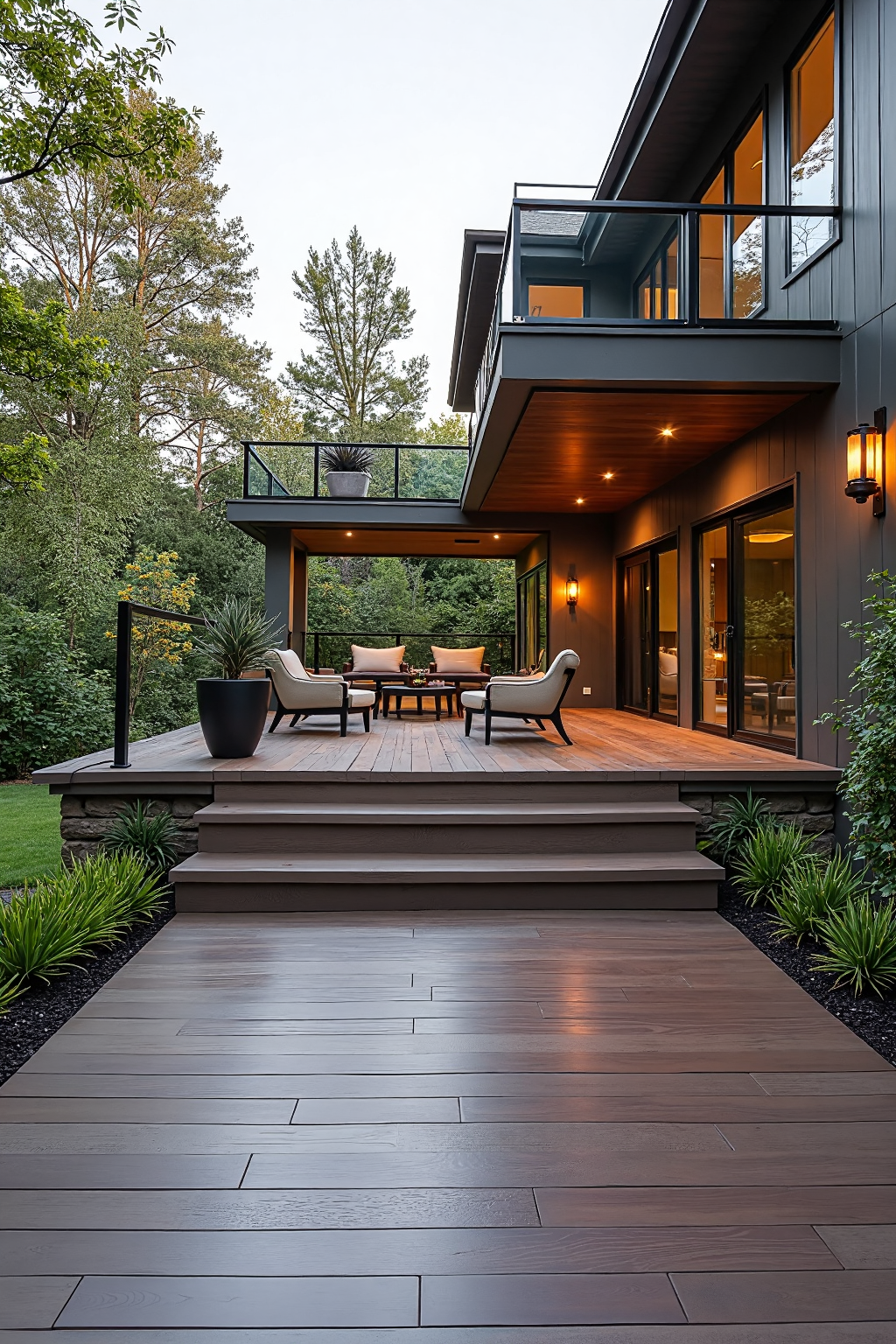
Composite decking makes an outdoor space significantly easier to maintain, but shade is still what makes the space genuinely comfortable to use. If your deck gets direct afternoon sun, it's worth thinking through how you'll actually use it — will you eat dinner outside, will kids be playing on it, do you have pets, will people be walking barefoot, would you like to sit outside during the hottest part of the day? Those questions should genuinely influence the design. A pergola, patio cover, strategically placed landscaping, outdoor umbrellas, or other shade features can make a major difference in how usable the space actually feels day to day. For a deck that gets intense afternoon sun, the combination of board color, shade, and orientation can matter just as much as the decking material itself.
What Composite Decking Actually Does Well
None of this means composite decking is a bad choice — it means homeowners should understand exactly what they're buying. A quality composite deck offers real advantages over traditional wood: no routine staining or sealing, no sanding to maintain the walking surface, resistance to rot and splintering, a consistent appearance over time, lower routine maintenance overall, long-term durability, a wide variety of colors and textures, and a wood-like appearance without the same level of upkeep. For homeowners who don't want their outdoor living space to become another weekend maintenance project, those advantages are genuinely significant. The goal isn't finding a deck that requires no maintenance whatsoever — it's finding a deck that requires less maintenance while actually fitting the way you use your backyard.
What Austin Homeowners Should Ask Before Choosing Composite Decking
Before signing a contract, it's worth asking your contractor exactly what specific decking product and product line is being installed, whether it has a protective outer cap, what maintenance the manufacturer actually recommends, how the color you've selected performs in direct sun, whether the manufacturer offers heat-mitigating options, how mold and mildew should be cleaned if they show up, what the manufacturer's warranty actually covers, what joist spacing is recommended for that specific product, how water will drain through the deck, whether the deck will get enough airflow to dry properly after rain, which areas of the deck will receive full afternoon sun, and whether a lighter board color would make more sense for that particular location. A good deck consultation should address these questions before construction begins — not after you've already discovered your dark-colored deck is uncomfortable to walk on barefoot in the afternoon.
Composite Decking Is Low-Maintenance — Not Magic
The simplest way to think about composite decking: it's designed to reduce maintenance, not eliminate it entirely. You'll trade away many of the chores associated with wood — sanding, staining, sealing, and frequent refinishing — but you'll still need to keep the surface clean. And in Central Texas specifically, you should think about heat before choosing a color. A shaded, tree-covered deck has different maintenance needs than a fully exposed one. A dark deck in full afternoon sun feels very different from a lighter deck under a pergola. Those details are easy to overlook when you're looking at a small sample in a showroom — they're much harder to ignore once you're standing on the finished deck in July.
At JP Exteriors, we help homeowners look at the entire outdoor living space, not just the decking board itself — the layout, sun exposure, drainage, shade, materials, and how you actually plan to use the space day to day.
Frequently Asked Questions
Is composite decking really maintenance-free?
No. It's more accurately described as low-maintenance — you avoid sanding, staining, and sealing, but the surface still needs periodic cleaning to remove dirt, pollen, and organic debris.
Can composite decking grow mold even with a protective cap?
Yes. Mold and mildew can feed on organic debris like pollen and dirt that sits on the surface, particularly in shaded, damp areas. A protective cap reduces vulnerability but doesn't eliminate it.
Does composite decking get hotter than wood in direct sun?
It depends on the specific product and color, but all outdoor decking surfaces — wood, composite, concrete — absorb heat in direct sun. Darker composite colors generally feel hotter underfoot than lighter ones.
Do heat-mitigating composite products actually stay cool?
They stay cooler than standard composite boards of a similar color, but they still get hot in direct, intense sun. Heat-mitigating technology reduces the problem — it doesn't eliminate it.
How should I clean composite decking?
Most manufacturers recommend regular cleaning with soap, water, and a soft-bristle brush. Always follow the specific product's care instructions, since some composite products can be damaged by aggressive pressure washing.
Why does my shaded deck look different from a deck in full sun?
Shaded areas stay damp longer, which creates more favorable conditions for mold, mildew, and organic buildup. Sun-exposed decks dry faster but deal with more heat and UV exposure instead.
Is a lighter deck color always the better choice in Texas?
Not necessarily for everyone, but lighter colors generally absorb less heat and stay more comfortable underfoot in direct sun. The right choice depends on your specific sun exposure, shade features, and how you plan to use the space.
Does composite decking need special joist spacing or installation?
Yes, and it varies by product. Following the manufacturer's specific installation requirements, including joist spacing, matters for both performance and warranty coverage.
Will a pergola or shade structure actually make a composite deck more comfortable?
Yes. Shade significantly reduces surface heat buildup and can make a deck usable during hours it otherwise wouldn't be, especially during peak Texas summer afternoons.
Are all composite decking brands and products the same?
No. Products vary significantly in cap technology, color and stain resistance, mold resistance, and heat-mitigating features. Comparing products by price per square foot alone leaves out a lot of relevant differences.
Get Started With a Free Consultation
Remember: When you refer a friend or neighbor for windows, siding, roofing, or door replacement, you can earn up to $250 through the JP Exteriors Referral Program.
Subscribe to JP Exteriors's Blog




Comments