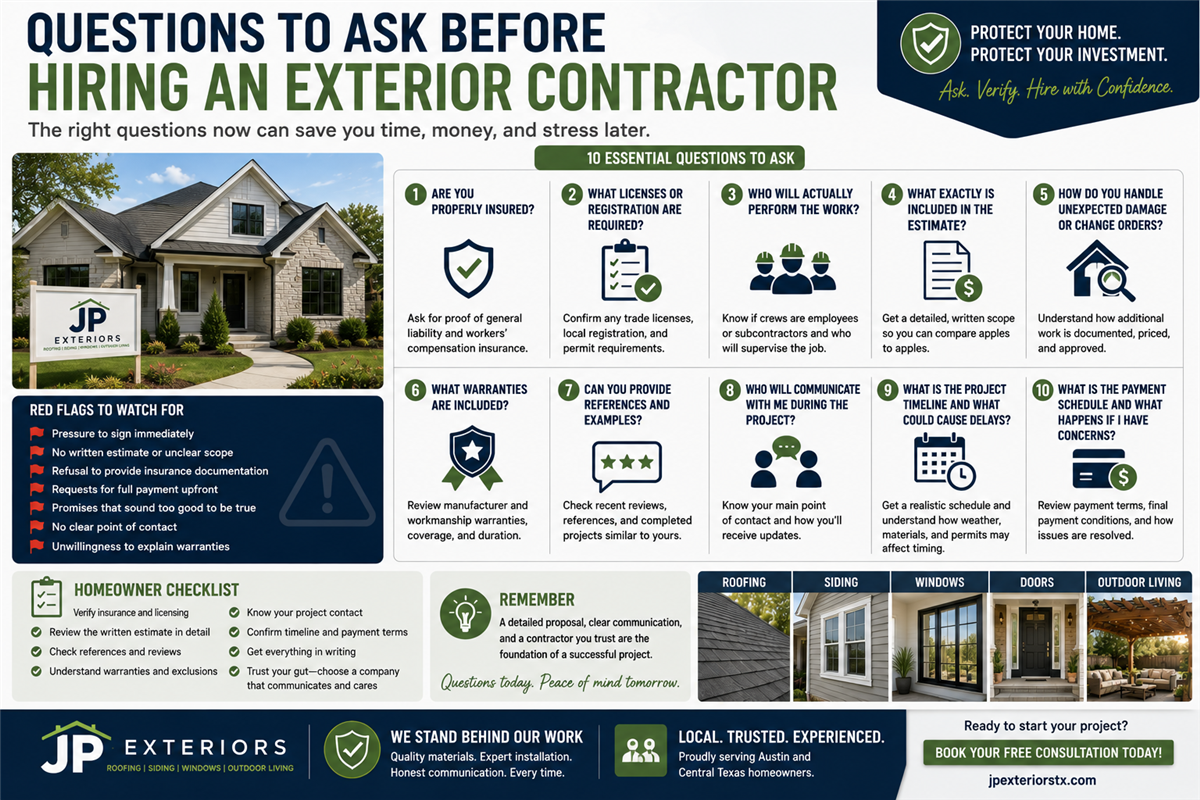
Questions to Ask Before Hiring an Exterior Contractor: 10 Things Every Homeowner Should Know
Replacing your roof, siding, windows, or exterior doors is a major investment. The contractor you choose can have just as much impact on the experience as the materials you select.
A proposal may look attractive because of its price, but what exactly is included? Who will perform the work? What happens if hidden damage is discovered? And what kind of warranty will you have after the crew leaves?
These are important questions to answer before signing an agreement.
Unfortunately, not every contractor approaches a project the same way. Some provide detailed proposals and clear communication, while others leave homeowners guessing about materials, scheduling, or what happens if something goes wrong.
Whether you are planning a roof replacement, new siding, window installation, or a larger exterior renovation, here are 10 questions worth asking before hiring a contractor.
1. Are You Properly Insured?
This should be one of your first questions.
Exterior remodeling involves ladders, roofing materials, power tools, heavy equipment, and work performed around your property. You want to understand what insurance protections the contractor carries before the project begins.
Ask:
Do you carry general liability insurance?
Do you carry workers' compensation insurance?
Can you provide a current certificate of insurance?
Can the certificate be provided with the appropriate project or property information?
General liability insurance and workers' compensation serve different purposes. General liability generally addresses certain claims involving property damage or injuries to third parties, while workers' compensation provides benefits for covered employee work-related injuries.
Do not rely solely on a verbal assurance that a company is insured. Ask for documentation and verify coverage with the insurance provider when appropriate.
Why it matters: You should understand how the contractor protects the business, its workers, and your property before allowing work to begin.
2. What Licensing or Registration Is Required for This Project?
Homeowners often assume every contractor must hold the same statewide license. In reality, requirements depend on the type of work and the jurisdiction.
In Texas, there is not one universal statewide general-contractor license that applies to every exterior remodeling project. However, certain trades and activities have their own licensing requirements, and cities may have permit, registration, or contractor requirements.
Ask:
Are any trade-specific licenses required for this work?
Does the city or county require contractor registration?
Will this project require a building permit?
Who is responsible for obtaining the permit and arranging inspections?
For example, a roofing or siding replacement may have different requirements from work involving electrical systems, plumbing, or structural modifications.
If a contractor tells you that no permit is needed, it is reasonable to verify that information with the local building department.
Why it matters: You want to know that the project will follow applicable local requirements and that any required permits and inspections are accounted for before work begins.
3. Who Will Actually Perform the Work?
This is an especially important question for exterior remodeling.
Some companies use their own employees, while others work with subcontracted installation crews. Neither arrangement automatically determines whether a contractor is good or bad. What matters is how the work is managed, supervised, and held accountable.
Ask:
Will the installers be employees or subcontractors?
How long have the crews worked with your company?
Who supervises the installation?
Who is my main contact once the project begins?
Who handles questions or problems during installation?
A company may have a great sales representative, but the person who sells the project may not be the person managing the installation.
You should know who is responsible for the job after the contract is signed.
Why it matters: Clear responsibility helps prevent communication gaps between the homeowner, contractor, project manager, and installation crew.
4. What Exactly Is Included in the Written Estimate?
Never compare contractors based on the total price alone.
Two estimates can look similar while describing very different projects. One may include removal and disposal of existing materials, replacement of damaged wood, upgraded flashing, and new trim. Another may exclude several of those items.
Ask for a written scope that explains the work in enough detail to compare proposals.
For roofing, look for:
Removal of existing roofing materials, if applicable.
Underlayment and other specified protective components.
Drip edge and flashing details.
Shingle or roofing material specifications.
Ventilation work, if included.
Cleanup and debris removal.
For siding, look for:
Removal and disposal of existing siding.
New siding material and profile.
Trim and corner details.
House wrap or other specified weather-resistive components.
Treatment of damaged sheathing or framing.
Caulking, painting, and finish work.
For windows and doors, look for:
Manufacturer and product line.
Frame material, color, and glass package.
Number and sizes of units.
Removal and disposal of existing units.
Installation method and trim details.
Interior or exterior finish work included in the proposal.
A good estimate should also identify exclusions and explain how concealed conditions or additional repairs will be handled.
Why it matters: A detailed estimate gives you a better way to compare contractors and reduces the chance of disagreements about what was promised.
5. How Do You Handle Unexpected Damage or Change Orders?
Exterior projects sometimes uncover problems that were not visible during the initial inspection.
A roofing crew may discover deteriorated decking after removing old shingles. A siding project may reveal damaged sheathing or framing behind the existing material. A window replacement may uncover concealed water damage around an opening.
These situations are not necessarily signs of poor workmanship. Some conditions cannot be fully evaluated until the existing materials are removed.
The important question is how the contractor handles them.
Ask:
How will additional damage be documented?
Will I receive photos of the affected areas?
How will additional work be priced?
Will I approve the cost before the work proceeds?
Will changes be documented in writing?
A clear change-order process protects both the homeowner and the contractor.
Be cautious if a company expects you to approve additional costs without explaining what was discovered or why the work is necessary.
Why it matters: You should understand how unexpected repairs will affect the scope, price, and schedule before agreeing to them.
6. What Warranties Are Included?
Warranties are another area where homeowners should ask for specifics.
Most exterior projects may involve two different types of warranty coverage:
Manufacturer warranty: This comes from the manufacturer and applies to the product under the terms and conditions of its warranty. Coverage varies by product and may include specific limitations, exclusions, registration requirements, or maintenance responsibilities.
Contractor workmanship warranty: This comes from the contractor and addresses installation-related coverage as defined by the written warranty.
Ask:
What manufacturer warranty comes with the materials?
What does the workmanship warranty cover?
How long does each warranty last?
Are there exclusions or maintenance requirements?
Who do I contact if a problem develops?
Is the warranty transferable if I sell the home?
Do not assume a long warranty covers every possible problem. For example, a manufacturer's material warranty and a contractor's installation warranty address different things.
Ask for the actual warranty documents rather than relying on a sales presentation.
Why it matters: Knowing who is responsible for what can make a major difference if you experience a problem years after installation.
7. Can You Provide References and Examples of Similar Projects?
Online reviews are useful, but they should not be your only source of information.
A contractor may have extensive experience with roofing but limited experience with complex window replacements or outdoor living projects. Look for examples that match the type of work you need.
Ask:
Can you provide recent local references?
Have you completed projects similar to mine?
Can I see photos of completed work?
Do you have examples of projects involving the same products?
Can I speak with a previous customer?
When checking references, consider asking about:
Whether the project was completed as described.
How the company communicated during installation.
Whether the crew protected and cleaned up the property.
How unexpected problems were handled.
Whether the homeowner would hire the company again.
You can also look at the company's online reviews and pay attention to how it responds to negative feedback.
No company has a perfect record, but a willingness to address concerns and explain how problems were resolved can tell you something about its approach to customer service.
Why it matters: You are looking for evidence of consistent project management and workmanship, not just attractive before-and-after photographs.
8. Who Will Communicate With Me During the Project?
A good project should not leave you wondering who to call.
Before signing, ask how communication will work from the first day through completion.
Questions to ask include:
Who is my primary point of contact?
Who will notify me about scheduling changes?
How will weather delays be communicated?
Who answers installation questions?
How will I receive updates if unexpected repairs are needed?
Who handles invoices and warranty questions after completion?
This is particularly important for projects involving multiple trades or several stages of work.
For example, a larger exterior renovation may involve windows, siding, trim, painting, and gutters. Without a clear communication structure, homeowners can end up coordinating issues that should be managed by the contractor.
Why it matters: Clear communication makes it easier to understand what is happening, what comes next, and who is responsible for addressing concerns.
9. What Is the Project Timeline, and What Could Cause Delays?
A contractor should be able to explain the expected schedule, but be cautious of anyone promising an exact completion date without considering the details.
Ask:
When can the project realistically begin?
How long should installation take?
Are materials already available or will they need to be ordered?
What happens if weather delays the work?
Are permits or inspections required?
How will schedule changes be communicated?
Different projects have different lead times.
A straightforward shingle roof replacement may be completed in a day once the crew begins. A window replacement project may require several weeks for manufacturing before installation can be scheduled. A larger siding or outdoor living project may involve multiple workdays and coordination between different stages.
Weather, material availability, concealed repairs, and project complexity can all affect the timeline.
Why it matters: A realistic schedule helps you plan around noise, pets, parking, access to your home, and other household responsibilities.
10. What Is the Payment Schedule, and What Happens If I Have Concerns?
Before signing, make sure you understand the payment terms.
Ask:
Is a deposit required?
When are progress payments due?
What payment methods are accepted?
When is the final payment due?
What documentation will I receive?
How are unresolved items handled before closeout?
The payment schedule should be clearly stated in the contract. Avoid paying the full project amount upfront without a clear, legitimate reason and appropriate protections.
For storm-related roofing work, be especially cautious of contractors who offer to waive your insurance deductible or promise a rebate for the deductible. Texas law prohibits contractors and roofers from waiving or rebating a property insurance deductible in the circumstances covered by the law. The Texas Department of Insurance provides guidance on avoiding these practices.
Also, do not sign a contract with blank spaces or terms you do not understand. Take time to review the agreement before committing.
Why it matters: A clear payment agreement helps establish expectations for both parties and gives you a record of what was agreed upon.
Red Flags to Watch for When Hiring an Exterior Contractor
Asking good questions is important, but paying attention to how a contractor responds is just as valuable.
Here are some warning signs that deserve extra caution:
Pressure to sign immediately
A contractor should be willing to give you time to review the proposal and ask questions. Be cautious if you are told that a special price is only available if you sign on the spot.
No written estimate or unclear scope
If the company cannot explain what materials, labor, and services are included, it will be difficult to compare the proposal with another contractor's estimate.
Refusal to provide insurance documentation
A professional company should be able to explain its coverage and provide appropriate documentation.
Requests for full payment before work begins
Understand the reason for any upfront payment and make sure the terms are documented. Avoid paying the entire project amount before the agreed work has been completed.
Promises that sound too good to be true
Be particularly careful with promises involving free roofs, waived deductibles, guaranteed insurance approvals, or unusually large discounts.
No clear point of contact
If a contractor cannot tell you who will manage the project or answer questions after the sale, that is worth considering before signing.
Unwillingness to explain warranty terms
A contractor should be able to distinguish manufacturer coverage from its own workmanship warranty and provide the applicable documents.
A Homeowner's Contractor Interview Checklist
Before choosing a company, use this quick checklist during your estimate appointments.
I received proof of applicable insurance.
I understand any licensing, registration, or permit requirements.
I know whether employees or subcontractors will perform the work.
I have a detailed written estimate.
I understand what is included and excluded.
I know how hidden damage and additional work will be handled.
I have reviewed manufacturer and workmanship warranty information.
I have checked references and examples of similar projects.
I know who my project contact will be.
I understand the expected schedule and payment terms.
I have had time to review the contract before signing.
You do not need to hire the contractor with the longest proposal or the most impressive sales presentation. You need a company that can explain the work, answer reasonable questions, and put its commitments in writing.
Frequently Asked Questions
Should I get multiple estimates before hiring an exterior contractor?
Getting multiple written estimates can help you compare pricing, materials, project scope, and warranty coverage. Make sure you are comparing similar products and installation details rather than looking at the total price alone.
Does an exterior contractor need a license in Texas?
Requirements depend on the type of work and local jurisdiction. Texas does not have one universal statewide general-contractor license covering every exterior remodeling project. Certain trades have their own licensing requirements, and local governments may have additional permit or registration rules. Check with the appropriate local department for your project.
Should I hire a contractor who uses subcontractors?
Using subcontractors is not automatically a problem. Many established contractors use specialized crews. What matters is whether the company properly manages the work, maintains appropriate insurance arrangements, provides supervision, and takes responsibility for the completed project.
What should a roofing or siding estimate include?
At a minimum, the estimate should identify the materials, work to be performed, removal and disposal requirements, installation details, cleanup, exclusions, payment terms, and how additional repairs will be handled. The exact scope depends on the project.
What is the difference between a manufacturer warranty and a workmanship warranty?
A manufacturer warranty covers specified product-related issues under the manufacturer's terms. A workmanship warranty is provided by the contractor and addresses installation-related coverage as described in its written warranty. They are separate forms of coverage.
Is it a red flag if a contractor asks for a deposit?
Not necessarily. Some projects involve ordering custom materials or reserving installation dates. The important thing is that the deposit and payment schedule are reasonable, clearly documented, and understood before signing. Be cautious about paying the full project amount upfront.
What should I do if a contractor offers to waive my insurance deductible?
Be cautious and do not agree to the offer. Texas law prohibits contractors and roofers from waiving or rebating a property insurance deductible in covered circumstances. Contact your insurance company if you have questions about your claim or payment responsibilities.
The Bottom Line
Hiring an exterior contractor should not feel like a guessing game.
Before committing to a roof, siding, window, door, or outdoor living project, take time to understand the company's insurance, qualifications, installation process, written scope, warranties, and communication practices.
A professional contractor should welcome reasonable questions. Clear answers and written expectations help create a better experience for everyone involved.
At JP Exteriors, we believe homeowners should understand what they are purchasing, who is responsible for the work, and what to expect throughout the project. Our goal is to make exterior remodeling straightforward, with clear communication and a team that helps guide the process from the initial consultation through completion.
Get Started With a Free Roofing Consultation
Planning a roof replacement or another exterior improvement? JP Exteriors provides roofing, siding, windows, doors, gutters, and outdoor living services throughout Austin and surrounding Central Texas communities. We would be happy to discuss your project and help you understand your options.
Remember: When you refer a friend or neighbor for windows, siding, roofing, or door replacement, you can earn up to $250 through the JP Exteriors Referral Program.
Subscribe to JP Exteriors's Blog

Comments