How Much Does James Hardie Siding Cost in Austin?
If you're considering replacing the siding on your home, one of the first questions you're probably asking is: How much is this going to cost?
James Hardie fiber cement siding is a popular choice for homeowners who want a durable exterior with a variety of styles, textures, and color options. But the final price can vary significantly depending on the size of the home, the existing siding, the amount of trim work, and what needs to be repaired underneath.
A siding estimate should account for much more than the cost of the new boards. Removal, disposal, weather protection, installation, caulking, painting, and possible repairs all contribute to the finished project.
For homeowners in Austin and Central Texas, here's what to understand before budgeting for a James Hardie siding replacement.
1. What Does James Hardie Siding Cost in Austin?
For preliminary budgeting, JP Exteriors' typical installed pricing for a standard fiber cement siding replacement is approximately:
$1,100–$1,200 **Per siding square (100 square feet)**
Approximately $11–$12 per square foot for a typical replacement scope, including removal, new siding, painting, caulking, and installation.
These figures are general planning estimates, not a formal quote. Actual pricing depends on the home's design, siding profile, accessibility, material selection, and condition of the existing exterior.
A siding square equals 100 square feet of coverage. Contractors commonly use this measurement when estimating siding quantities.
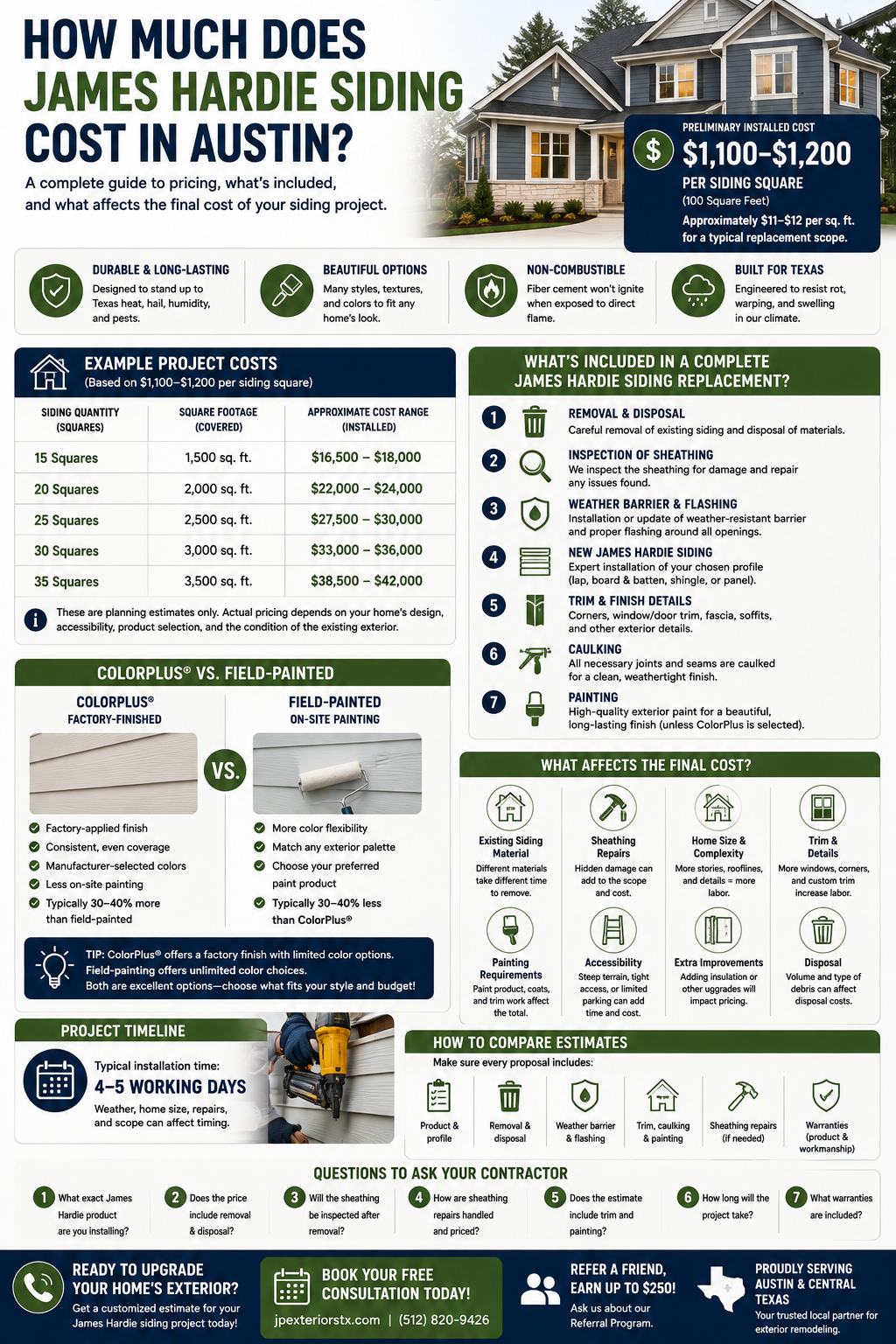
Example: What Could a Siding Project Cost?
The following examples use the approximate $1,100–$1,200 per-square planning range. They are illustrations of how siding quantities affect a preliminary budget, not measurements or quotes for a particular home.
Siding quantity | Approximate planning range |
|---|---|
15 squares | $16,500–$18,000 |
20 squares | $22,000–$24,000 |
25 squares | $27,500–$30,000 |
30 squares | $33,000–$36,000 |
35 squares | $38,500–$42,000 |
The actual amount of siding required is not necessarily the same as your home's interior square footage. Contractors calculate the exterior wall area, account for openings and design details, and determine the material quantities needed.
Homes with multiple stories, complex rooflines, large gables, or extensive trim may require more labor than a simpler home with similar siding coverage.
2. What Is Included in a James Hardie Siding Replacement?
When comparing siding estimates, make sure you're comparing the same scope of work.
A complete replacement project may include several steps.
Removal of Existing Siding
Before new siding can be installed, the existing material generally needs to be removed.
The type and condition of the old siding can affect labor and disposal requirements. Older homes may also have additional layers or materials that require special handling.
Removing the existing siding allows the contractor to evaluate the wall surface rather than simply covering up potential problems.
Inspection of the Wall Sheathing
Once the old siding is removed, the sheathing underneath can be inspected for visible damage.
Sheathing is the layer attached to the exterior wall framing. It provides a surface for the siding assembly and may show signs of moisture exposure or deterioration.
If damaged sections are discovered, they may need to be replaced before installation continues.
The amount of repair work can vary considerably from one home to another. A proposal should explain how unexpected repairs will be documented and priced.
Weather-Resistant Barrier and Flashing
A siding replacement should also account for the layers that help protect the home from water.
Depending on the existing wall assembly and project scope, this may involve installing or updating a weather-resistant barrier and addressing flashing around windows, doors, and other transitions.
These details matter because siding is not intended to be the home's only line of defense against water.
New Siding Installation
The selected James Hardie profile, board dimensions, layout, and architectural details all influence the project.
Popular styles include:
Lap siding: A traditional horizontal appearance.
Board and batten: Vertical siding with contrasting or matching battens.
Shingle siding: A textured appearance often used on gables and accent areas.
Panel siding: Larger panels that can create a more contemporary look.
Different profiles can require different installation methods, trim details, and labor.
Trim, Caulking, and Painting
The finished appearance depends on more than the siding boards.
Exterior trim around windows, doors, corners, fascia, and other transitions may need to be replaced or updated. Caulking and painting requirements also depend on the product selected.
When reviewing an estimate, confirm whether these finishing details are included or listed separately.
3. What Can Make James Hardie Siding More Expensive?
Two homes with similar exterior dimensions can receive very different siding estimates.
Here are some of the biggest factors that influence the final price.
The Existing Siding Material
Removing older wood siding, fiber cement, or other exterior materials can involve different labor and disposal requirements.
The condition of the existing siding also matters. Loose, damaged, or deteriorated materials may require additional preparation.
Sheathing Repairs
This is one of the more important unknowns in a siding replacement.
Some homes have sound sheathing underneath the existing siding. Others may have localized areas of deterioration that need attention.
JP Exteriors can include certain anticipated repairs in a project scope, but the full extent of hidden damage may not be known until the existing siding is removed.
Ask how additional repairs will be handled if they are discovered.
The Number of Stories and Home Design
A straightforward one-story home may be easier to access than a two-story home with tall gables, multiple rooflines, and complicated exterior details.
Labor, ladders, scaffolding, and material handling can all affect the price.
Trim and Architectural Details
Homes with numerous windows, decorative trim, columns, corner boards, and other architectural features may require more detailed work.
If you're changing the siding profile or adding new exterior accents, those choices can also affect material and installation costs.
Painting Requirements
Field-painted siding requires appropriate preparation and application after installation.
The paint product, number of coats, color selection, surface conditions, and amount of trim work can all influence the total.
Additional Insulation or Wall Improvements
If you're considering exterior insulation or other improvements behind the siding, those should be evaluated as separate parts of the project.
They can affect wall thickness, window and door trim, flashing, and attachment details. They should not be assumed to be included in a standard siding replacement estimate.
4. ColorPlus vs. Field-Painted James Hardie Siding: Which Costs More?
One decision homeowners often face is whether to choose factory-finished ColorPlus siding or have the siding painted after installation.
Both options can provide an attractive finished exterior, but the cost structure and selection process are different.
Factory-Finished ColorPlus
<AsyncImage query="James Hardie ColorPlus factory finished fiber cement lap siding exterior home close up" aspectRatio="16:9" width="100%"/>
ColorPlus siding comes with a factory-applied finish.
Potential advantages include:
A finish applied under controlled factory conditions.
Manufacturer-selected color options.
Less field painting on the siding itself.
A consistent factory finish across the ordered material.
However, the available colors and product options may be more limited than selecting a custom field-applied paint color.
The manufacturer's current product and warranty documentation should be reviewed for the specific product and finish being considered.
Field-Painted Siding
<AsyncImage query="professional painter applying exterior paint to newly installed fiber cement lap siding on house" aspectRatio="16:9" width="100%"/>
With field-painted siding, the boards are installed and then painted on the home.
Potential advantages include:
Greater flexibility when choosing paint colors.
More options for coordinating siding and trim.
The ability to select from available exterior paint products.
Flexibility when matching existing exterior features.
Field painting also requires appropriate preparation and application. The quality of the finished result depends on using suitable products and following the siding and paint manufacturers' requirements.
How Much More Does ColorPlus Cost?
For preliminary JP Exteriors budgeting, ColorPlus may run approximately 30–40% more than a comparable Prime Board project with field painting.
That is a general comparison, not a guaranteed price difference for every home. The actual difference depends on the selected product, profile, color, material availability, and project scope.
The best way to compare the two is to request proposals that clearly identify the product, finish, and included installation work.
5. Is James Hardie Siding Worth the Investment in Central Texas?
For many homeowners, the appeal of fiber cement siding is its combination of appearance, durability, and resistance to common exterior concerns.
James Hardie siding is designed for exterior use and is available in multiple profiles and finish options.
Homeowners often consider it when they want to:
Replace deteriorating or damaged exterior siding.
Update an older home's appearance.
Move away from traditional wood siding.
Choose from different architectural styles and textures.
Improve the overall condition and appearance of the exterior.
However, no siding product is completely maintenance-free.
Proper installation, appropriate clearances, flashing, caulking where required, and routine maintenance all contribute to long-term performance.
The product should also be installed according to the manufacturer's current instructions and applicable building requirements.
You can learn more about the product options and installation guidance directly from James Hardie.
6. How Long Does a James Hardie Siding Replacement Take?
The installation schedule depends on the size and complexity of the project, the condition of the existing exterior, weather, and crew availability.
For a typical full siding replacement, JP Exteriors generally plans for approximately four to five working days of installation.
That estimate can change when:
The home has multiple stories or complex architectural details.
Additional sheathing repairs are required.
The project includes extensive trim replacement.
Weather interrupts removal, installation, or painting.
The project scope includes additional exterior improvements.
The overall timeline should also account for scheduling, material availability, and any necessary preparation before the installation crew arrives.
Ask your contractor for an expected start date, approximate duration, and how weather-related changes will be communicated.
7. How to Compare James Hardie Siding Estimates
Getting more than one estimate can help you understand your options, but the lowest total price does not necessarily represent the best value.
The key is to compare what each contractor is actually providing.
Before choosing a proposal, check whether it identifies:
The specific James Hardie product and siding profile.
The quantity of siding included.
Removal and disposal of existing materials.
Weather-resistant barrier requirements.
Flashing and water-management details.
Trim replacement and finishing.
Caulking and painting.
How sheathing repairs will be handled.
Cleanup and disposal.
Manufacturer warranty information.
Contractor workmanship warranty information.
If one estimate includes new trim, painting, and removal while another only lists siding installation, the totals are not directly comparable.
A detailed written proposal helps you understand what is included before work begins.
8. Questions to Ask Before Signing a Siding Contract
Before moving forward with a siding replacement, consider asking your contractor these questions:
What exact James Hardie product are you installing?
Make sure the estimate identifies the profile, dimensions, and finish.Does the price include removing and disposing of the old siding?
Confirm whether demolition and disposal are included.Will the sheathing be inspected after removal?
Ask how damaged areas will be documented and priced.What weather-resistant barrier and flashing details are included?
Understand how the wall will be protected from water.Does the estimate include trim and painting?
Clarify whether all finishing work is included.How long should the project take?
Ask for a realistic schedule and how delays will be handled.What warranties apply?
Review both the manufacturer's product warranty and the contractor's written workmanship warranty.
These questions can help you avoid surprises and compare proposals more confidently.
The Bottom Line: Understand the Complete Siding Project, Not Just the Price Per Square
James Hardie siding can be an excellent option for homeowners looking to update and protect their home's exterior. But the cost of a replacement project depends on much more than the price of the siding boards.
Removal, wall preparation, trim, flashing, painting, access, and unexpected repairs all contribute to the final investment.
For a preliminary budget, JP Exteriors' typical installed pricing for a standard replacement is approximately $1,100–$1,200 per siding square, or about $11–$12 per square foot. Your home's actual measurements and project requirements will determine the final price.
At JP Exteriors, we help homeowners throughout Austin and Central Texas with James Hardie fiber cement siding replacement and exterior remodeling. We can review your home's existing exterior, discuss product and finish options, and provide a proposal based on the actual work involved.
Get Started With a Free Roofing Consultation
Considering new siding for your home? JP Exteriors can help you compare siding options, understand the project scope, and plan an exterior replacement that fits your home's needs.
Frequently Asked Questions
How much does James Hardie siding cost per square foot in Austin?
For preliminary budgeting, JP Exteriors' typical installed range for a standard fiber cement siding replacement is approximately $11–$12 per square foot. The final cost depends on removal, trim, painting, repairs, accessibility, and product selection.
How much is one square of siding?
One siding square represents 100 square feet of coverage. At an estimated $1,100–$1,200 per square, the preliminary cost works out to approximately $11–$12 per square foot.
Is James Hardie ColorPlus more expensive than field-painted siding?
It can be. For preliminary JP Exteriors budgeting, ColorPlus may cost approximately 30–40% more than a comparable Prime Board project with field painting. Actual pricing depends on the selected product, color, and project requirements.
Does a James Hardie siding estimate include removing old siding?
It depends on the contractor and the proposal. A complete replacement estimate should clearly state whether removal and disposal are included. Always confirm this before comparing prices.
Can damaged wood behind the siding increase the project cost?
Yes. If deteriorated sheathing or other hidden damage is discovered after the old siding is removed, additional repairs may be necessary. Ask how those repairs will be documented and approved.
How long does it take to replace siding on a house?
A typical full siding replacement through JP Exteriors is generally planned for approximately four to five working days. Larger homes, additional repairs, complex details, and weather can extend the schedule.
Is James Hardie siding a good choice for Texas homes?
Many homeowners choose fiber cement siding for its durability, appearance, and range of design options. Proper installation and maintenance are important, and the product should be selected based on the home's conditions and the manufacturer's requirements.
Does JP Exteriors install James Hardie siding in Austin?
Yes. JP Exteriors provides James Hardie fiber cement siding replacement and exterior remodeling services throughout Austin and its Central Texas service area.
Remember: When you refer a friend or neighbor for windows, siding, roofing, or door replacement, you can earn up to $250 through the JP Exteriors Referral Program.
Subscribe to JP Exteriors's Blog

Comments