If a roofing contractor tells you, "Don't worry, we'll cover your insurance deductible," it can sound like a great deal. It isn't. In Texas, contractors are prohibited from waiving, rebating, or absorbing a homeowner's property-insurance deductible, and the Texas Department of Insurance specifically warns homeowners to steer clear of contractors who make that offer — the deductible is the homeowner's responsibility, full stop. For anyone dealing with hail or wind damage in Austin and Central Texas, understanding how this works can help you avoid a bad contractor, a questionable insurance claim, and bigger problems down the road.
What Does "We'll Cover Your Deductible" Actually Mean?
Say your roof has $25,000 in covered damage and your policy has a $5,000 deductible. The insurance company determines the covered loss is $25,000; your policy requires you to pay the first $5,000, and the insurer covers the remaining amount, subject to the policy terms. A legitimate contractor shouldn't be telling you they'll simply make that $5,000 responsibility disappear — Texas regulators are explicit that contractors can't waive the deductible, offer a rebate for it, or quietly "work it into" the bid.
So why do some contractors offer it anyway? There are a few common tactics. One is submitting an estimate higher than the actual repair cost and using the extra insurance money to effectively cover the homeowner's deductible. Another is offering a rebate or credit equal to the deductible amount outright. Neither is a legitimate discount — both are a problem with how the insurance claim itself is being represented.
Is It Actually Illegal to Waive a Deductible in Texas?
Yes. Texas law — specifically Texas Insurance Code §707.002, enacted through House Bill 2102 in 2019 — requires anyone insured under a property insurance policy to pay the deductible applicable to their claim, and separately prohibits contractors from paying, waiving, absorbing, rebating, or crediting that amount on the homeowner's behalf. A violation can carry real penalties, including fines and potential jail time. This isn't a gray area or an industry norm being loosely enforced — it's a specific, enacted statute.
Texas regulators also require that contracts of $1,000 or more tied to an insurance settlement include a written notice stating that the policyholder is responsible for paying the deductible. This isn't just an industry preference — it's the law.

"But I'm the Homeowner. Why Is It My Problem?"
This is the part a lot of homeowners don't realize. You might think, "if the contractor is the one offering to waive it, why should I care?" Because you're the policyholder — and your insurance company can request proof that you actually paid your deductible, whether that's a canceled check, a money-order receipt, a credit-card statement, or payment-plan documentation. The deductible isn't just something worked out privately between you and your contractor. It's part of your insurance claim, and you're the one on the hook for it.
Could a Deductible Waiver Actually Affect My Insurance Claim?
Potentially, yes — and this is the bigger issue. If a contractor inflates the repair estimate, offers a hidden credit, or otherwise represents the repair cost as higher than what they actually intend to collect, the insurance company may treat that as false information submitted on a claim. Regulators are direct about this: contractors who waive deductibles may be sending false information to an insurance company, and that can amount to fraud — which is a completely different situation than simply negotiating the legitimate scope or price of the actual work.
What If Another Roofer Just Gives Me a Lower Price?
This distinction matters. A contractor absolutely can compete on price — they can offer a legitimate lower bid for the work they're actually going to perform. What they can't do is say, "your deductible is $5,000, but we'll make that disappear." There's a real difference between a competitive bid and an illegal deductible waiver. It's worth getting multiple written bids after storm damage and comparing them directly — if one contractor's price is dramatically out of line with everyone else's, ask specific questions about the scope, materials, labor, warranties, and exclusions before assuming it's simply a better deal.
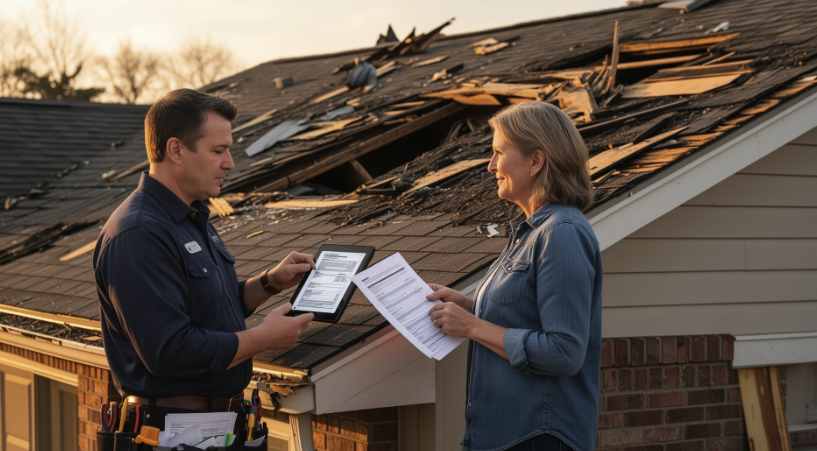
What Happens If the Contractor Cuts Corners Instead?
This is another reason the "free deductible" pitch is misleading. If a contractor promises to absorb several thousand dollars of your deductible, that money has to come from somewhere — and regulators specifically warn that contractors offering deductible waivers often make up the difference by cutting corners or using lower-quality products, which can create additional problems and repairs down the line. A roofing project should be evaluated on the actual materials, underlayment, flashing, ventilation, drip edge, tear-off, any necessary decking replacement, installation quality, and both the workmanship and manufacturer warranties — not on how much you can shave off your deductible.
What Should a Legitimate Roofing Contractor Do?
A reputable contractor should be able to walk you through the project without making questionable promises. That means clearly explaining the actual scope of work, the specific materials being installed, what they're charging for the work, what your insurance company determined is covered, what your deductible actually is under your policy, and what happens if previously hidden damage turns up once the project starts. That kind of straightforward transparency is worth a lot more than someone promising to make your deductible vanish.
Your Deductible Isn't a Discount Coupon
This might be the simplest way to think about it. Your deductible is part of your insurance policy — the portion of a covered loss you're responsible for before the insurance company's payment kicks in. So when a contractor says "we'll cover your deductible," the right response isn't "great, how much do I save?" It's "how exactly are you doing that?" If the answer involves a rebate, an inflated estimate, a hidden credit, or paperwork designed to make the deductible quietly disappear, walk away.
What Should Austin Homeowners Look for After a Hailstorm?
Central Texas sees significant hail and wind exposure, so insurance-related roofing projects are common here. After a storm, don't feel pressured to sign with the first contractor who shows up at your door. It's worth getting multiple written bids, checking references, verifying insurance and licensing, favoring local companies when possible, and steering clear of anyone offering to waive your deductible.
You also don't need to pick a contractor just because they're promising to "get you everything the insurance company owes you." Texas law separately restricts contractors performing the work from also acting as your public insurance adjuster on the same project — a contractor shouldn't be representing that they can negotiate your claim or act as your official insurance representative.
The Bottom Line
"We'll cover your deductible" isn't a great deal — it's a warning sign. Texas law requires homeowners to pay their property-insurance deductible, and contractors cannot legally offer to waive, rebate, or absorb it. Your insurance company may also ask you to prove that you actually paid it. When you're replacing a roof after hail or wind damage, focus on what actually determines whether you're getting a good project: quality materials, honest pricing, proper installation, clear documentation, and a contractor willing to explain the process without gimmicks.
At JP Exteriors, we help Austin-area homeowners navigate exterior remodeling projects after storm damage while keeping the focus on the actual work — not questionable deductible promises.
Frequently Asked Questions
Is it really illegal for a contractor to waive my insurance deductible in Texas?
Yes. Texas Insurance Code §707.002 requires policyholders to pay their applicable deductible, and separate provisions prohibit contractors from paying, waiving, absorbing, rebating, or crediting that amount on the homeowner's behalf.
How would a contractor actually help me avoid paying my deductible?
Common methods include submitting an inflated repair estimate and using the extra insurance payout to cover the deductible, or offering a direct rebate or credit equal to the deductible amount. Both are illegal.
What's the actual harm if a contractor offers to waive my deductible?
It can mean false information is being submitted to your insurance company about the true cost of repairs, which can constitute insurance fraud — putting both the contractor and, potentially, the homeowner at risk.
Can I get in trouble as the homeowner if my contractor waives my deductible?
It's possible, since you're the policyholder responsible for the claim. Insurance companies can request proof that the deductible was actually paid, and participating in a scheme to avoid it can create real risk for you as well as the contractor.
Is it illegal for a contractor to simply offer me a lower price?
No. Competing on price for legitimate work is completely normal. What's illegal is specifically promising to eliminate or absorb your deductible rather than pricing the actual work competitively.
What should I do if a contractor offers to waive my deductible?
Ask exactly how they plan to do it. If the answer involves an inflated estimate, a rebate, or a hidden credit, decline and consider reporting the offer to the Texas Department of Insurance or the Texas Attorney General's Consumer Protection Hotline.
Does this law apply to all types of contractors, or just roofers?
The Texas law specifically targeting deductible waivers (HB 2102) was written largely in response to roofing scams after storms, though the underlying requirement that policyholders pay their deductible applies broadly to property insurance claims.
How can I verify what my insurance company actually approved for my roof claim?
Request a copy of your insurance company's estimate or scope of work directly from your adjuster, and compare it line by line against any contractor proposal you're considering.
Should I get multiple bids after storm damage, or just go with the first contractor?
Get multiple written bids. It helps you spot outliers, whether unusually high or suspiciously low, and gives you leverage to ask specific questions about scope, materials, and warranties.
Can a roofing contractor also act as my insurance adjuster?
No. Texas law restricts a contractor performing the repair work from also acting as your public insurance adjuster on the same project or representing that they can negotiate your claim on your behalf.
Get Started With a Free Consultation
Dealing with storm damage and trying to sort out a legitimate roofing quote?
Remember: When you refer a friend or neighbor for windows, siding, roofing, or door replacement, you can earn up to $250 through the JP Exteriors Referral Program.
Subscribe to JP Exteriors's Blog





Comments