If you're replacing siding in Austin, the easiest way to compare your options is to put them into three categories:
Good: Vinyl
Better: Engineered wood
Best: Fiber cement
But that ranking needs an asterisk.
"Best" depends on what you're trying to optimize.
If the lowest upfront price is the goal, vinyl has a strong argument.
If you want a wood-like appearance with better impact resistance and less maintenance than traditional wood, engineered wood can be an excellent middle ground.
If fire resistance, long-term durability, and overall performance in the Central Texas climate are the priorities, fiber cement is difficult to beat.
And that's before you consider what happens over the next 20 years.
Because siding isn't just a purchase.
It's an exterior system you're going to own, maintain, repair, repaint, and eventually replace.
What Makes Austin Different?
Austin siding has to deal with several conditions that can be hard on exterior materials:
Long periods of intense sun
High summer temperatures
Significant UV exposure
Hail and wind-driven debris
Heavy rain followed by rapid drying
Humidity and moisture around exterior penetrations
Wildfire exposure in parts of the Austin area
That combination makes material selection more important than simply asking which siding looks best on a sample board.
A siding product that performs well in a mild climate may have a very different maintenance profile when it's exposed to years of Central Texas sun and severe storms.
And Austin has another consideration that many homeowners don't think about until they need to replace siding:
Wildland-Urban Interface requirements.
First: What Does Austin's WUI Code Mean for Siding?
Austin's Wildland-Urban Interface Code divides affected properties into Proximity Zones based on their distance from wildland.
Under the current 2024 WUI Code, effective for applications submitted on or after July 10, 2025, more than half of Austin falls within one of the city's WUI zones.
For exterior walls in the most restrictive Zone A, the code requires ignition-resistant or approved exterior-facing materials. Zone B follows similar exterior-wall requirements, while Zone C has its own ignition-resistant requirements.
This matters when you're comparing siding.
But there's an important distinction:
A material having a "Class A" flame-spread rating is not automatically the same thing as being noncombustible.
That's an easy detail to miss.
James Hardie's fiber cement products, for example, are described as noncombustible and are tested for Class A flame spread.
Vinyl siding can also carry a Class 1(A) flame-spread classification depending on the product, but that doesn't mean vinyl is noncombustible. CertainTeed's own installation information warns that rigid vinyl exposed to significant heat or flame can soften, sag, melt, or burn.
So when you're looking at Austin's WUI requirements, don't just ask:
"Does this siding have a Class A rating?"
Ask:
"Does this specific product and wall assembly meet the requirements for my property's WUI zone?"
That's a much better question.
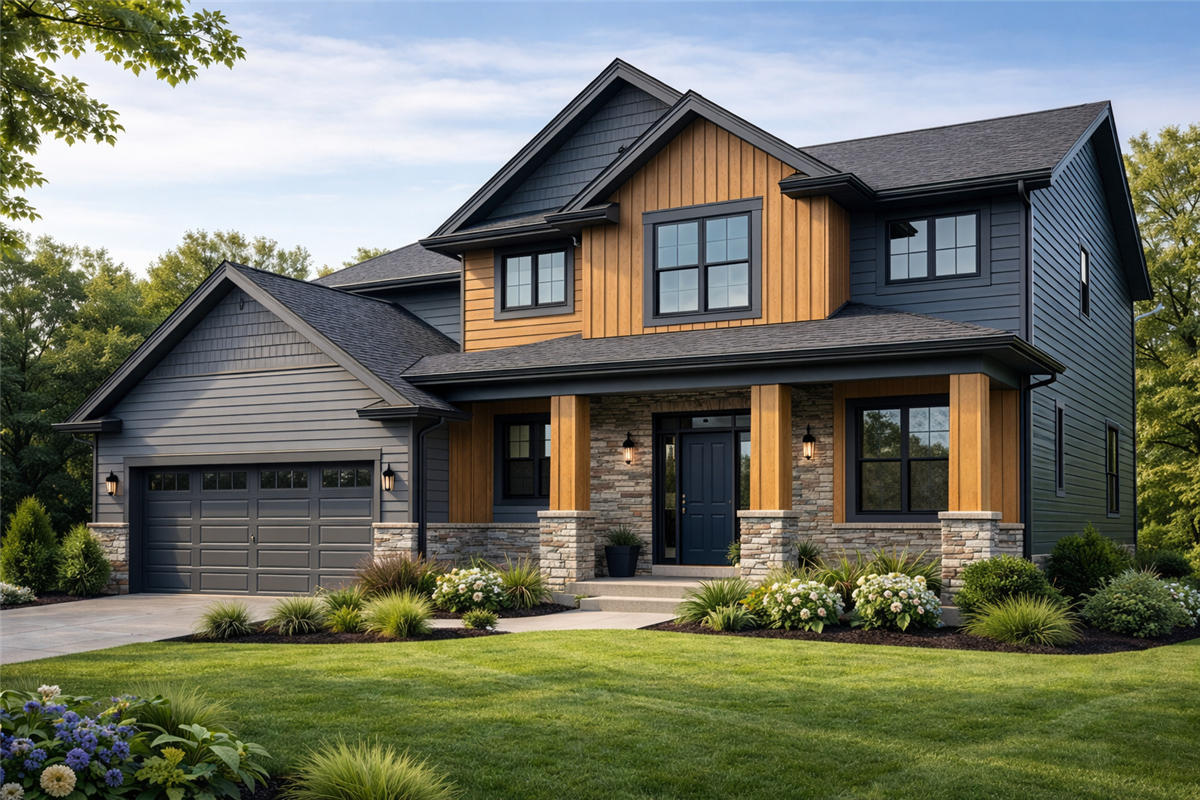
Good: Vinyl Siding
Vinyl wins one category before the conversation even starts:
Upfront cost.
It's generally the least expensive of these three siding categories, which makes it attractive when a homeowner wants to improve an exterior without making a major investment in premium cladding.
Vinyl is also lightweight, relatively quick to install, doesn't require routine painting, and can provide decades of service when properly selected and installed.
CertainTeed, for example, markets several vinyl products as virtually maintenance-free and never needing painting.
That's a real advantage.
Where vinyl works well
Vinyl can make sense when:
Budget is the primary consideration
Fire exposure isn't the main concern
The homeowner wants minimal painting
The home has relatively straightforward elevations
A lower-cost siding system fits the neighborhood
The homeowner understands the limitations of the material
Where vinyl gets more complicated in Austin
The problem isn't that vinyl automatically fails in Texas.
The problem is that vinyl has less margin for extreme heat and impact than some of the heavier siding options.
Direct heat and reflected sunlight can cause distortion, and manufacturers specifically warn about concentrated solar reflection.
Hail is another consideration.
Thin or lower-grade vinyl can crack or become damaged by significant impacts. Higher-quality reinforced vinyl products can perform considerably better, so "vinyl" isn't one uniform performance category.
That's an important point.
Comparing premium vinyl to budget vinyl is like comparing two different products simply because they share the same material family.
Repainting vinyl
Usually, you don't.
That's one of vinyl's biggest advantages.
However, that also means you have less flexibility if you eventually decide you hate the color.
You can sometimes paint vinyl using appropriate coatings and conditions, but it isn't the same thing as repainting a conventional painted siding system.
Better: Engineered Wood Siding
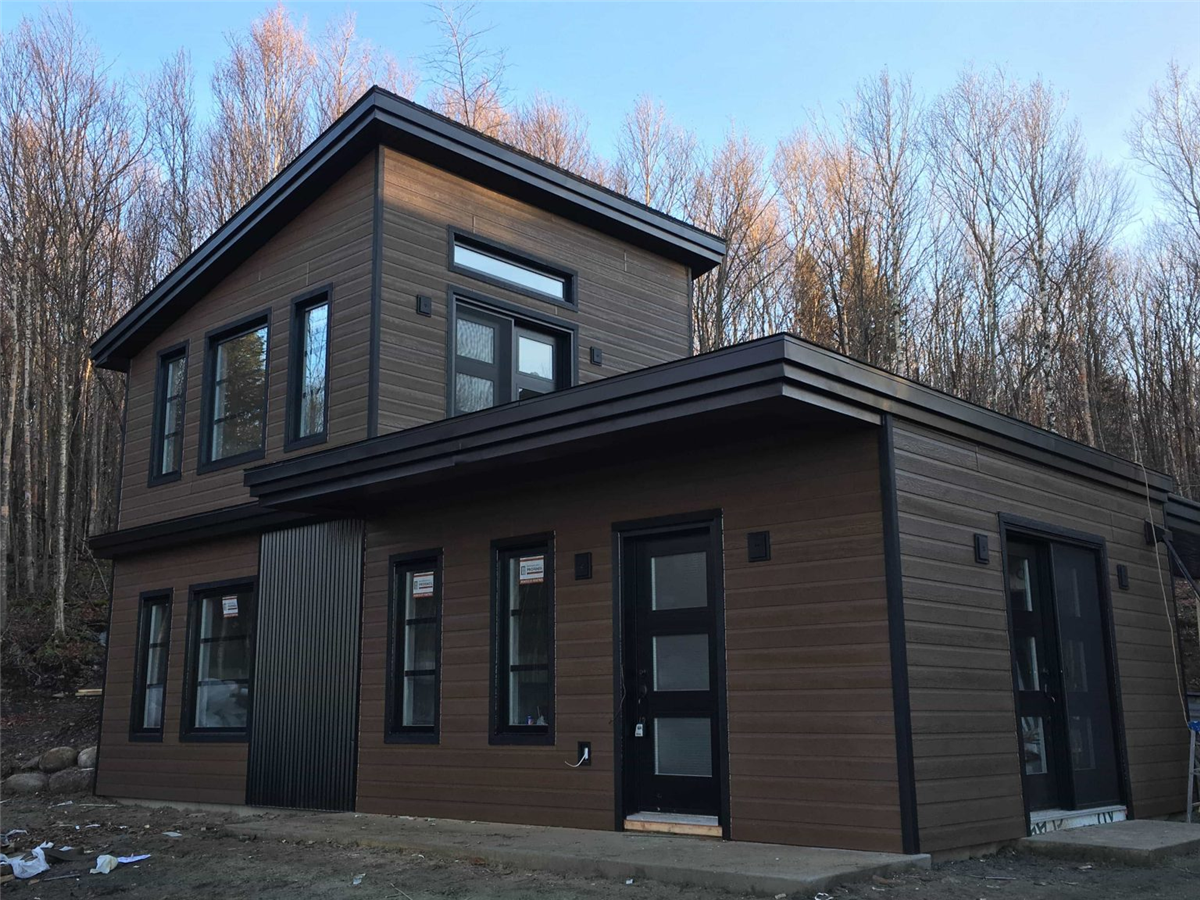
Engineered wood sits in the middle.
Products such as LP SmartSide are manufactured from treated engineered wood rather than solid wood boards.
The goal is straightforward:
Get the appearance and workability of wood while improving resistance to moisture, insects, and impact.
LP says SmartSide products are treated for protection against the elements and are warranted against hail damage under its current warranty terms.
That's particularly interesting in Central Texas.
Where engineered wood shines
Engineered wood is attractive for homeowners who want:
A more substantial wood-like appearance
Better impact performance than basic vinyl
A broad selection of profiles
Board-and-batten or other architectural looks
A painted or factory-finished appearance
A middle ground between vinyl and fiber cement
It also tends to have a more convincing wood appearance than many entry-level vinyl products.
The catch
Engineered wood is still a wood-based product.
That doesn't mean it's fragile.
It means installation details matter.
Cuts, joints, penetrations, flashing, moisture management, clearances, and finish maintenance all matter.
The product is designed to resist moisture, but it shouldn't be treated as though water management no longer matters.
And the finish is part of the long-term equation.
LP's current ExpertFinish products carry a 15-year finish warranty and a 50-year substrate warranty, with specific warranty terms and exclusions.
That doesn't mean you automatically repaint at year 15.
It means the homeowner should understand that the finish and the siding substrate have different expected warranty periods.
Best: Fiber Cement
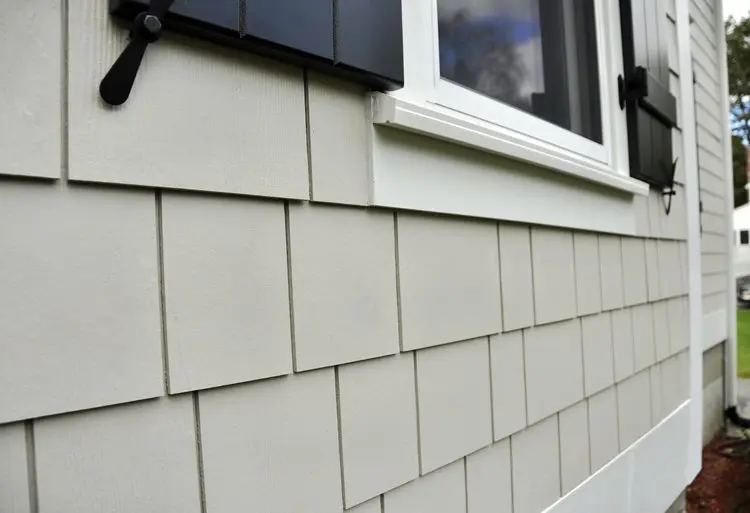
Fiber cement is usually the most expensive of these three choices upfront.
It's also the material that gives you one of the strongest combinations of:
Fire resistance
Dimensional stability
Impact resistance
Moisture resistance
Long-term durability
Architectural flexibility
Paintability
James Hardie describes its fiber cement siding as noncombustible, with a Class A flame-spread rating on applicable products.
That's particularly relevant in Austin's WUI areas.
Austin's current WUI guidance specifically identifies fiber cement as one of the simple material choices that can satisfy ignition-resistant requirements for certain exterior components.
Why fiber cement fits Central Texas
Fiber cement doesn't respond to summer heat the same way vinyl does.
It also doesn't provide the same combustible fuel source as wood-based siding.
And unlike vinyl, it can be repainted when the finish eventually needs attention.
James Hardie's current product information describes its siding as backed by a 30-year non-prorated substrate warranty, with ColorPlus finishes carrying a separate 15-year limited warranty covering paint and labor for covered finish issues.
That's a very different ownership proposition from buying a material primarily because it is inexpensive today.
Hail: Which Siding Wins?
This is where the comparison gets more interesting.
You might assume fiber cement automatically wins because it's heavier and more substantial.
But engineered wood deserves serious consideration.
LP has published testing from Texas Tech University's National Wind Institute showing LP SmartSide lap siding resisted hail damage better than comparable fiber cement and vinyl siding in the specific laboratory testing cited by LP.
That doesn't mean every engineered-wood product will outperform every fiber-cement or vinyl product in every storm.
It means you shouldn't make a blanket assumption that:
fiber cement = best hail resistance
without looking at the actual product and testing.
A practical Austin ranking
For basic, non-reinforced products:
Vinyl: Most vulnerable to significant impact, particularly lower-grade products.
Engineered wood: Strong impact performance and specifically engineered for hail resistance in products such as LP SmartSide.
Fiber cement: Very durable and impact-resistant, but specific products and profiles matter.
The better question isn't simply "Which material is strongest?"
It's:
"Which specific siding product gives me the impact performance I want at the price I'm willing to pay?"
Fire: This Is Where Fiber Cement Pulls Away
If wildfire exposure is part of the equation, the comparison changes.
Fiber cement is noncombustible.
Engineered wood is wood-based and therefore combustible, although certain products or assemblies may have tested fire performance or be approved for specific WUI applications.
Vinyl is also combustible despite the fact that some products carry Class A flame-spread classifications.
Austin's WUI Code specifically addresses exterior wall materials, and its approved-materials resources identify particular products and fire-performance data rather than simply declaring an entire material category acceptable.
That distinction matters.
Don't choose a siding product for a WUI property based solely on a salesperson saying "it's Class A."
The actual product, assembly, location, and code requirements need to line up.
Repainting: The Cost People Forget
Siding advertisements tend to focus on the installation price.
Homeowners should also ask:
"What happens to the finish ten years from now?"
That's where the three materials begin to separate.
Vinyl
Normally no routine repainting.
That's the simplest ownership model.
But you're largely living with the manufacturer's color and the limitations of the material if you want to change it later.
Engineered wood
There are two different ownership paths.
Factory-finished engineered wood can significantly reduce routine painting.
LP ExpertFinish, for example, is sold with a factory-applied finish and a separate 15-year finish warranty.
Primed engineered wood requires a field-applied finish and therefore has a different maintenance schedule.
Fiber cement
Fiber cement can be purchased primed and painted after installation or with a factory-applied finish such as ColorPlus.
A field-painted fiber-cement house may eventually need another coat depending on exposure, color, preparation, and paint system.
ColorPlus changes that equation because the finish is applied in a controlled factory environment.
James Hardie currently provides a 15-year limited warranty for its ColorPlus finish, separate from its 30-year substrate warranty.
The takeaway
Don't ask:
"Does fiber cement need painting?"
Ask:
"Which finish are we buying, and what does that finish require over the next 20 years?"
That's a much more useful question.
What Does a 20-Year Ownership Cost Actually Look Like?
Here's where siding comparisons get tricky.
There is no universal 20-year price because the starting price depends on:
Wall area
Number of stories
Tear-off requirements
Trim
Housewrap
Sheathing repairs
Access
Siding profile
Paint system
Labor
Storm damage
Color
Existing conditions
Current Austin-area cost guides put basic vinyl below engineered wood and fiber cement, with fiber cement generally carrying the highest upfront price among these three categories. Published 2026 Austin estimates vary considerably depending on scope, which is exactly why homeowners should compare complete proposals rather than material-only numbers.
A useful way to think about the 20-year cost is:
Initial installation + maintenance + repainting + repairs + eventual replacement risk
—not simply the first contractor's number.
A Simple 20-Year Ownership Example
Let's use a 2,000-square-foot exterior wall area purely as an example.
That is wall area, not the home's interior square footage.
The following is an illustrative planning model rather than a quote:
Vinyl | Engineered Wood | Fiber Cement | |
|---|---|---|---|
Typical upfront position | Lowest | Middle | Highest |
Routine painting | Usually none | None with factory finish; more with field-painted product | Depends on finish |
Hail considerations | Product-dependent; basic vinyl more vulnerable | Strong impact performance in products such as LP SmartSide | Strong durability; product-specific |
Fire performance | Combustible | Wood-based/combustible | Noncombustible |
Color flexibility later | Limited | Good | Excellent |
20-year maintenance | Low | Low to moderate | Low to moderate |
Potential major cost | Storm damage/replacement | Finish + moisture-related repairs if poorly maintained | Repainting if field-painted |
This table is more useful than pretending we can predict your exact 20-year bill.
For example, a homeowner who chooses factory-finished engineered wood may spend very little on repainting over 20 years.
A homeowner who chooses primed fiber cement and uses a quality field-applied paint system may eventually have a repainting expense.
A homeowner who chooses inexpensive vinyl may spend almost nothing on painting—but could eventually face repairs after severe hail or heat-related damage.
And a homeowner with a WUI property may decide that the additional upfront cost of a noncombustible siding system is worth more than its simple dollar payback.
That's why total cost of ownership isn't just a spreadsheet exercise.
The Cheapest Siding Isn't Always the Cheapest House
Imagine two homeowners.
Homeowner A spends less on siding today but chooses a product with fewer performance advantages.
Homeowner B spends more on a durable siding system with a stronger finish and better fire characteristics.
If both homeowners sell in five years, the difference may not matter much.
If both stay for 20 years, the calculation becomes much more interesting.
The second homeowner may have:
Fewer repairs
Less maintenance
Better fire resistance
Better long-term appearance
Fewer finish concerns
A more durable exterior envelope
Meanwhile, the first homeowner may have spent less initially but may eventually spend money on repairs, repainting, or replacement.
That's the basic reason total cost of ownership matters more than installation price.
What About Resale Value?
There's no universal rule that says fiber cement automatically adds a certain dollar amount to an Austin home.
But exterior appearance matters.
So does condition.
A house with faded, warped, cracked, or damaged siding is going to present differently from a house with a well-maintained exterior.
The most important resale question may not be:
"Which siding did you install?"
It may be:
"What condition will the siding be in when you sell?"
That makes finish quality, installation, trim details, and maintenance just as important as the material itself.
Don't Forget the Installation
This is where homeowners sometimes spend too much time comparing siding samples and not enough time comparing installation details.
A great siding product can still perform poorly if the installation is wrong.
For a siding replacement, ask about:
Existing siding removal
Housewrap or water-resistive barrier
Flashing
Window and door transitions
Kickout flashing
Roof-to-wall transitions
Rotten sheathing
Rotten framing
Fastener requirements
Trim
Caulking
Paint
Ground clearances
Moisture management
Cleanup
The siding is the visible part of the system.
The details behind it are what help keep water out of the wall assembly.
What About Austin's Heat?
Heat doesn't affect all siding materials the same way.
Vinyl is particularly sensitive to excessive heat and concentrated solar reflection. Manufacturers warn that reflected sunlight can distort or melt vinyl under certain conditions.
Fiber cement doesn't have that same heat-softening issue.
Engineered wood also doesn't behave like thin vinyl, although its moisture management and finish still matter.
That makes orientation worth considering.
A west-facing wall that receives intense afternoon sun may have different performance demands than a shaded north-facing wall.
The house itself is part of the siding specification.
So Which One Should an Austin Homeowner Choose?
Choose vinyl if:
Initial budget is the biggest consideration
You want minimal painting
Your property doesn't have unusual fire-exposure concerns
You choose a quality product rather than the thinnest option available
You understand the material's limitations
Choose engineered wood if:
You want a more authentic wood appearance
Hail resistance is important
You want a middle-ground price
You like factory-finished options
You want more architectural flexibility than basic vinyl
Choose fiber cement if:
Long-term durability is the priority
Fire resistance matters
You're in or near Austin's WUI
You want extensive color and profile options
You want a siding system that can be repainted
You're willing to spend more upfront for a higher-performance exterior
Our "Good, Better, Best" Verdict
Good — Vinyl
Vinyl makes sense when budget and low maintenance are the priorities. It's not automatically a bad choice for Austin, but product quality, heat exposure, impact resistance, and fire considerations matter.
Better — Engineered Wood
Engineered wood occupies the sweet spot for homeowners who want a substantial wood appearance and better impact performance without jumping all the way to premium fiber cement.
Best — Fiber Cement
For the broadest combination of Central Texas performance, especially when fire resistance and long-term durability matter, fiber cement has the strongest overall case.
But there is one final caveat:
"Best" doesn't mean "best for every house."
A shaded suburban home with a tight budget has different priorities than a home near wildland vegetation with significant hail exposure.
The right siding is the one that matches the home's location, exposure, architecture, budget, and expected ownership period.
Questions to Ask Before Choosing Siding
Before comparing three contractor proposals, ask:
What exact siding product are you quoting?
What thickness or product series is it?
Is the finish factory-applied or field-painted?
What does the manufacturer warranty actually cover?
How does this product perform against hail?
Is it noncombustible, ignition-resistant, or simply Class A flame-spread rated?
Does my property fall within Austin's WUI requirements?
What's included behind the siding?
What happens if rotten sheathing is found?
How often should I realistically expect to repaint or refinish it?
What happens if hail damages part of the exterior?
What will this material realistically cost to maintain over 20 years?
Those questions will tell you much more than a brochure saying "premium siding."
Frequently Asked Questions
Is fiber cement better than vinyl siding in Austin?
For overall durability, fire resistance, and long-term performance, fiber cement generally has advantages over basic vinyl. Vinyl still makes sense when lower upfront cost and minimal maintenance are the priorities.
Is engineered wood better than fiber cement?
Not necessarily. Engineered wood can offer excellent impact performance and a convincing wood appearance, while fiber cement has a major advantage in noncombustibility and fire performance. The right choice depends on what matters most for the property.
Which siding is best for hail in Austin?
There isn't one universal answer. Product-specific testing matters. LP, for example, cites Texas Tech testing showing SmartSide lap siding resisting hail damage better than comparable fiber cement and vinyl products in that particular test.
Is vinyl siding fire resistant?
Some vinyl siding products have Class 1(A) flame-spread classifications, but vinyl itself is combustible and can soften, sag, melt, or burn when exposed to significant heat or flame.
Is fiber cement siding fireproof?
No siding should be described as making a house "fireproof." Fiber cement is noncombustible and can improve exterior fire resistance, but wildfire protection depends on the entire building and surrounding property.
Does Austin require special siding in the WUI?
Certain properties within Austin's WUI zones have specific requirements for exterior wall materials. The applicable requirements depend on the property's proximity zone and the current code.
Does fiber cement need to be painted?
Not necessarily. It can be field-painted or purchased with factory-applied finishes such as James Hardie's ColorPlus Technology. The maintenance requirements depend on the finish selected.
How often does fiber cement need repainting?
There isn't a universal repainting interval. Exposure, paint quality, color, preparation, and installation all affect how long a field-applied finish lasts. Factory finishes can have separate manufacturer warranties.
Does engineered wood siding need to be painted?
Not always. Factory-finished products such as LP SmartSide ExpertFinish come with a factory-applied finish. Primed products require field finishing.
Does vinyl siding need to be repainted?
Generally, no. That's one of vinyl's major advantages. However, color flexibility and repair options are different from a painted siding system.
Which siding lasts the longest?
Product warranties and expected service life aren't the same thing, and actual longevity depends heavily on installation and maintenance. Fiber cement, engineered wood, and quality vinyl can all provide long service when properly installed and maintained.
Is expensive siding worth it in Austin?
It can be, particularly if you're planning to stay in the home for many years. The value comes from considering maintenance, storm exposure, fire performance, appearance, and replacement risk—not simply comparing the initial installation price.
The Bottom Line
Choosing siding for an Austin home isn't really a contest between three materials.
It's a decision about how you want your exterior to perform for the next 10, 15, or 20 years.
Vinyl gives you the lowest entry point and very little routine painting.
Engineered wood gives you a more substantial appearance and strong impact performance at a middle-ground price.
Fiber cement costs more upfront but brings noncombustible construction, strong durability, and excellent long-term flexibility.
And if your home falls within Austin's Wildland-Urban Interface, fire performance can move from being a nice feature to a major part of the decision.
Don't compare siding by price per square foot alone.
Compare the product, finish, fire performance, hail performance, installation system, warranty, maintenance requirements, and expected ownership period.
That's how you find the siding that actually makes sense for your house.
Get Started With a Free Consultation
Planning to replace your siding and not sure which material makes the most sense for your Austin-area home? JP Exteriors can help you compare siding options, review your home's existing exterior, and build a project around your priorities and budget.
Remember: When you refer a friend or neighbor for windows, siding, roofing, or door replacement, you can earn up to $250 through the JP Exteriors Referral Program.
Subscribe to JP Exteriors's Blog

Comments