If you've started shopping for replacement windows in Austin, you may have heard a salesperson mention Low-E 366, Low-E 270, or clear glass.
The numbers can sound like product grades, with 366 being the premium option and 270 sitting somewhere below it.
But that's not quite how it works.
These glass packages are designed to manage sunlight differently. Some let more solar heat enter your home, while others block more of it. Some transmit more visible light, while others provide stronger solar control.
In Central Texas, where air conditioning can run for much of the year, those differences matter.
The right glass package can help reduce unwanted solar heat gain, improve comfort near windows, and limit UV exposure to interior furnishings. The wrong choice for your home may leave you paying for performance you don't need—or missing out on benefits that would make a real difference.
Let's break down what the numbers mean, how the options compare, and whether upgrading to Low-E 366 is likely to pay for itself.
First, What Is Low-E Glass?
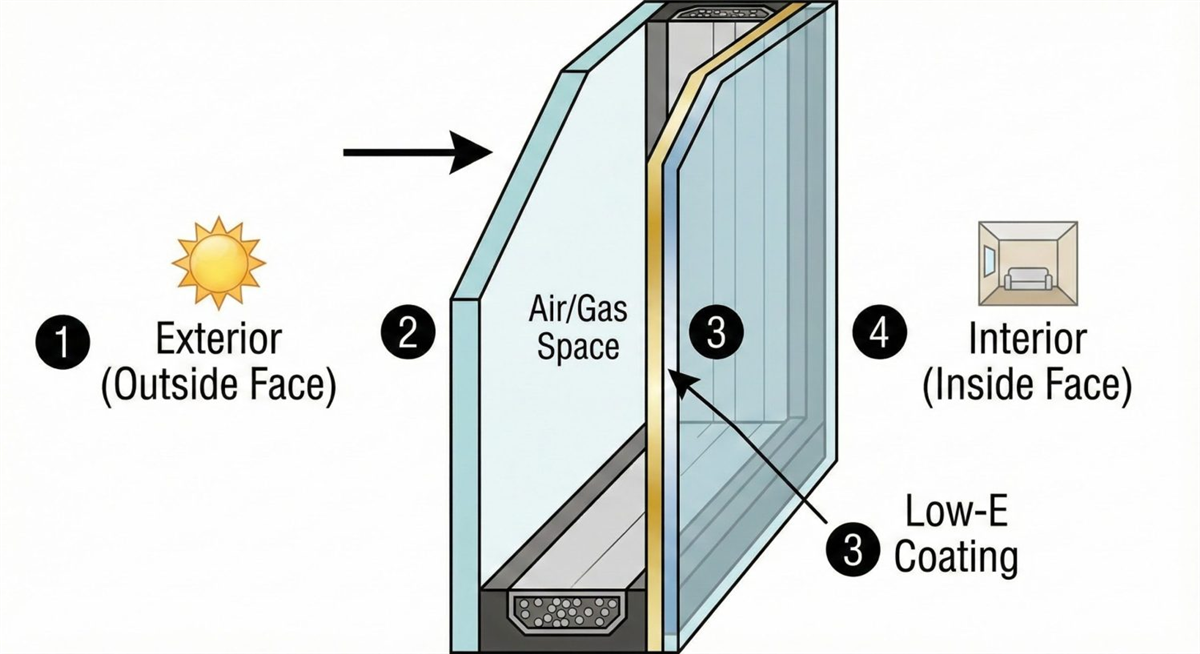
Low-E stands for low emissivity.
A Low-E coating is an extremely thin layer of metallic or metal-oxide material applied to glass. It's designed to manage heat transfer while allowing visible light to pass through.
The important part is that not all Low-E coatings control solar energy in the same way.
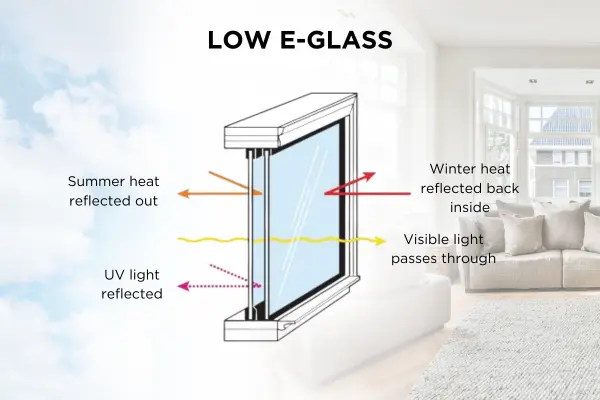
Some coatings are designed to allow more solar heat into a building, which can be useful in cold climates. Others are designed to reject more solar heat while maintaining a clear view and useful daylight.
For Austin homeowners, the second approach is often especially valuable.
A sunny window can make a room feel noticeably warmer even when the thermostat is set to a comfortable temperature. That happens because sunlight entering through the glass adds heat to the room, increasing the cooling load.
A well-chosen Low-E package helps control that solar gain without necessarily making your home feel dark.
The U.S. Department of Energy recommends choosing low solar heat gain coefficient (SHGC) windows in warm climates where cooling is a major concern. (Department of Energy)
What Do 366 and 270 Actually Mean?
The numbers are product identifiers for specific coating systems, not a universal rating scale for every window manufacturer.
Two widely used Cardinal glass products illustrate the difference:
LoĒ²-270: A dual-layer Low-E coating with moderate solar control.
LoĒ³-366: A triple-layer Low-E coating designed to provide stronger solar control while retaining a high level of visible light.
The extra digit in 366 isn't a guarantee that every window containing it will perform better in every category. The complete glass package, frame, gas fill, and overall window design all affect the finished product's performance.
Still, Cardinal's published data gives us a useful comparison.
Clear Glass vs. Low-E 270 vs. Low-E 366
The following figures are representative published values for specific double-pane glass configurations. They are not guaranteed ratings for every complete window.
| Glass package | Solar Heat Gain Coefficient (SHGC) | Visible Light Transmission (VT) | General takeaway |
|---|---|---|---|
| Double-pane clear | 0.78 | 82% | Allows substantially more solar heat and daylight through |
| Low-E 270 | 0.37 | 70% | Provides moderate solar control while retaining good daylight |
| Low-E 366 | 0.27 | 65% | Blocks more solar heat while still allowing useful natural light |
Source: Cardinal Glass Industries, published insulating-glass performance data.
These numbers tell an important story.
Low-E 366 has a lower SHGC than Low-E 270, meaning less solar heat enters through the glazing in the tested configuration. It also transmits slightly less visible light.
Clear glass transmits the most daylight of these examples, but it also admits considerably more solar heat.
That trade-off is central to choosing glass for Texas.
What is SHGC?
SHGC stands for Solar Heat Gain Coefficient.
It's a measure of how much solar energy entering a window ends up contributing to heat inside the building. The number generally ranges from 0 to 1.
A lower SHGC means less solar heat gain.
For example, a glass package with an SHGC of 0.27 generally admits less solar heat than one with an SHGC of 0.37 under comparable conditions.
That doesn't mean it will reduce your electric bill by 27% or 37%. SHGC is a window-performance measurement, not an energy-bill savings percentage.
What is VT?
VT stands for Visible Transmittance.
It measures how much visible light passes through the glazing.
A higher VT generally means more daylight enters the room.
That's why choosing a window isn't simply about getting the lowest possible SHGC. You also want to consider daylight, views, glare, and how you use each room.
The goal is to control unwanted heat without making the home feel unnecessarily dark.
Why Low-E 366 Is Often Attractive in Austin
Central Texas has a long cooling season, and windows can contribute to heat gain even when the air conditioner is working properly.
Low-E 366 is designed to reject more solar heat than Low-E 270 in comparable configurations while maintaining relatively high visible-light transmission.
That combination can be particularly useful for:
West-facing windows exposed to afternoon sun
Large picture windows
Rooms that become noticeably warmer on sunny days
Homes with substantial unshaded glazing
Homeowners who want to reduce solar heat gain without relying on dark tint
Consider a living room with a large west-facing picture window. During summer afternoons, sunlight may strike the glass for hours, warming the room and nearby surfaces.
A lower-SHGC glass package can reduce the amount of solar heat entering through that window.
It won't eliminate all heat gain, and it won't fix every cause of an uncomfortable room. Insulation, air leakage, shading, window size, and HVAC performance still matter.
But it can address one important part of the problem.
Is Low-E 270 Still a Good Choice?
Absolutely.
Low-E 270 isn't automatically an inferior product just because Low-E 366 offers stronger solar control in the representative comparison above.
It may be a sensible choice when the homeowner wants a balance of solar control, daylight, and product cost.
The best package also depends on the actual window being quoted. One manufacturer's Low-E 270 option may not have identical performance to another manufacturer's product carrying the same or a similar name.
And a whole-window rating can differ from a center-of-glass rating.
When comparing proposals, ask for the manufacturer's documented whole-window SHGC, VT, and U-factor rather than relying on the coating name alone.
A well-designed Low-E 270 window may be a better overall purchase than a poorly specified window advertised with a premium coating.
What About Clear Glass?
For a typical Austin replacement-window project, clear glass is usually the least attractive of these three choices when cooling performance is a priority.
Its higher SHGC allows significantly more solar heat into the home than the representative Low-E options above.
That can be especially noticeable with large windows or rooms exposed to intense afternoon sun.
Clear glass may still have applications in certain designs or situations, but homeowners should understand the trade-off before choosing it simply because it costs less.
And remember: a double-pane clear window is not the same as an old single-pane window. Multiple panes improve insulation, but clear glass can still allow substantial solar heat gain.
For a home that spends much of the year running air conditioning, the question isn't just whether a window is double-pane. It's how well the complete window manages heat.
Will Low-E 366 Pay for Itself?
This is the question homeowners should ask before paying extra for a premium glass package.
The honest answer is: it can, but there isn't enough information in the coating name alone to promise a payback period.
Your savings depend on several factors:
The price difference between the two window packages
How many windows you're replacing
The size and orientation of the glass
Existing window performance
Shading from trees, porches, or overhangs
Air leakage around the existing windows
Your air-conditioning system and thermostat settings
Electricity rates and how much cooling energy you use
A home with large, unshaded west-facing windows may benefit more from a lower-SHGC package than a home with smaller windows under deep shade.
Likewise, replacing old, leaky, single-pane windows with properly installed double-pane Low-E windows may produce a much larger improvement than upgrading from one modern Low-E package to another.
A simple break-even calculation
Suppose the upgrade from Low-E 270 to Low-E 366 adds $600 to your total project price.
If the upgrade saves an average of $100 per year in energy costs, the simple payback would be six years.
If it saves $50 per year, the simple payback would be twelve years.
Those are illustrative examples, not predictions of actual savings. The real annual savings must be estimated from the home, the window specifications, and the price difference.
The calculation is straightforward:
Simple payback = added upfront cost ÷ estimated annual savings
For example:
| Added cost | Estimated annual savings | Simple payback |
|---|---|---|
| $600 | $50 | 12 years |
| $600 | $100 | 6 years |
| $600 | $150 | 4 years |
This calculation doesn't account for future electricity prices, financing costs, or the time value of money. It also doesn't assign a dollar value to comfort, reduced glare, or protection against UV-related fading.
The important point is to ask for the price difference and evaluate it realistically instead of assuming that the most expensive glass package must be the best investment.
Don't Forget UV Protection
Solar heat isn't the only thing passing through a window.
Ultraviolet radiation can contribute to fading and deterioration of flooring, furniture, artwork, curtains, and other interior materials.
Cardinal reports that its LoĒ³-366 product blocks approximately 95% of the sun's damaging UV rays under its published product specifications.
That can be valuable for rooms with hardwood floors, upholstered furniture, artwork, or other items that receive direct sunlight.
However, UV protection doesn't eliminate all fading. Visible light and other factors can also contribute, and performance varies by glass package.
If protecting interior furnishings matters to you, ask for the manufacturer's UV-transmission data for the exact glazing configuration.
Does Low-E 366 Make the Whole Window More Efficient?
Not by itself.
Glass is a major part of a window's performance, but the frame, sash, spacers, gas fill, and installation also matter.
Two windows with Low-E 366 can perform differently as complete products.
For example, a poorly sealed window with significant air leakage may undermine some of the benefits of high-performance glazing. A well-designed window with a thermally efficient frame and good weatherstripping can perform better overall.
The U-factor is another important measurement.
While SHGC tells you about solar heat gain, U-factor measures how readily heat transfers through the window. Lower U-factor values generally indicate better insulation.
When comparing replacement windows, review all three numbers:
SHGC: How much solar heat the window admits
VT: How much visible light passes through
U-factor: How readily heat transfers through the complete window
No single number tells the entire story.
What About East-, South-, and North-Facing Windows?
Window orientation can influence the best glass choice.
West-facing windows: These often deserve close attention because of intense afternoon sun. A lower-SHGC package may be especially useful when the glass is large and unshaded.
East-facing windows: Morning sunlight can create heat and glare, so solar control may still be important.
South-facing windows: Performance depends on the size of the windows, roof overhangs, exterior shading, and the seasonal sun angle.
North-facing windows: These generally receive less direct sunlight, so the difference between glass packages may be less noticeable in terms of direct solar gain.
That doesn't mean you need four different glass packages for one house. Product availability, appearance, budget, and the home's overall design all factor into the decision.
But orientation is worth discussing when the home has a few large windows that contribute disproportionately to heat gain.
What Should You Ask Your Window Contractor?
Before choosing Low-E 366, Low-E 270, or another package, ask:
What is the exact glass package being quoted?
What are the whole-window SHGC, VT, and U-factor ratings?
How much more does the upgraded package cost?
Is the price difference for the entire project or per window?
Are the windows double-pane or triple-pane?
Is argon gas included?
Does the upgrade change the visible appearance or reflectivity of the glass?
Which windows in my home would benefit most from lower solar heat gain?
What does the manufacturer's documentation say about UV transmission?
Is the estimate based on the same frame, hardware, installation method, and warranty?
Those questions help you compare the actual products rather than just the names on the proposals.
Our Recommendation for Austin Homeowners
For many Central Texas homes, Low-E 366 is an excellent starting point when solar heat control is a priority.
It offers a strong balance of reduced solar heat gain and useful daylight in the representative configurations discussed here.
Low-E 270 can still be a sensible choice when its price and overall window performance make more sense for the project.
Clear glass generally admits far more solar heat and is rarely the first choice for homeowners specifically seeking better cooling performance.
But don't pay for an upgrade simply because the number sounds better.
Compare the complete window ratings, ask how much the upgrade costs, and consider how much sun actually reaches your windows.
The best glass package is the one that improves comfort and performance for your home at a price that makes sense.
Frequently Asked Questions
Is Low-E 366 better than Low-E 270?
Low-E 366 typically provides stronger solar control than Low-E 270 in comparable Cardinal glass configurations. The complete window's ratings, cost, and intended use still determine which is the better purchase.
What does the 366 mean in Low-E 366?
366 is a product identifier for Cardinal's triple-layer Low-E coating system. It isn't a universal industry score or a promise that every window containing it will outperform every 270 window.
Is Low-E 366 worth the extra money in Texas?
It can be, particularly for large or unshaded windows that receive intense sun. Whether it pays for itself depends on the added cost, the existing windows, the home's exposure, and actual cooling-energy savings.
Does Low-E 366 make a room darker?
It transmits slightly less visible light than the representative Low-E 270 package, but it still allows substantial daylight through. The exact result depends on the full glass configuration.
Does Low-E 366 block all UV rays?
No. Cardinal reports approximately 95% protection against the sun's damaging UV rays for its published LoĒ³-366 product. That is substantial protection, but it doesn't eliminate every cause of fading.
Is clear double-pane glass energy efficient?
Double-pane construction generally improves insulation compared with single-pane glass, but clear glass can still admit substantial solar heat. Look at the whole-window SHGC and U-factor before deciding.
What matters more: SHGC or U-factor?
Neither replaces the other. SHGC is especially important for solar heat gain in hot climates, while U-factor measures heat transfer through the window. Both matter when comparing complete window products.
Will new Low-E windows lower my electric bill?
They can reduce heating and cooling loads, but the amount depends on the old windows, new window specifications, installation quality, shading, HVAC system, and household energy use. No particular coating guarantees a specific percentage of savings.
Should every window in my house have Low-E 366?
Not necessarily. A consistent glass package can simplify ordering and maintain a uniform appearance, but some homes may benefit from different solar-control priorities based on orientation, shading, and window size.
Can Low-E glass stop a room from overheating?
It can reduce solar heat gain, but it cannot correct every cause of overheating. Air leakage, insulation, exterior shading, ductwork, and HVAC performance can all contribute.
Does Low-E 366 cost more than Low-E 270?
Pricing depends on the window manufacturer, product line, glass configuration, and order size. Ask your contractor for the actual upgrade cost on the same window model so you can compare the difference accurately.
Get Started With a Free Consultation
Considering replacement windows for your Austin-area home? JP Exteriors can help you compare window options, understand glass-package differences, and choose products that fit your home and priorities.
Remember: When you refer a friend or neighbor for windows, siding, roofing, or door replacement, you can earn up to $250 through the JP Exteriors Referral Program.
Subscribe to JP Exteriors's Blog




Comments