When homeowners compare roofing proposals, wind ratings can sound straightforward.
One contractor says the shingles are rated for 110 mph.
Another says 130 mph.
The natural assumption is that the 130 mph shingle must be a stronger, more expensive product.
Sometimes that's true.
But sometimes the difference isn't the shingle itself.
It can come down to how the shingle is installed.
The number of nails, where those nails are placed, starter strips, ridge caps, and other installation requirements can determine which wind-performance or warranty level applies.
That means two roofs can use the same basic shingle product and end up with different wind ratings under the manufacturer's warranty.
Here's how it works.
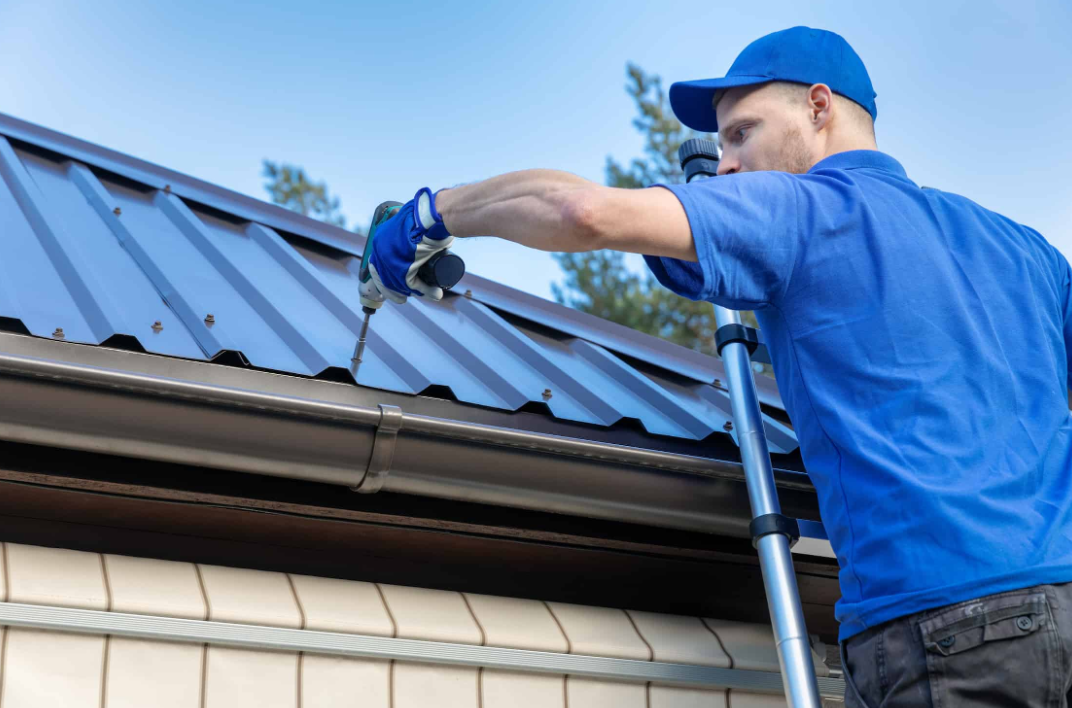
First: What Does "130 MPH" Actually Mean?
This is where roofing terminology can get confusing.
When a manufacturer says a shingle has a 130 mph wind rating, homeowners may assume that means the roof is guaranteed to remain intact in any 130 mph wind.
That's not what the number should be taken to mean.
A manufacturer's wind-speed figure is generally tied to the conditions of its testing, installation requirements, warranty language, and product system.
For example, GAF currently states that certain shingles can have 130 mph maximum wind-speed coverage with Special Installation, while the same shingles may have 110 mph maximum wind-speed coverage without that Special Installation.
So the number is not simply a property of the shingle sitting by itself in a box.
The installation is part of the rating.
And that's the part homeowners often don't see.
The Same Shingle Can Have Two Different Wind Ratings
Consider a simplified example.
You select a particular architectural shingle.
The product is capable of being covered to:
110 mph with standard installation
or
130 mph with the manufacturer's special installation requirements.
The homeowner might think those are two different shingles.
They may not be.
GAF's current warranty information provides exactly this type of distinction: for certain products, 130 mph coverage requires a specified installation, while installations that don't qualify for the special requirements have a 110 mph maximum wind-speed coverage.
That's why comparing roofing proposals based only on the number printed next to "wind rating" can be misleading.
You need to ask:
"What installation requirements are being used to achieve that rating?"
What Does Nailing Have to Do With It?
A lot.
Asphalt shingles are attached to the roof deck with roofing nails. Wind creates forces that try to lift and peel the shingles from the roof.
The nails have to hold the shingle securely enough to resist those forces.
But it's not simply a matter of throwing more nails at the roof.
Where the nail goes matters.
Manufacturers specify a particular nailing zone on the shingle. Installing the nail outside the prescribed area can reduce the effectiveness of the fastening system and may also affect warranty eligibility.
Owens Corning emphasizes that the nailing zone is a critical part of shingle performance because it influences resistance to wind, water, and long-term wear.
That's why a roofing crew's installation technique matters even when the homeowner has selected a high-quality shingle.
Four Nails vs. Six Nails Can Change the Answer
Here's where the difference becomes especially interesting.
Some shingle systems allow different fastening patterns depending on the desired wind-performance level.
GAF, for example, currently specifies that certain LayerLock-labeled shingles can qualify for 130 mph coverage with its Special Installation using four nails per shingle, along with specified starter-strip products at the eaves and rakes. For other GAF shingles, Special Installation for 130 mph coverage requires six nails per shingle plus the specified starter strips. Without Special Installation, the applicable maximum wind-speed coverage can be 110 mph.
So more nails isn't automatically the answer.
The manufacturer's instructions for the specific shingle determine:
How many nails are required
Where the nails must go
What starter products are required
Whether additional components are necessary
What wind-speed coverage applies
The installation instructions are the roadmap.
The Nailing Zone Is More Important Than "How Many Nails?"
Yes.
Imagine a shingle that calls for four nails.
A crew installs four nails—but some are too high, too low, too close to an edge, or outside the manufacturer's designated fastening area.
Technically, there are four nails in the shingle.
But that doesn't mean the shingle has received the installation the manufacturer specified.
Owens Corning's SureNail technology is designed specifically around creating a clearly defined nailing area to help installers place fasteners consistently. The company says its testing evaluates factors including nail pull-through, nail blow-through, and delamination.
This is an important distinction:
Fastener count is not the same thing as fastening quality.
What Happens When a Nail Is in the Wrong Place?
Several things can go wrong.
The nail can miss the intended fastening zone
The nail may not engage the shingle layers the way the manufacturer intended.
The nail can be underdriven
The nail head may not sit correctly against the shingle.
The nail can be overdriven
The nail head can cut into the shingle rather than properly securing it.
The nail can be driven at an angle
An improperly angled fastener can reduce holding performance.
The nail can be placed too close to a joint
Manufacturers can specify minimum distances from shingle joints to help maintain proper fastening.
GAF specifically notes that nails should be installed correctly and warns against underdriven, overdriven, and angled fasteners.
So when someone says, "We're using six nails, so it's a 130 mph roof," that's not enough information.
The specific shingle, fastening pattern, nail placement, and other required installation details all matter.
Starter Strips Matter Too
This is another part homeowners often overlook.
The shingle itself isn't the entire roofing system.
For certain GAF wind-warranty configurations, achieving the higher wind-speed coverage requires manufacturer-approved starter strip products at the eaves and rakes in addition to the specified shingle nailing pattern.
Why?
Because the edges of a roof can experience significant wind forces.
If you're building a system designed to achieve a particular wind-performance level, the components at the roof perimeter can't simply be treated as an afterthought.
That's why a roofing proposal that says "130 mph shingles" isn't enough.
Ask what makes the complete installation eligible for that rating.
What About the Ridge?
The ridge deserves its own attention.
Ridge-cap shingles are exposed differently from shingles installed across the main roof field, and manufacturers can have separate installation requirements for them.
GAF's warranty language specifically states that ridge-cap shingles must be installed according to the applicable instructions to qualify for the stated maximum wind-speed coverage.
So if you're evaluating a high-wind roofing system, don't just ask about the field shingles.
Ask:
"What wind rating applies to the ridge-cap installation?"
Wind Rating vs. Building-Code Requirements
This distinction is extremely important.
A manufacturer's 110 mph or 130 mph wind-speed warranty number is not necessarily the same thing as the design wind speed required for your particular building.
Building codes deal with the structural design of the building and its components based on factors such as location, building characteristics, exposure, and other conditions.
A manufacturer's warranty may use a wind-speed number to describe the maximum wind speed covered under particular warranty conditions.
Those are related concepts, but they aren't interchangeable.
In other words:
Don't use a shingle warranty number as a substitute for determining the applicable building-code requirements for the property.
If a project has specific engineering or code requirements, those requirements need to be evaluated separately.
So Is a 130 MPH Shingle Better Than a 110 MPH Shingle?
Not necessarily.
That's one of the biggest misconceptions this topic creates.
If the same shingle can receive 110 mph coverage under one installation method and 130 mph coverage under another, the difference isn't necessarily that one shingle is inherently stronger.
You may instead be comparing:
Standard installation
versus
Special installation.
And that's why the details behind the number matter more than the number itself.
Of course, different products can also have different construction, adhesive systems, reinforcement, or testing results.
Owens Corning, for example, markets its Duration shingles with SureNail technology and cites high-wind performance testing as part of the product's design.
But don't assume that every 130 mph shingle is equivalent to every other 130 mph shingle.
Read the product-specific requirements.
The Warranty Is Part of the Story
Another common mistake is treating the wind number as if it were the entire warranty.
It isn't.
A manufacturer's warranty can have separate provisions for:
Wind coverage
Material defects
Algae resistance
Workmanship
Tear-off
Disposal
Installation requirements
Contractor certification
Required accessory products
For example, GAF's current warranty information lists a 15-year wind limited warranty term for the applicable shingles while the maximum wind-speed coverage varies depending on the product and installation method.
Owens Corning likewise has different warranty levels and component requirements depending on the warranty program.
So when a contractor says, "This has a 130 mph warranty," ask what that actually means.
Why the Contractor Matters
This is the part homeowners can't see by looking at a shingle sample.
A manufacturer can design a shingle with a specific nailing zone and wind-performance capability.
But someone still has to install it.
The contractor has to:
Follow the correct fastening pattern
Hit the manufacturer's nailing zone
Use the correct starter product
Follow ridge-cap requirements
Use the correct fasteners
Set the nail gun properly
Avoid underdriven and overdriven nails
Follow the manufacturer's application instructions
The best product specification can't compensate for an installation that doesn't follow the specification.
That's why "What shingles are you using?" is only half of the roofing question.
The other half is:
"How are you installing them?"
How to Compare Two Roofing Proposals
Let's say Contractor A writes:
Architectural shingles — 130 mph.
Contractor B writes:
Architectural shingles — 110 mph.
At first glance, Contractor A appears to offer the better roof.
But you don't yet know enough to make that conclusion.
Ask both contractors:
1. What exact shingle model are you installing?
"Architectural shingle" is a category, not a complete product specification.
2. What is the manufacturer's standard wind coverage?
Find out what the specific product provides under its standard installation.
3. What installation is required for the higher wind rating?
Ask whether the 130 mph number requires special installation.
4. How many nails per shingle?
Then ask the more important follow-up:
Where are those nails going?
5. What starter strips are included?
Don't assume any starter strip qualifies for every manufacturer's wind program.
6. Does the ridge-cap installation have separate requirements?
It may.
7. Are the installation instructions being followed exactly?
This sounds obvious.
It's still worth asking.
8. What does the warranty actually cover?
Ask for the applicable manufacturer warranty rather than relying on a sales description.
What a Good Roofing Proposal Should Tell You
A strong proposal doesn't need to become a technical engineering report.
But it should make the important product and installation details clear enough that you can compare bids.
Look for:
Manufacturer
Exact shingle product
Shingle color
Underlayment
Starter strips
Ridge-cap product
Number of nails where relevant
Special installation requirements
Tear-off scope
Decking allowance
Flashing scope
Ventilation
Cleanup
Applicable warranties
If one proposal says "130 mph shingles" and the other says "110 mph shingles," don't automatically choose the first one.
Find out why.
You may discover that you're comparing different products.
Or you may discover that you're comparing two installation methods for essentially the same product.
A Real-World Example
Imagine a homeowner gets two proposals for the same roof.
Proposal A
Same basic shingle family
Standard installation
110 mph maximum wind-speed coverage
Proposal B
Same basic shingle family
Manufacturer's special installation
Additional fastening requirements
Required starter-strip products
130 mph maximum wind-speed coverage
The second proposal may genuinely provide a higher level of manufacturer wind coverage.
But it doesn't necessarily mean the contractor bought a dramatically stronger shingle.
The difference may be the roofing system and installation method.
That's exactly why understanding the fine print can be more valuable than simply looking at the biggest number on the proposal.
What Homeowners Should Watch for During Installation
You don't need to climb onto your roof to inspect every nail.
In fact, you shouldn't.
But you can ask the contractor questions before the work starts.
Ask for the manufacturer's installation instructions and confirm:
What fastening pattern is being used?
How many nails are required?
Where is the specified nailing zone?
What starter product is being installed?
What ridge-cap product is being used?
Is the installation intended to qualify for the higher wind-speed warranty?
Are there any special requirements for this particular roof?
A reputable contractor should be able to explain the installation without making it sound like you're asking an unreasonable question.
Don't Let "130 MPH" Become a Marketing Number
A wind rating can be useful information.
But without context, it's just a number.
A 130 mph claim should lead to more questions:
130 mph under what conditions?
With what installation?
How many nails?
What starter strips?
What ridge-cap system?
What does the manufacturer's warranty actually say?
Those questions are far more useful than simply asking which contractor has the biggest wind number.
The Bottom Line
A shingle's wind performance isn't determined by the shingle alone.
The product matters.
The nailing zone matters.
The number of fasteners matters.
The placement of those fasteners matters.
Starter strips matter.
Ridge caps matter.
And the installation instructions matter.
That's why the same general shingle product can have different maximum wind-speed coverage depending on how it is installed. GAF's current warranty documentation provides a clear example of 110 mph coverage under standard installation versus 130 mph coverage when specified Special Installation requirements are met.
So the next time you see 110 mph vs. 130 mph on two roofing proposals, don't immediately assume you're comparing two different-quality shingles.
Ask what changed.
Because sometimes the difference isn't what's sitting on the roof.
It's how the roof was put together.
10 Questions Homeowners Ask About Shingle Wind Ratings
1. Are 130 mph shingles stronger than 110 mph shingles?
Not necessarily. The difference can come from the product itself, the installation method, or both. Some manufacturers provide different wind-speed coverage for the same product depending on how it is installed.
2. Can the same shingle have a 110 mph and 130 mph rating?
Yes. GAF currently provides examples where certain shingles have 110 mph maximum wind-speed coverage without Special Installation and 130 mph coverage when specified Special Installation requirements are met.
3. Does using more nails automatically make a roof 130 mph?
No. The manufacturer specifies both the number and placement of fasteners. The nails need to be installed in the proper nailing area and according to the applicable instructions.
4. Why does the nailing zone matter?
The nailing zone is where the fasteners are intended to secure the shingle. Manufacturers design and test their products around this fastening area. Owens Corning specifically identifies the nailing zone as critical to wind and long-term performance.
5. Can a roofing nail be in the wrong place even if the shingle has enough nails?
Yes. Fastener location matters. A nail outside the specified fastening area may not provide the intended holding performance and can affect warranty eligibility.
6. Do starter strips affect wind ratings?
They can. Some manufacturer wind-warranty programs require specific starter-strip products and installation at the eaves and rakes to qualify for higher wind-speed coverage.
7. Does the ridge cap have its own wind requirements?
It can. Manufacturers may specify separate installation requirements for ridge-cap shingles, so the ridge shouldn't be ignored when evaluating a high-wind roofing system.
8. Is a 130 mph warranty the same thing as a building-code wind requirement?
No. A manufacturer's warranty wind-speed limit and the building's applicable design requirements are different concepts. Code requirements should be evaluated separately for the specific property.
9. Should I choose the contractor advertising the highest wind rating?
Not based on that number alone. Ask what product, installation method, fastening pattern, accessories, and warranty conditions produce the stated rating.
10. What's the most important roofing question to ask?
Ask:
"What exact installation method are you using to achieve the wind rating you're quoting me?"
That question gets you much closer to understanding what you're actually buying.
Get Started With a Free Consultation
Planning a roof replacement in the Austin area? JP Exteriors can help you compare roofing materials, understand your options, and make sure the details of your roofing system are clear before work begins.
Remember: When you refer a friend or neighbor for windows, siding, roofing, or door replacement, you can earn up to $250 through the JP Exteriors Referral Program.
Subscribe to JP Exteriors's Blog



Comments