Weather windows, lead times, and how to avoid peak-season backlogs
Planning an exterior remodeling project in Central Texas involves more than choosing materials and setting a budget. The time of year you schedule your project can affect contractor availability, material lead times, weather delays, and how soon you can enjoy the finished result.
Texas weather offers opportunities to complete exterior improvements throughout much of the year, but each season comes with different considerations. Spring brings comfortable temperatures alongside unpredictable storms. Summer offers long working days but intense heat. Fall provides another stretch of milder weather, while winter can be an excellent time to plan ahead and tackle certain projects before demand picks up again.
Whether you're considering new siding, replacement windows, a Trex deck, or a covered patio, understanding these seasonal patterns can help you plan with fewer surprises.
When Is the Best Time of Year for Exterior Remodeling in Texas?
For many Central Texas homeowners, fall and early spring are excellent windows for exterior remodeling. Temperatures are often more comfortable for outdoor work, and certain projects benefit from avoiding the most intense summer heat.
However, the best time to schedule a project depends on what you're having done, the materials involved, and your preferred completion date.
Here's a general overview of what to expect throughout the year.
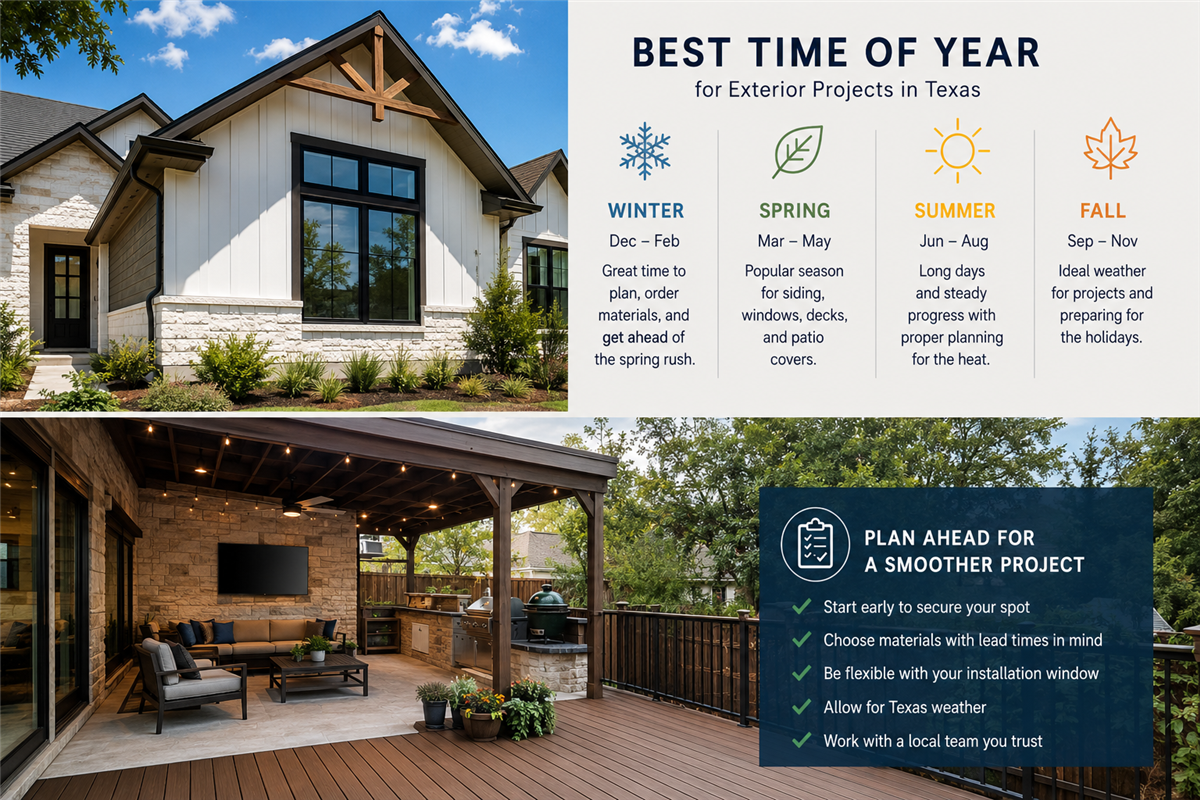
Winter: Plan Ahead and Get Ahead of the Spring Rush
December through February can be a smart time to start planning an exterior renovation. Central Texas winters are relatively mild compared with much of the country, so many exterior projects can proceed during suitable weather.
Winter is particularly useful for homeowners who want to get their project scoped, select materials, finalize a design, and secure a place on the contractor's schedule before spring demand increases.
Projects to consider:
Replacement windows, especially if you want improved comfort before summer.
Siding replacement for homes that need an exterior refresh or have deteriorating materials.
Deck and patio cover planning, including design decisions and material selection.
Exterior painting when temperatures, surface conditions, and product requirements allow.
The main consideration is weather variability. Cold fronts, freezing temperatures, rain, and wet ground can temporarily delay installation, painting, caulking, or work that requires concrete footings.
Winter also includes the holiday period, when supplier schedules and contractor availability may be affected. If you want your project completed early in the new year, begin planning before the holidays whenever possible.
Spring: A Popular Time for Exterior Improvements
March through May is a natural time for homeowners to address exterior projects. Warmer temperatures, longer days, and more time spent outdoors make it an appealing season to replace aging siding, upgrade windows, or improve an outdoor living area.
The challenge is that spring is also a busy period for many remodeling contractors. Severe thunderstorms, hail, and heavy rain can increase demand for storm-related repairs while interrupting projects already underway.
Projects to consider:
Siding replacement before the hottest months arrive.
Window replacement to improve comfort ahead of summer.
Deck construction and patio cover installation before peak outdoor entertaining season.
Exterior painting when conditions are suitable.
Spring can be an excellent choice, but waiting until April or May to begin planning may limit your scheduling flexibility. If you have a specific event, vacation, or summer deadline in mind, start the consultation process during winter or early spring.
One additional consideration is moisture. Rain can delay work even when temperatures are comfortable, particularly when installation involves exposed wall assemblies, surface preparation, or concrete footings.
Summer: Make Progress Despite the Texas Heat
June through August brings long daylight hours, but Central Texas heat can make exterior construction more challenging.
That doesn't mean summer is a bad time to remodel. Experienced crews can complete many projects during the warmer months, provided they account for heat, surface temperatures, material requirements, and safe working conditions.
Projects to consider:
Window replacement before or during the hottest part of the cooling season.
Patio covers and pergolas that add shade to outdoor living areas.
Deck construction, including Trex composite decking.
Siding replacement when the home needs attention and waiting would create additional problems.
Summer scheduling requires more attention to the conditions at the job site. Direct sunlight can heat exterior surfaces well beyond the surrounding air temperature. Sealants, caulks, paints, and other installation materials must be used within their specified application conditions.
Afternoon thunderstorms can also interrupt work, and extreme heat may affect working hours and productivity.
For outdoor living projects, summer can still be a worthwhile time to build. Just keep in mind that the goal is not simply to finish quickly; the installation must be completed according to the materials' requirements and the project's specifications.
Fall: A Strong Window for Siding, Windows, and Outdoor Living
September through November offers another favorable stretch for many exterior remodeling projects. As temperatures begin to moderate, outdoor working conditions often become more comfortable.
Fall is especially attractive for homeowners who want to address aging siding, replace inefficient windows, or prepare their outdoor spaces for cooler-weather gatherings.
Projects to consider:
Full siding replacement and exterior painting.
Replacement windows and exterior doors.
Decks, pergolas, and covered patio structures.
Exterior improvements you want completed before the holidays or the following spring.
Fall is not automatically the quietest season for contractors. Many homeowners recognize the benefits of the weather and aim for the same installation window. Scheduling can become competitive, especially in October and November.
September can also bring lingering summer heat, while rain and occasional severe weather remain possible. A late-season project may face additional scheduling pressure as the holidays approach.
If fall is your preferred installation window, consider requesting an estimate during the summer. That gives you time to make decisions and coordinate material orders before your ideal dates fill up.
The Best Time to Schedule Each Type of Project
Seasonal weather matters, but siding, windows, decks, and patio covers each have different planning requirements. Here's how to approach each one.
Siding Replacement: Spring or Fall
Siding replacement involves more than attaching new boards or panels. Depending on the project, the work may include removing old siding, inspecting the underlying wall, addressing damaged materials, installing new siding, and completing caulking and painting.
Spring and fall often provide favorable conditions for this work, particularly when temperatures are moderate and surfaces can remain dry during installation and finishing.
Summer projects are possible, but extreme heat and direct sunlight require attention to installation practices and product requirements. Winter projects may also proceed during suitable weather, although freezing conditions can affect some materials and finishing products.
For homeowners considering James Hardie fiber cement siding, proper installation is particularly important. Product-specific instructions, appropriate clearances, fastening methods, and suitable conditions for caulking and painting all matter.
Planning tip: If you want your siding replaced before summer or before the holidays, begin the process well in advance. A full siding replacement at JP Exteriors typically takes around four to five working days once installation begins, depending on the home's size, project scope, and weather. The full process takes longer because estimating, scheduling, and material preparation happen first.
Window Replacement: Plan Around Manufacturing Lead Times
Window replacement is a project where planning ahead can make a significant difference.
Unlike some materials that may be readily available, replacement windows are measured and ordered for the individual openings in your home. Once the contract is signed and final measurements and selections are confirmed, manufacturing and delivery take time.
At JP Exteriors, window projects generally involve approximately four to six weeks for manufacturing, followed by another one to two weeks for installation scheduling after the windows arrive. The overall timeline can vary based on the product, supplier, order complexity, and availability.
That means the best time to begin a window project is not necessarily the season when you want the installation to happen.
For example, if you want new windows installed before summer, starting the consultation and selection process in winter or early spring gives you more room to accommodate ordering and scheduling.
Window replacement can take place during much of the year. Crews typically work one opening at a time, but weather, the number of windows, and site conditions can influence the installation schedule.
Planning tip: Don't wait until the first major heat wave to start researching replacement windows if your goal is to have them installed before summer.
Decks and Patio Covers: Start Planning Before Outdoor Season
Decks, pergolas, and patio covers are often planned around how homeowners want to use their outdoor spaces.
If you want a new deck ready for spring gatherings or summer entertaining, beginning the design process during winter can give you more time to finalize the layout, choose materials, and coordinate installation.
If fall is your preferred construction season, summer is a good time to start planning.
Outdoor living projects may involve more than the visible structure. Depending on the design, they can require site preparation, structural considerations, concrete footings, drainage planning, HOA approval, or permits. Requirements vary by project and location, and any necessary approvals can affect the schedule.
Material choice also matters. Composite decking, such as Trex, has different care and installation considerations than wood decking. Covered structures may require additional planning for attachment points, drainage, and how the new structure interacts with the existing home.
Summer construction is possible, but high temperatures can make work more demanding. Spring rain may affect excavation and concrete work, while winter freezes can temporarily delay certain tasks.
Planning tip: Decide when you want to use the finished space, then work backward to determine when to begin the consultation, design, approvals, and scheduling process.
Understanding Project Lead Times: Installation Is Only One Part of the Timeline
One of the most common planning mistakes is focusing only on how many days the crew will be at your home.
The full timeline typically includes several stages:
Consultation and measurements. Your contractor evaluates the project, discusses options, and gathers the information needed to prepare an estimate.
Proposal and selections. You review the scope, materials, colors, and other details before approving the project.
Ordering and preparation. Materials are ordered, and the project is coordinated with the installation schedule.
Installation. The crew completes the work, with the duration depending on the project type and size.
Final details. Finishing work, cleanup, and any necessary follow-up are completed.
Each stage can be affected by material availability, project complexity, scheduling demand, and weather.
At JP Exteriors, general scheduling can be approximately four to six weeks out, while custom window orders have their own manufacturing and delivery timelines. These are planning guidelines rather than guaranteed completion dates; current availability and the specifics of your project will determine the actual schedule.
A project with a short installation period can still require several weeks of preparation before work begins.
How to Avoid Peak-Season Backlogs
You don't have to predict Texas weather perfectly to make good scheduling decisions. A few practical steps can help you avoid unnecessary delays.
1. Start the Conversation Before You Need the Work Completed
If you want a project finished by a particular date, contact a contractor early enough to allow for estimating, material selection, ordering, and scheduling.
For spring projects, winter is a useful planning period. For fall projects, consider starting during summer.
2. Be Flexible About Your Installation Window
If your schedule allows it, ask about alternative dates. Moving your preferred start date by a week or two may open up more options, depending on current demand.
Flexibility can be especially useful during spring storm season and the popular fall remodeling window.
3. Finalize Materials and Selections Promptly
Changes to window styles, siding selections, colors, or project scope can affect ordering and preparation. Taking time to make informed decisions is important, but once you're ready to proceed, finalizing the details helps keep the process moving.
4. Account for Weather Delays
A forecast of clear skies for one day does not guarantee suitable conditions throughout an entire project.
Rain can delay siding removal, painting, and concrete work. High temperatures may affect surface conditions and finishing products. Freezing weather can temporarily interrupt certain installation activities.
Allow some flexibility in your plans, especially if you're coordinating the project around travel, celebrations, or other contractors.
5. Don't Delay Necessary Repairs Just to Reach the Ideal Season
Seasonal recommendations are most useful when you're planning an elective upgrade.
If your siding is allowing water to enter, your windows are damaged, or an exterior structure has a safety concern, waiting several months for a preferred installation window may not be the right choice.
Have the problem assessed and discuss appropriate next steps. Addressing an active issue takes priority over trying to find the perfect season.
Should You Wait for a Better Season to Remodel?
Not necessarily.
The right time to start depends on the condition of your home, your goals, the materials involved, and how soon you want the project completed.
If you're planning ahead, spring and fall are often attractive seasons for exterior remodeling because of their generally moderate temperatures. Winter can be a productive time to plan and complete suitable projects before demand increases, while summer remains a viable option when the work is scheduled and performed with heat and material requirements in mind.
The bigger advantage often comes from starting early. A homeowner who begins planning several months before a target completion date has more opportunity to compare options, finalize selections, and coordinate the project than someone who waits until the desired season is already underway.
Frequently Asked Questions
What is the best month for siding replacement in Central Texas?
October and November are often attractive months because temperatures tend to be more moderate. Early spring can also work well. Actual conditions, material requirements, contractor availability, and the condition of the existing siding should guide the final decision.
Can windows be replaced during the summer in Texas?
Yes. Window replacement can take place during summer, although high outdoor temperatures can affect working conditions and indoor comfort while openings are being serviced. Scheduling early in the day and keeping the work area organized can help minimize disruption.
How far in advance should I schedule new windows?
Start the process several weeks to a few months before your preferred installation date, depending on the product and your schedule. At JP Exteriors, manufacturing typically takes four to six weeks, followed by approximately one to two weeks for installation scheduling after arrival. Beginning early gives you more flexibility if timelines change.
Is winter a bad time to build a deck or patio cover?
Not necessarily. Many Central Texas outdoor projects can proceed during winter's milder periods. Freezing temperatures, rain, wet ground, and conditions affecting concrete footings or other materials may cause delays. The project's design and site conditions determine how suitable a winter installation will be.
Does scheduling during the off-season guarantee a faster or cheaper project?
No. Contractor availability and pricing vary with demand, material costs, project complexity, and current workload. An off-season inquiry may offer more scheduling flexibility, but it is best to request a project-specific estimate and timeline rather than assume a discount or immediate start.
What if my siding or windows need attention before the ideal season?
You don't need to wait for a preferred season if the condition of your home requires attention. Have the issue evaluated and discuss the safest, most practical way to address it. A contractor can help determine whether the work can proceed under current conditions or whether particular steps need to wait for suitable weather.
Get Started With a Free Roofing Consultation
Planning an exterior project is easier when you understand your options, expected lead times, and the work involved. JP Exteriors helps Central Texas homeowners explore exterior improvements, including James Hardie siding, replacement windows, decks, and patio covers.
Whether you're preparing for spring, getting ahead of the fall rush, or simply deciding which project to tackle next, our team can help you take the next step.
Remember: When you refer a friend or neighbor for windows, siding, roofing, or door replacement, you can earn up to $250 through the JP Exteriors Referral Program.
Subscribe to JP Exteriors's Blog



Comments