Why Your Windows Are Hard to Open: Warped Frames, Failed Balances, and When It's Time to Replace
You reach for a window on a warm Central Texas morning, expecting to let in some fresh air. Instead, it barely moves. Maybe it takes both hands to lift it. Maybe it slides halfway and gets stuck. Or perhaps it opens normally but won't stay up.
Before you assume the entire window needs replacing, there's something worth knowing: a window that's hard to open doesn't always have a failed frame. Sometimes the problem is dirt, paint buildup, a worn-out balance mechanism, or hardware that needs attention.
Other times, the window itself—or the opening it sits in—has changed enough that a simple adjustment won't solve the problem.
In Austin and the surrounding areas, heat, humidity, seasonal moisture changes, and movement in the home's framing can all play a role. Understanding the symptoms can help you determine whether you're looking at a relatively straightforward repair or a window that's reached the point where replacement deserves serious consideration.
Why Windows Become Hard to Open in Texas
Windows have moving parts that must fit and operate within relatively tight tolerances. When a track becomes obstructed, a balance loses tension, or a frame shifts out of alignment, the window may become difficult to operate.
Central Texas weather can add another layer to the problem. Long periods of intense sun heat window frames and glass, while humidity and rain can affect wood components and surrounding materials. Repeated temperature and moisture changes put stress on the entire window assembly.
That doesn't mean a quality vinyl window will warp simply because Austin has a hot summer. Window design, material, installation, exposure, and maintenance all influence how a window performs over time.
The most useful first step is to identify exactly what the window is doing.
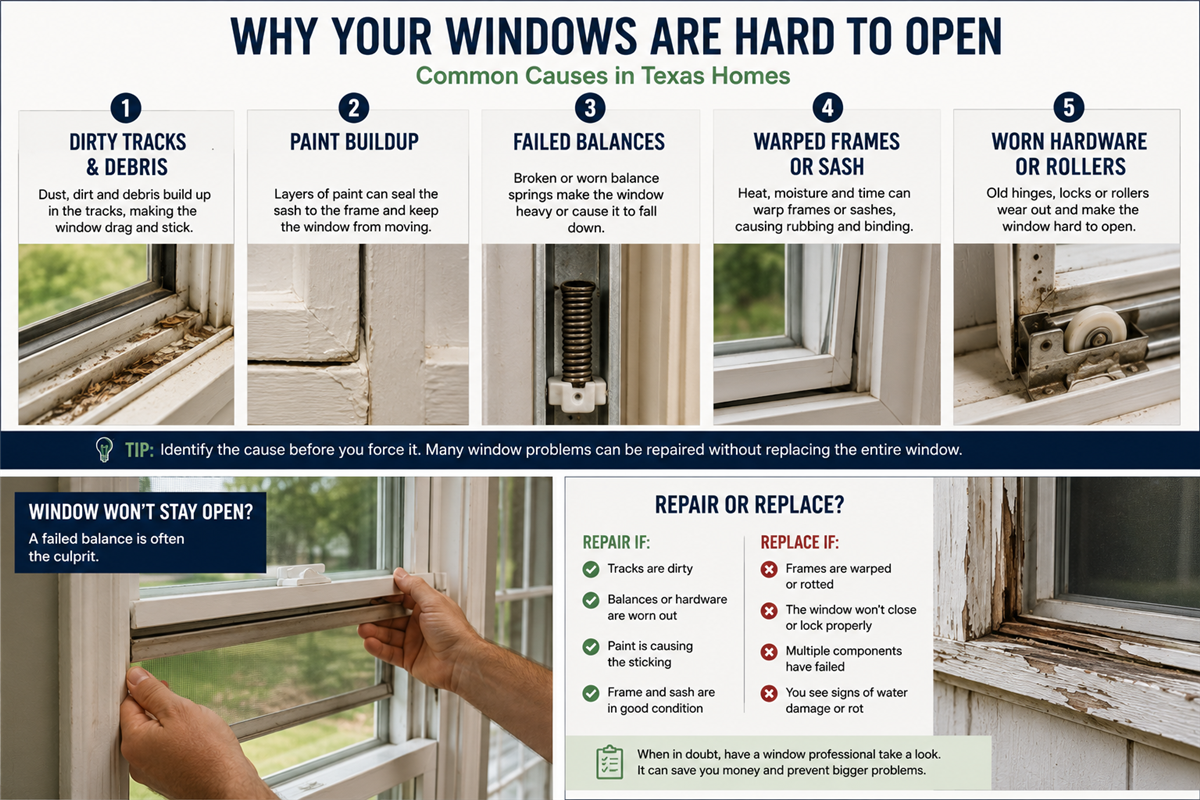
1. Dirty Tracks and Debris Buildup
If your window slides but feels gritty, catches in certain spots, or becomes progressively harder to move, start by checking the tracks and channels.
Dust, pollen, leaves, insect debris, and old lubricant can accumulate in the areas where the sash moves. Even a relatively new window can develop operating problems if debris builds up or installation materials are left in the track.
What you might notice
The window moves more easily in some spots than others.
You hear scraping or grinding when opening it.
The sash moves after you apply extra force but doesn't glide smoothly.
Visible dirt or debris has collected along the track.
Can it be fixed?
Often, yes.
Vacuum loose debris from the track, wipe the surfaces clean, and check for visible obstructions. If the manufacturer permits lubrication, use the type specified for that window. Many windows call for a silicone-based or dry lubricant rather than a heavy oil that can collect dirt.
Avoid forcing the sash if it remains stuck. Excessive pressure can damage the track, hardware, or glass.
If cleaning doesn't help, the track may be damaged, a roller may be worn, or the sash may be misaligned.
2. Paint Has Sealed the Window Shut
This problem is especially common with older wood windows that have been painted repeatedly.
When paint bridges the narrow gap between the movable sash and the frame, it can effectively glue the window closed. Several layers of paint can make the bond stronger over time.
What you might notice
The window feels completely immovable, even though you don't see an obvious obstruction. You may also notice thick paint along the edges where the sash meets the frame.
Can it be fixed?
Sometimes.
If paint buildup is the only problem, carefully cutting through the paint line with an appropriate tool may free the sash. Work gently, and avoid putting pressure on the glass or damaging the weatherstripping.
Older painted windows may contain lead-based paint. If the home was built before 1978, consider the possibility of lead before disturbing painted surfaces, and follow appropriate lead-safe practices.
If the window remains stuck after the paint is released, there may be another problem, such as swollen wood, failed hardware, or frame distortion.
3. Failed Window Balances: When the Window Won't Stay Open
A window that slides upward but immediately drops back down may have a failed balance mechanism.
Many double-hung windows use spring-loaded balances to counteract the weight of the sash. These mechanisms help the window move smoothly and remain in position when opened.
When a balance wears out, loses tension, or breaks, the sash may become difficult to lift or may no longer stay open.
What you might notice
The window feels unusually heavy when you lift it.
One side rises more easily than the other.
The sash drops after you release it.
The window previously operated smoothly but has gradually become harder to open.
Can it be fixed?
In many cases, yes.
A window professional may be able to replace the failed balance without replacing the entire window. The correct replacement depends on the manufacturer, model, sash weight, and balance design.
The same principle applies to other operating hardware. Casement windows use crank operators and hinges, while sliding windows may use rollers. A failed component can sometimes be replaced independently.
Important: Don't rely on a broken balance to hold a heavy sash open. A sash that falls unexpectedly can cause injury or damage. Have the mechanism assessed before continuing to use the window.
4. Warped Frames and Sash Problems
A warped frame can make a window difficult to operate because the sash no longer fits correctly within its opening.
Wood can expand with moisture and contract as conditions change. In some cases, this produces temporary seasonal sticking. Long-term moisture exposure, deterioration, or physical damage can cause more persistent distortion.
Vinyl frames can also experience operating problems if the window is poorly designed for its size and exposure, improperly installed, or subjected to stresses that distort the frame.
Dark-colored frames deserve particular attention when exposed to intense direct sunlight because they can absorb more solar energy. However, frame color alone does not prove that heat has caused a window to warp.
What you might notice
The sash rubs against one side of the frame.
The gap around the closed window looks uneven.
The frame or sash appears visibly bowed or twisted.
The window has become increasingly difficult to operate despite clean tracks and functioning hardware.
You see signs of moisture damage, soft wood, or deterioration around the frame.
Can it be fixed?
That depends on the severity and cause.
A minor issue with an adjustable component or a replaceable sash may be repairable. A wood sash with limited damage may also be a candidate for restoration, depending on its condition.
But a permanently distorted, deteriorated, or structurally compromised frame may not be worth repairing. If the frame can no longer maintain proper alignment or the window cannot close and seal correctly, replacement may be the more reliable option.
Before deciding, determine whether the problem is confined to the window itself or whether the surrounding wall opening has moved.
5. Foundation Movement or an Out-of-Square Opening
Sometimes the window isn't the original problem.
A window can be installed correctly and later begin binding if the surrounding framing shifts. In other cases, an installation that wasn't properly aligned can cause a window to operate poorly from the beginning.
Central Texas has expansive clay soils in many areas. Depending on soil conditions, drainage, foundation design, and maintenance, changes in soil moisture can contribute to foundation movement.
That doesn't mean every sticking window indicates a foundation problem. One difficult window may simply have a worn balance or dirty track.
However, if several windows begin sticking around the same time—or you notice other signs of movement—it may be worth investigating the larger picture.
Signs to pay attention to
Multiple windows or doors become difficult to operate.
Latches no longer line up properly.
Gaps around frames appear uneven.
New or widening cracks develop around nearby openings.
The window binds even after its hardware has been checked.
Can it be fixed?
The right response depends on what's moving.
If the problem is a minor window installation or hardware issue, a qualified professional may be able to correct it. If the rough opening or surrounding structure has shifted, simply installing a new window may not resolve the underlying cause.
Where there are broader signs of foundation movement, have the cause evaluated before committing to window replacement. Otherwise, the same operating problem could return.
6. Worn Cranks, Hinges, Locks, and Rollers
Not every hard-to-open window slides vertically. Casement windows swing outward using a crank, while horizontal sliders move along rollers and tracks.
Each style has its own potential failure points.
A stripped crank may turn without moving the sash. Worn hinges may cause a casement window to sag. Damaged rollers can make a sliding window drag. A misaligned latch may prevent the sash from closing or locking correctly.
Can these parts be replaced?
Often, yes—provided the frame and sash remain in good condition and replacement parts are available.
Older or discontinued window models can be more challenging. Even when the window itself appears sound, unavailable hardware may make repair impractical.
Before replacing an entire unit, ask whether the specific operator, hinge, roller, latch, or balance can be serviced independently.
Repair vs. Replacement: How to Decide
The best choice depends less on how annoying the problem is and more on what has failed.
| Problem | Is repair often possible? | When replacement deserves consideration |
|---|---|---|
| Dirty tracks or debris | Yes; cleaning may solve it | Track is damaged or the frame is also deteriorated |
| Paint buildup | Often, if paint is the only issue | Sash or frame is damaged or other failures are present |
| Failed balances | Often; balances may be replaceable | Parts are unavailable or other major components have failed |
| Worn crank, hinge, or roller | Often; hardware may be replaceable | Frame or sash damage prevents reliable operation |
| Minor seasonal wood swelling | Sometimes; depends on condition | Persistent distortion, rot, or recurring moisture damage |
| Warped or deteriorated frame | Depends on severity | Frame is permanently distorted or cannot maintain a proper seal |
| Out-of-square installation | Sometimes; professional adjustment may help | Correction isn't practical or the unit is unsuitable for the opening |
| Building or foundation movement | Address the underlying cause first | Replacement may be appropriate after the opening is evaluated |
A window's age alone shouldn't determine the decision. A relatively new window with a failed balance may be worth repairing, while an older window with a deteriorated frame, damaged glass, and recurring air leakage may be a better replacement candidate.
It's also worth considering the broader project. If you're already planning to replace several aging windows, compare the cost of repairing individual units with the cost and expected benefits of replacing them together.
Why Hard-to-Open Windows Matter Beyond Convenience
A window that won't open is inconvenient, but the consequences can extend beyond everyday use.
Security
A window that won't close completely or whose lock won't engage may leave the home less secure. Don't assume that a stuck sash is safely closed just because it appears to be in place.
Energy performance
If a window no longer closes or latches properly, gaps can allow unwanted air movement. This can make a room less comfortable and may increase the load on your heating and cooling system.
A difficult-to-open window doesn't automatically mean it leaks air. The actual condition of the seals, weatherstripping, and frame determines how well it performs.
Water intrusion
A window that no longer fits correctly may have gaps that allow wind-driven rain to enter. If you see staining, soft wood, peeling paint, or moisture around the opening, investigate the source rather than simply adjusting the hardware.
Emergency escape
A window intended to serve as an emergency escape opening needs to remain operable and meet applicable requirements. If a bedroom window is designated for emergency escape and cannot be opened, address the problem promptly. Don't assume that a nearby window automatically meets the same requirements.
A Simple Checklist Before You Call a Window Professional
You don't need to dismantle a window to make an initial assessment. A few observations can help narrow down the cause.
Identify the symptom. Does the window refuse to move, drag along its track, fall after opening, or fail to latch?
Look for visible obstructions. Check for dirt, debris, paint buildup, or damaged weatherstripping.
Inspect the frame. Look for visible bowing, rot, cracks, or uneven gaps.
Compare nearby windows. If several windows have developed the same problem, note whether doors or nearby trim show changes too.
Check the warranty and product information. If the window is relatively new, contact the manufacturer or installer before attempting repairs that could affect coverage.
Avoid forcing it. Excessive force can turn a repairable hardware problem into a broken sash or damaged glass.
If the window is heavy, visibly distorted, or unable to stay open safely, leave the repair to a qualified professional.
When It's Time to Consider Replacement Windows
Replacement makes the most sense when the problem extends beyond a single repairable component.
Consider getting a replacement estimate when:
The frame or sash is significantly warped, rotted, or damaged.
Several major components have failed.
The window no longer closes, locks, or seals properly.
Replacement parts for an older model are unavailable.
Repeated repairs have not restored dependable operation.
You want to address other issues, such as deteriorated frames, persistent drafts, or outdated glass, as part of a larger project.
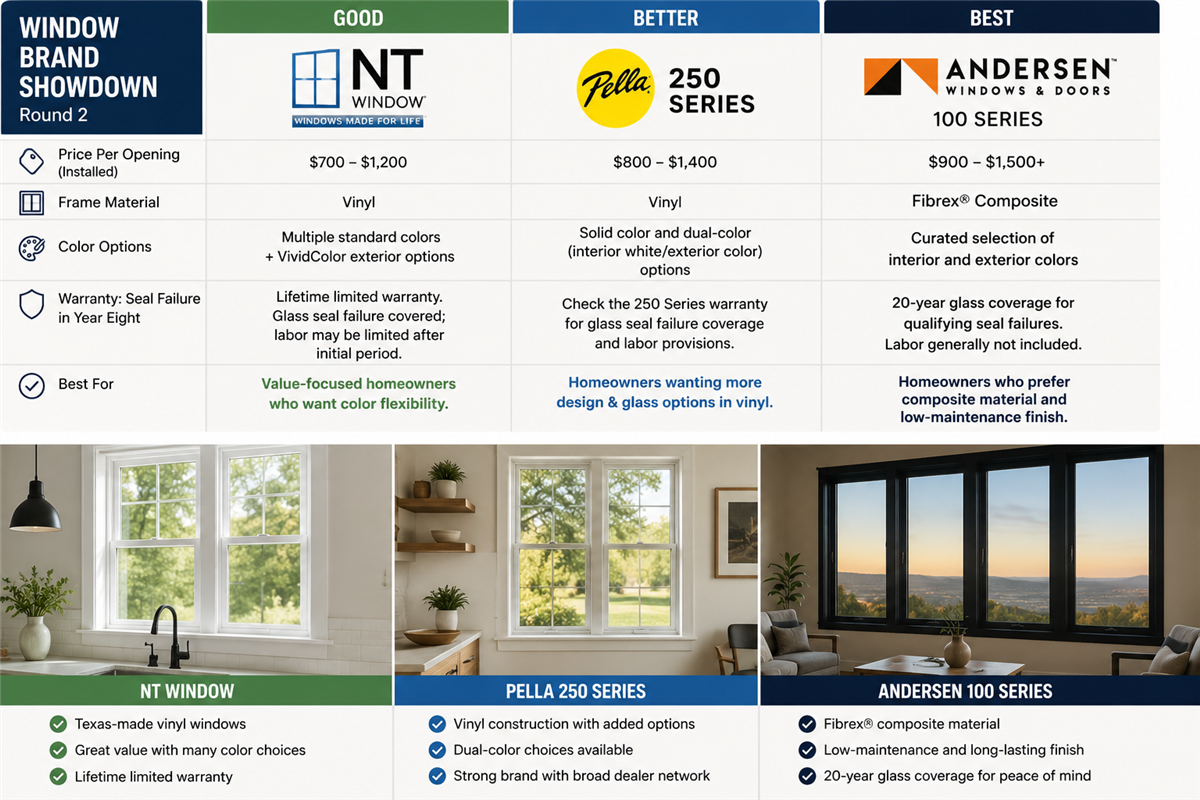
Replacement is also an opportunity to evaluate frame material and glass options for your home's exposure to Texas heat. Vinyl, fiberglass, and composite windows each have different characteristics, and the right choice depends on the opening, design, budget, and performance goals.
For a closer look at those differences, read our guide to vinyl, fiberglass, or composite windows in Texas heat.
The goal isn't to replace a window just because it sticks. It's to identify the cause and choose the most practical long-term solution.
Frequently Asked Questions
Why are my windows hard to open when it's hot outside?
Temperature changes can affect window components, and humidity can cause wood to swell. Direct sunlight may also heat frames significantly. However, heat isn't the only possible cause. Dirty tracks, failed balances, worn hardware, paint buildup, and installation issues can produce similar symptoms.
Can a window balance be replaced without replacing the entire window?
Often, yes. Many double-hung windows have replaceable balance mechanisms. Whether repair is practical depends on the window model, the condition of the sash and frame, and the availability of compatible parts.
Does a hard-to-open window mean the frame is warped?
No. A stuck window may have a simple problem, such as debris in the track or paint bridging the sash and frame. Visible distortion, uneven gaps, or persistent binding after hardware and track checks warrant a closer inspection.
Should I replace all my windows if only one is sticking?
Not necessarily. If the problem is isolated to one repairable component, replacing the entire window—or every window in the house—may be unnecessary. If several windows are failing or the existing frames are deteriorating, a broader replacement project may be worth evaluating.
Can I use WD-40 on a window track?
Check the window manufacturer's instructions first. Many window tracks are better suited to a specified silicone-based or dry lubricant, and heavy oils can attract dirt and leave residue. Cleaning the track before applying any approved lubricant is important.
Is a window that won't open a safety concern?
It can be, particularly if the window is intended to serve as an emergency escape opening. A window that won't close or lock can also create a security concern. Address these issues promptly rather than waiting for routine maintenance.
Get Started With a Free Consultation
If your windows are becoming difficult to open, close, or lock, identifying the cause is the first step toward making the right decision. JP Exteriors helps homeowners throughout Central Texas explore window replacement options and determine which solutions best fit their homes and budgets.
Remember: When you refer a friend or neighbor for windows, siding, roofing, or door replacement, you can earn up to $250 through the JP Exteriors Referral Program.
Subscribe to JP Exteriors's Blog


Comments