For homeowners in Austin and throughout Central Texas, window performance isn't just about keeping winter air outside.
It's about what happens when the thermometer hits 105°F, the afternoon sun is beating directly against the glass, and a dark-colored window frame is absorbing even more heat.
That's when the differences between vinyl, fiberglass, and composite window frames become much more important.
All three can be excellent choices. But they don't respond to heat in exactly the same way.
The biggest questions are:
How much does the frame expand?
What happens with dark-colored frames?
Can extreme heat contribute to warping?
How does temperature affect seals and glass?
Which material makes the most sense for a Texas home?
Let's break it down.
Why 105°F Is Different From an Ordinary Summer Day
A weather forecast of 105°F doesn't necessarily mean your window frame is reaching 105°F.
A window exposed to direct sunlight can become substantially hotter than the surrounding air.
A west-facing black window receiving several hours of afternoon sun can experience particularly high surface temperatures.
That's important because materials expand and contract as temperatures change.
The issue isn't simply:
"Can this window survive 105°F?"
Modern residential windows are designed to operate in hot climates.
The more useful question is:
"How does this particular frame material behave as temperatures repeatedly rise and fall?"
That's where vinyl, fiberglass, and composite begin to separate.
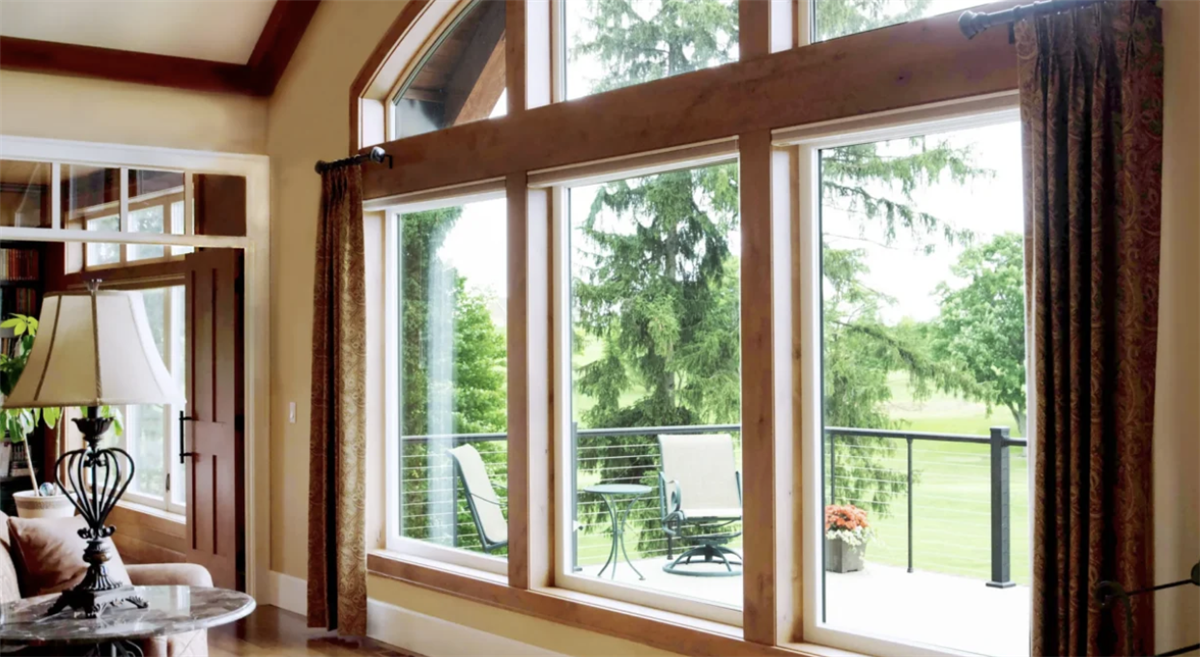
Vinyl Windows in Texas Heat
Vinyl is extremely popular in the residential window market, including Austin.
It's affordable, energy efficient, low maintenance, and doesn't require painting.
But vinyl has a higher coefficient of thermal expansion than fiberglass and many other frame materials.
In simple terms:
Vinyl moves more when temperatures change.
That doesn't mean a quality vinyl window is going to warp the first time Austin reaches 105°F.
It means the frame's movement needs to be accounted for in the design, manufacturing, installation, and especially the size of the window.
What About Dark Vinyl Windows?
This is where the conversation gets more complicated.
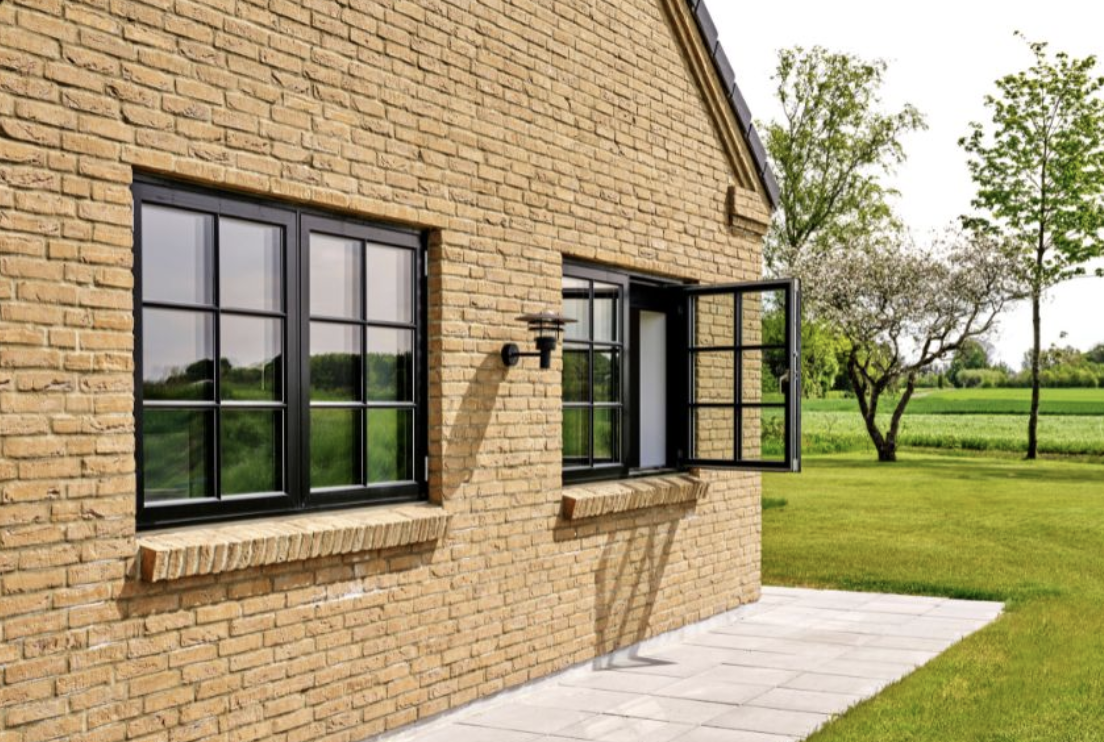
Black and other dark-colored vinyl frames absorb more solar radiation than lighter-colored frames.
That can cause the frame to reach much higher temperatures than the surrounding air.
The result can be greater thermal expansion.
On large units, poorly engineered products, or improperly installed windows, excessive movement can contribute to:
Frame distortion
Difficulty operating the window
Seal stress
Gaps
Premature component wear
That doesn't mean black vinyl is a bad choice in Texas.
It means you should pay more attention to the specific manufacturer's design and the size and orientation of the window.
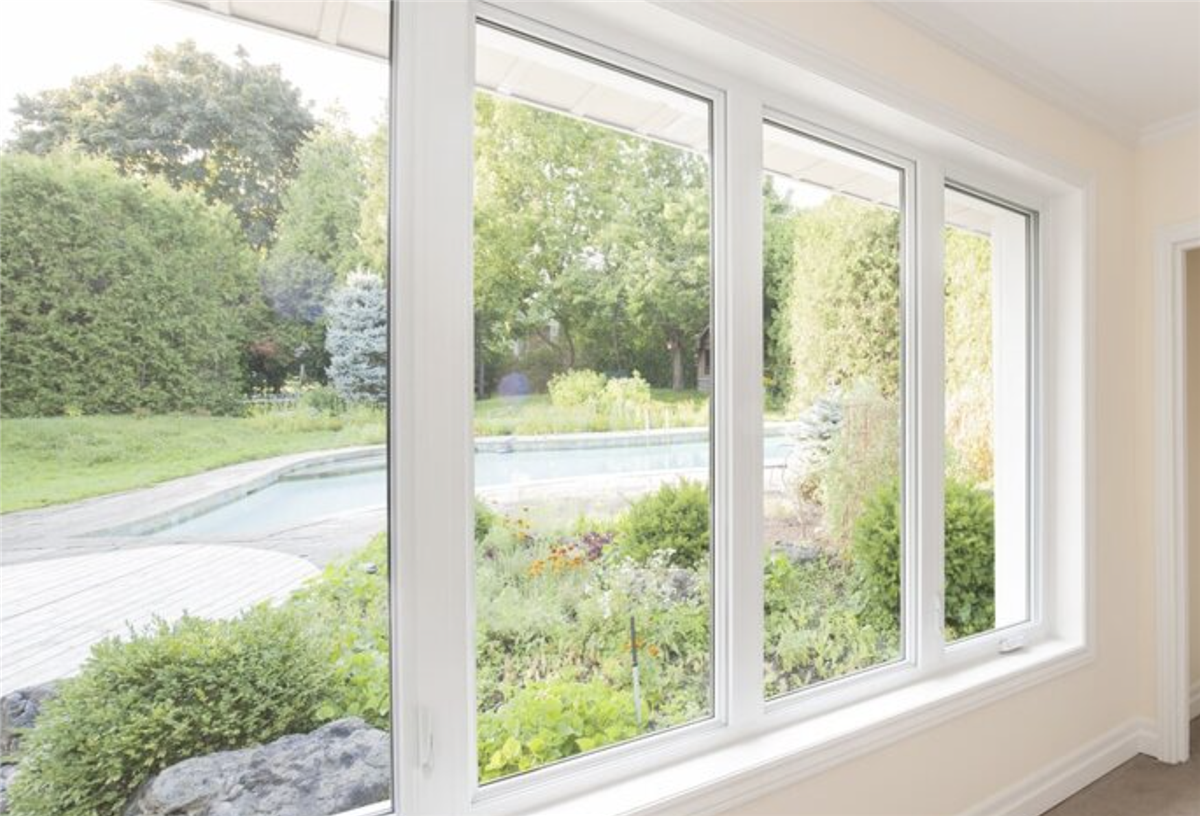
Fiberglass Windows: A Different Approach
Fiberglass has become increasingly popular for homeowners looking for a stronger frame material.
The primary advantage is dimensional stability.
Fiberglass generally expands and contracts much less than vinyl as temperatures change.
That's particularly useful for:
Large windows
Large fixed units
Dark-colored frames
High-sun exposures
Expansive glass walls
Fiberglass also has excellent strength relative to its frame size, which can allow manufacturers to create narrower frames and larger glass areas.
For a Texas homeowner who wants large black windows, that's a significant consideration.
Does Fiberglass Mean Zero Expansion?
No.
Every material responds to temperature.
Fiberglass isn't immune to thermal expansion.
The advantage is that its expansion characteristics are generally much closer to glass than those of vinyl.
That can reduce the amount of movement between the frame and glass as temperatures change.
And that brings us to one of the most important parts of a window:
the seal.
Composite Windows: The Middle Ground
"Composite" can mean several different things in the window industry, so homeowners should be careful with the terminology.
Some composite frames use engineered polymers. Others use proprietary reinforced materials.
And products such as Andersen Fibrex® aren't the same material as fiberglass.
The common theme is that many composite materials are designed to provide more strength and dimensional stability than traditional vinyl while retaining some of the low-maintenance advantages homeowners want.
But you shouldn't compare a window simply because both manufacturers call the frame material "composite."
Look at the actual material and manufacturer's specifications.
Why Expansion Matters to the Glass Seal
A window isn't just a frame and a piece of glass.
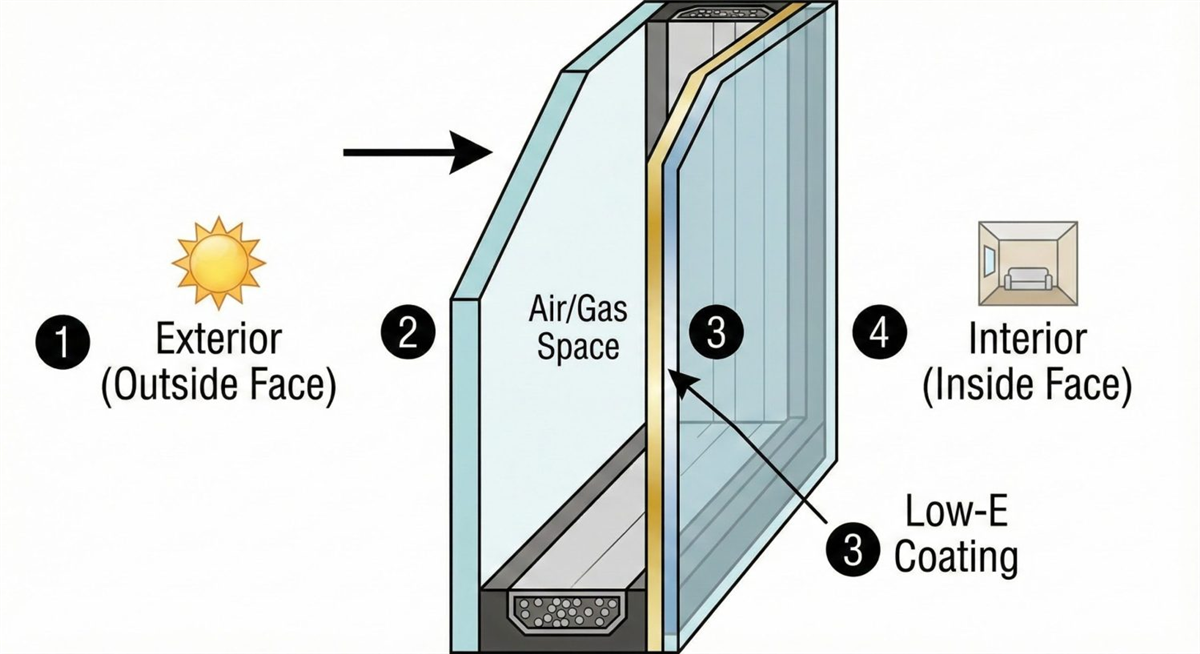
Modern insulated windows contain sealed glass units with two or more panes separated by a spacer.
The space between the panes can contain insulating gas, depending on the product.
The edge of the glass is sealed to keep the insulating system intact.
Repeated movement and temperature changes place stress on the components of the window.
A well-designed window accounts for that movement.
Poorly designed, poorly manufactured, or improperly installed windows can experience premature problems.
What Does Seal Failure Look Like?
One of the classic signs of an insulated glass seal failure is condensation or fogging between the panes of glass.
That's different from condensation on the room-side surface of the window.
If moisture appears between the panes, the insulating glass unit may have lost its seal.
A failed seal can affect:
Insulating performance
Appearance
Energy efficiency
Gas retention
Long-term window performance
The frame material isn't the only factor involved, but frame movement is one reason thermal stability matters.
Texas Sun Creates Another Problem: UV Exposure
Heat isn't the only challenge.
Texas windows also receive significant UV exposure.
Over time, UV radiation can contribute to:
Fading
Material degradation
Sealant deterioration
Finish wear
This is particularly relevant for dark frames.
A quality window system needs to be designed for exterior exposure—not just laboratory performance under controlled conditions.
Vinyl vs. Fiberglass vs. Composite
Here's the simplest way to think about the three.
Feature | Vinyl | Fiberglass | Composite |
|---|---|---|---|
Cost | Usually lower | Usually higher | Varies |
Thermal expansion | Higher | Lower | Generally lower than traditional vinyl |
Dimensional stability | Good | Excellent | Generally very good |
Large openings | Depends on design | Excellent | Depends on product |
Dark frames | Requires careful product selection | Strong option | Strong option depending on product |
Maintenance | Very low | Very low | Very low |
Frame strength | Good | Excellent | Varies by material |
Custom options | Varies | Often extensive | Varies |
The important word in this table is "depends."
There are excellent vinyl windows and poorly engineered vinyl windows.
There are excellent fiberglass windows and products that may not be the right fit for a particular application.
The material is important—but the engineering matters too.
Is Vinyl a Bad Choice for Austin?
Absolutely not.
Vinyl is one of the most common window materials in Austin for a reason.
A quality vinyl window with proper installation can provide excellent:
Energy efficiency
Weather resistance
Value
Low maintenance
Noise reduction
For many homeowners, vinyl offers the best balance between performance and price.
The key is choosing the right product for the application.
A small white vinyl window on a shaded elevation is a very different application from a massive black window facing west.
When Does Fiberglass Make More Sense?
Fiberglass becomes especially interesting when you're dealing with:
Large openings
The additional frame strength can make fiberglass a good choice for larger units.
Dark colors
If you're concerned about thermal movement, fiberglass can offer greater dimensional stability.
Modern designs
Large expanses of glass and narrow sightlines often pair well with stronger frame materials.
Long-term durability
Fiberglass is highly resistant to warping, rotting, and UV-related deterioration.
What About Black Windows in Texas?
Black windows aren't going away.
They're one of the most popular exterior design choices for modern and transitional homes.
But homeowners shouldn't choose a black window based solely on the color.
Ask:
What is the frame material?
How is the frame engineered?
What size is the unit?
Which direction does it face?
How much direct sun does it receive?
What does the manufacturer specify for that application?
A premium black window can perform beautifully in Texas.
A poorly designed black window can be a completely different story.
Installation Matters More Than Most Homeowners Realize
Even the best window can perform poorly if it's installed incorrectly.
The installer needs to account for:
Proper opening dimensions
Shimming
Fastening
Flashing
Water management
Insulation
Sealants
Expansion requirements
This becomes particularly important with large windows.
The frame needs room to move where the manufacturer's installation instructions require it.
If a window is installed too tightly, thermal movement can create problems regardless of how good the window itself is.
Don't Choose a Window Based on Frame Material Alone
This is one of the biggest mistakes homeowners make.
A window's performance comes from the entire system.
That includes:
Frame
Glass
Low-E coating
Gas fill
Spacer
Seals
Hardware
Installation
For Texas, homeowners should pay particular attention to U-Factor and SHGC.
U-Factor tells you how well the window resists heat transfer.
SHGC tells you how much solar heat passes through the glass.
For Austin's hot climate, SHGC can be especially important on heavily sun-exposed windows.
The West-Facing Window Test
Here's an easy way to think about it.
Imagine two houses with the exact same floor plan.
Both have 15 windows.
House A has mostly shaded windows with light-colored frames.
House B has large black windows facing west.
Even though the houses are in the same neighborhood, their windows experience very different thermal conditions.
That's why a window recommendation shouldn't be based solely on:
"What material is cheapest?"
The better question is:
"What window makes sense for this particular opening?"
What Should Texas Homeowners Ask Their Window Contractor?
Before choosing a window, ask:
1. What is the frame material?
Vinyl, fiberglass, composite, wood, or another material?
2. What are the U-Factor and SHGC?
Don't just ask whether the window is "energy efficient."
Ask for the actual numbers.
3. Is this product appropriate for dark colors?
Especially important if you're considering black frames.
4. What size limitations apply?
A product that works well for a standard window may not be ideal for a large opening.
5. What does the manufacturer require for installation?
Ask about expansion gaps, fastening, flashing, and other installation requirements.
6. What does the warranty cover?
Understand the difference between manufacturer product coverage and the contractor's workmanship warranty.
So Which Window Material Is Best for 105°F Texas Summers?
There isn't one universal winner.
Vinyl: Excellent value and energy efficiency when properly engineered and installed.
Fiberglass: Excellent dimensional stability, strength, and performance for larger or more demanding openings.
Composite: Can provide a strong combination of stability, durability, and low maintenance, but the specific material and product matter.
For a standard residential replacement, a quality vinyl window may make perfect sense.
For a large black window exposed to intense afternoon sun, fiberglass or a well-engineered composite may deserve a closer look.
The right window isn't necessarily the one with the highest price tag.
It's the one that's properly engineered for the opening, climate, design, and performance goals of your home.
The Bottom Line
Texas heat doesn't automatically make vinyl windows a bad choice.
And buying fiberglass doesn't automatically guarantee a better-performing window.
The important factors are thermal movement, frame design, glass performance, size, exposure, installation, and long-term durability.
If you're replacing windows in Austin, think beyond the showroom sample.
Think about what those windows will experience when the thermometer hits 105°F, the west-facing wall is sitting in direct afternoon sun, and your air conditioner is working overtime.
That's when the differences between vinyl, fiberglass, and composite windows really matter.
Get Started With a Free Consultation
JP Exteriors installs replacement windows throughout Austin and Central Texas, including vinyl, fiberglass, and composite window options.
We can help you compare the frame material, glass package, performance specifications, and overall cost for your specific home.
Book a Free Consultation • Explore Our Project Gallery • Learn About Financing
Remember: When you refer a friend or neighbor for windows, siding, roofing, or door replacement, you can earn up to $250 through the JP Exteriors Referral Program.
Window performance varies by manufacturer, product line, size, glass package, color, orientation, and installation. Always review the manufacturer's specifications and installation requirements for the specific window being considered.
Subscribe to JP Exteriors's Blog


Comments