If you're building a new home, replacing siding, or upgrading a deck in Austin, there's an important factor many homeowners don't realize until they start the permitting process: wildfire code compliance.
Approximately 61% of homes in the Austin area fall within the Wildland-Urban Interface (WUI), where neighborhoods meet natural vegetation and wildfire risk is significantly higher. Because of this, Austin's updated 2024 WUI Code requires ignition-resistant construction materials in many areas designated as WUI Zones A, B, and C.
That means you can't simply choose any siding, soffit, fascia, or decking product. The materials must meet specific fire-resistance standards designed to reduce the risk of ignition from airborne embers—the leading cause of home loss during wildfires.
At JP Exteriors, we help homeowners throughout Austin, Lakeway, Bee Cave, West Lake Hills, Dripping Springs, Steiner Ranch, and the surrounding Hill Country select products that satisfy code requirements while still delivering outstanding curb appeal.
Frequently Asked Questions
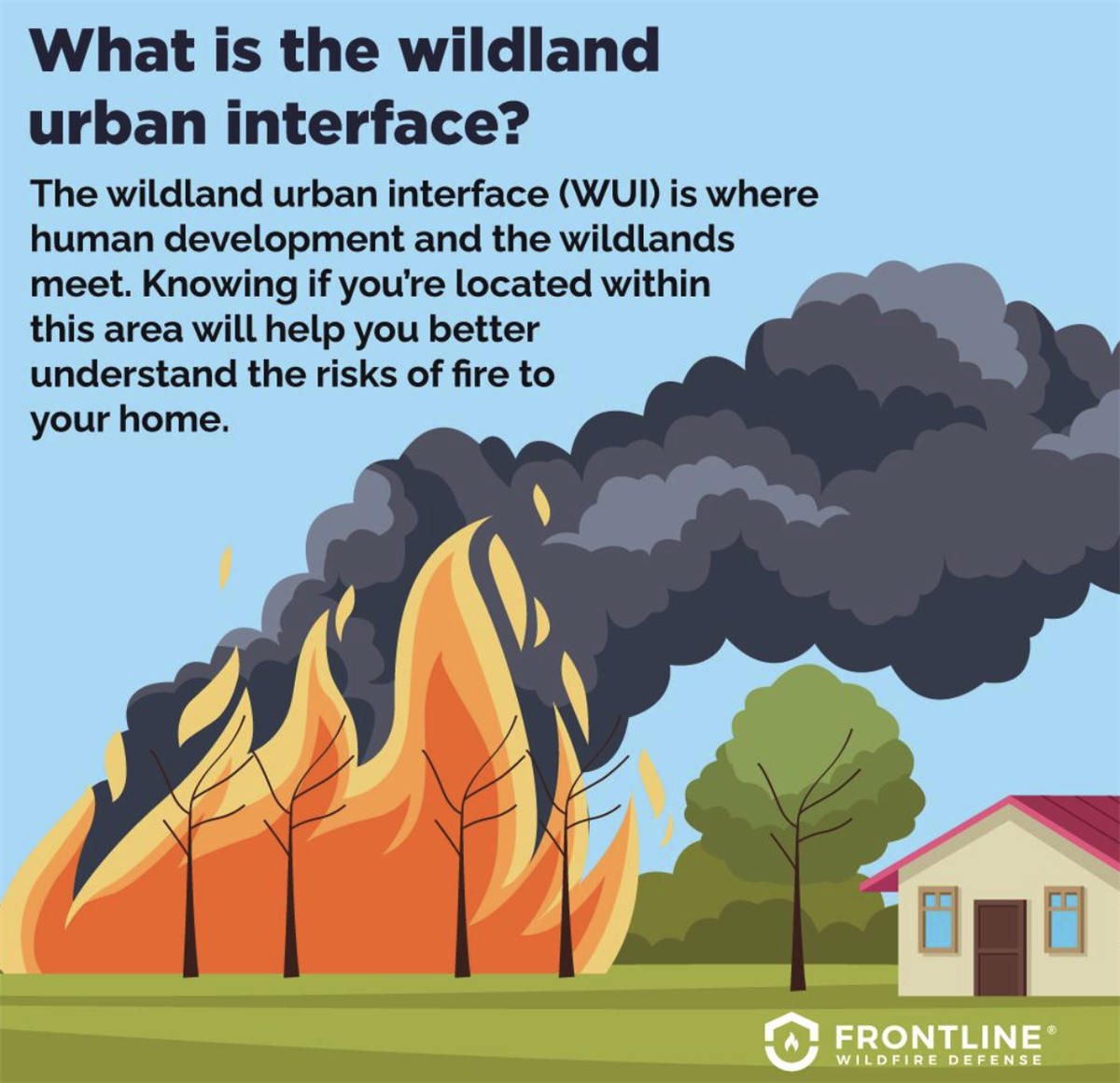
What is the Wildland-Urban Interface (WUI)?
The Wildland-Urban Interface, or WUI, refers to areas where residential development meets undeveloped land, forests, grasslands, and other wildfire-prone vegetation.
Many neighborhoods throughout Central Texas fall within designated WUI zones, including:
- Lakeway
- Bee Cave
- West Lake Hills
- Dripping Springs
- Steiner Ranch
- River Place
- Parts of Cedar Park and Leander
- Various Hill Country communities
Austin's 2024 WUI Code introduced stricter requirements intended to improve wildfire resilience and reduce structural losses during major fire events.
Why are ignition-resistant materials required?
Wildfires rarely ignite homes through direct flames.
In most cases, wind-driven embers travel long distances and land on vulnerable areas of a home, including:
- Wood siding
- Deck surfaces
- Porch ceilings
- Soffits
- Fascia boards
- Vents and roof edges
Ignition-resistant materials help prevent these embers from starting fires, giving homeowners significantly greater protection during wildfire events.
This is why Austin's Hill Country wildfire code focuses heavily on exterior building materials.
Is James Hardie siding WUI compliant?
Yes.
James Hardie fiber cement siding is one of the most commonly specified products for WUI-compliant construction because it is noncombustible and highly resistant to ignition.
James Hardie products are frequently used to satisfy fire-resistance requirements for:
- Exterior walls
- Soffits
- Fascia
- Porch ceilings
- Trim details
Unlike traditional wood siding, James Hardie fiber cement siding will not ignite when exposed to airborne embers.
This makes it one of the most popular choices for homeowners seeking fire-resistant siding in Austin.
Which James Hardie products are commonly used in WUI zones?
Most WUI-compliant projects utilize a combination of:
- HardiePlank lap siding
- HardiePanel vertical siding
- HardieTrim
- HardieSoffit
Together, these products create a fully integrated exterior system that provides excellent durability, low maintenance requirements, and strong fire resistance.
In many situations, the code also allows pressure-treated structural posts and beams when wrapped with approved fiber cement products such as HardieTrim.
This allows homeowners to maintain attractive architectural details while still complying with WUI requirements.
Why is James Hardie so popular in Austin?
Beyond wildfire protection, James Hardie performs exceptionally well in Central Texas conditions.
Benefits include:
- Noncombustible construction
- Resistance to hail damage
- Moisture resistance
- No rot or insect damage
- Excellent performance in extreme heat
- Long-term durability
- Low maintenance requirements
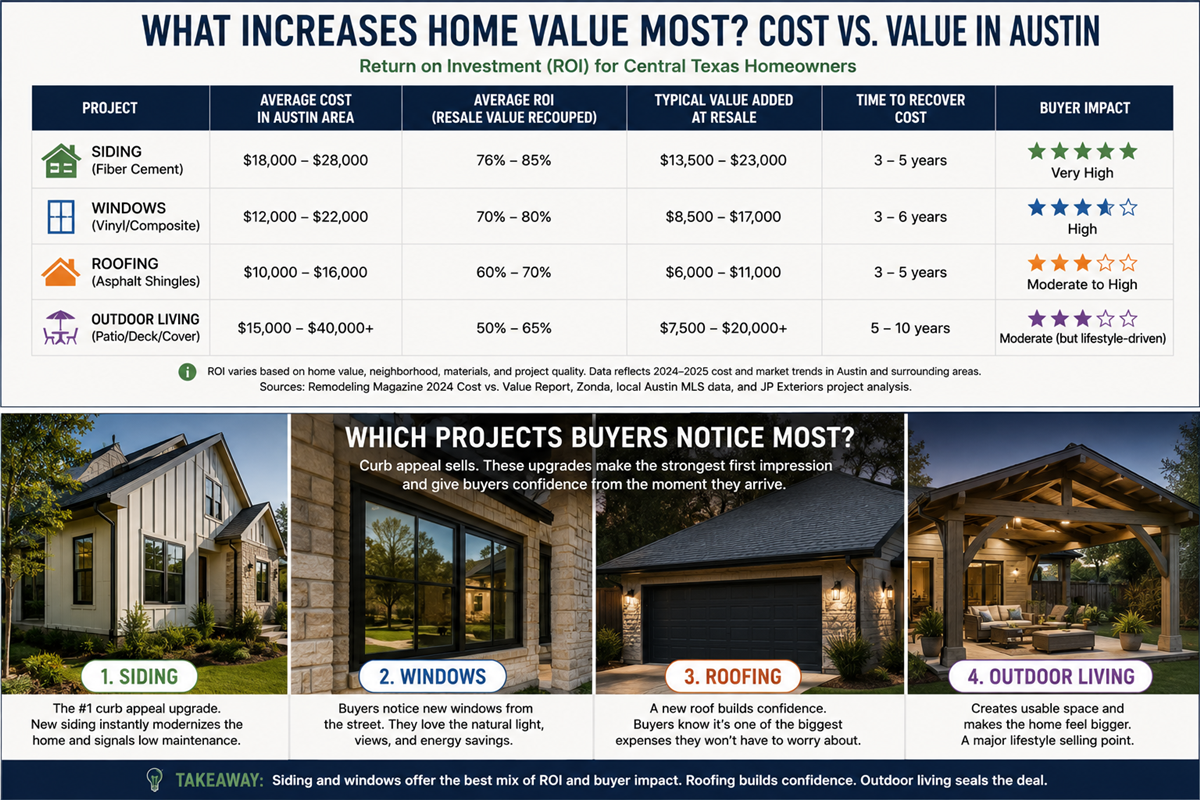
For many homeowners, James Hardie offers the ideal combination of appearance, longevity, and code compliance.
Does decking have to meet WUI requirements too?
Yes.
Decks are often one of the most vulnerable areas during wildfire events.
Traditional wood decking can ignite when embers accumulate between deck boards or underneath the deck structure.
As a result, many WUI zones require fire-rated or ignition-resistant decking materials.
Is TimberTech WUI compliant?
TimberTech is one of the most popular options for WUI-compliant decking in Austin.
Many TimberTech products are specifically engineered to provide superior fire performance compared to traditional wood decking.
Homeowners searching for:
- WUI compliant decking Austin
- Fire-resistant deck materials
- Composite decking Austin TX
People often choose TimberTech because it combines durability, low maintenance, and wildfire resilience.
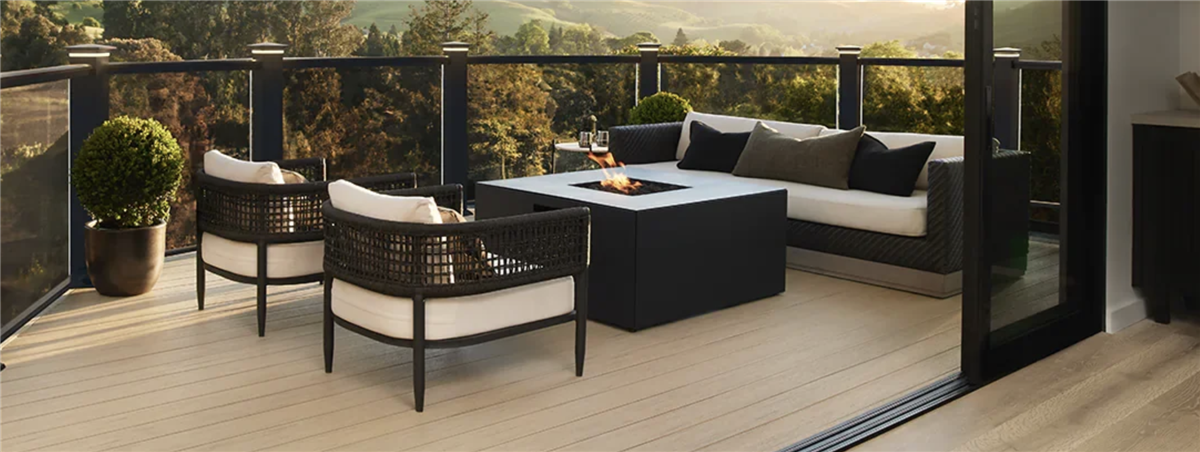
What TimberTech decking collections are available?
TimberTech offers several product families to fit different budgets and design preferences.
TimberTech Advanced PVC (formerly AZEK)
Premium performance and aesthetics:
- Vintage Collection
- Landmark Collection
- Harvest Collection
These products offer exceptional durability, moisture resistance, and long-term appearance retention.
TimberTech Composite (formerly PRO)
Mid-range composite decking options:
- Legacy Collection
- Reserve Collection
- Terrain Collection
These collections provide a natural wood appearance with significantly less maintenance.
TimberTech Edge
Entry-level composite decking:
- Cost-effective
- Durable
- Low maintenance
A popular option for homeowners looking to upgrade from wood without moving into premium PVC pricing.
Didn't James Hardie acquire TimberTech?
Yes.
In July 2025, James Hardie acquired AZEK, the parent company of TimberTech.
The acquisition brought together two of the most recognized names in exterior building products.
For homeowners, this means access to trusted siding and decking systems from one of the largest exterior building material manufacturers in North America.
Are composite decks safer than wood decks in wildfire areas?
In many situations, yes.
A fire-resistant deck built using approved composite or PVC materials generally performs significantly better than exposed wood decking during ember exposure.
Benefits include:
- Improved fire performance
- Reduced maintenance
- No staining requirements
- Resistance to rot and insects
- Longer service life
This is why composite decking continues to gain popularity throughout Austin's WUI zones.
How do I know if my home is in a WUI zone?
Determining WUI status can be confusing because requirements vary by location, jurisdiction, and project type.
At JP Exteriors, we help homeowners understand:
- Whether their property falls within a WUI zone
- Which materials satisfy local requirements
- Product options that fit their style and budget
- Permit and code considerations
- The best approach for siding, decking, soffits, fascia, and trim
Why Work With JP Exteriors?
WUI compliance is about more than simply selecting a product. Proper installation, detailing, and understanding local code requirements are equally important.
Our team regularly works with:
- James Hardie fiber cement siding
- HardieTrim
- HardieSoffit
- TimberTech Advanced PVC decking
- TimberTech Composite decking
- Fire-resistant exterior remodeling projects throughout Austin and the Hill Country
We help homeowners create beautiful exteriors that satisfy code requirements while improving durability, curb appeal, and long-term value.
Get Started with a Free Consultation
Not sure if your home falls within a WUI zone?
Thinking about replacing your siding, decking, soffits, or trim?
Our team can help you determine your requirements and recommend the right ignition-resistant materials for your project.
Book a free, no-pressure consultation: Schedule Now
Explore recent projects: Project Gallery
Ask about financing options: JP's Financing Portal
Remember: When you refer a friend or neighbor for windows, siding, roofing, or door replacement, you can earn up to $250 through the JP Exteriors Referral Program.
Subscribe to JP Exteriors's Blog

Comments