A new roof can look perfect from the ground and still have problems hiding underneath it. That's because a roof replacement isn't just about the shingles you see — the shingles are the outermost layer of a much larger system that includes the roof deck, underlayment, flashing, drip edge, ventilation, fasteners, and other components. When a contractor focuses only on getting new shingles onto the house as quickly and cheaply as possible, those less-visible components can get far less attention than they deserve.
That's exactly where homeowners can end up with a roof that technically meets a minimum requirement without delivering the long-term performance they actually expected. You might see two proposals that both say "tear off and replace roof." One produces a roof that performs well for decades. The other leaves you wondering years later why you're dealing with leaks, exposed edges, deteriorated decking, or premature failure. The difference usually lives in the line items nobody sees from the street.
Code Minimum Is Not the Same as Best Practice
Building codes exist to establish minimum requirements for construction, and that matters. But minimum code compliance shouldn't automatically be read as a guarantee of maximum durability or a 25-year service life. A roof can be installed according to applicable requirements and still differ substantially from another roof in materials, installation details, flashing, ventilation, deck preparation, water management, workmanship, and manufacturer specifications. That's exactly why homeowners should look beyond the final shingle selection when comparing proposals.
The Roof Deck: What's Actually Under Your Shingles?
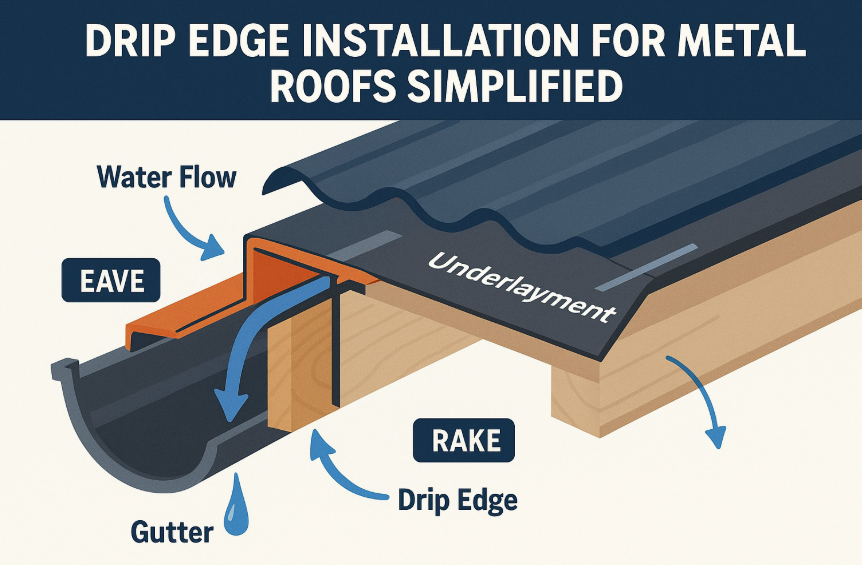
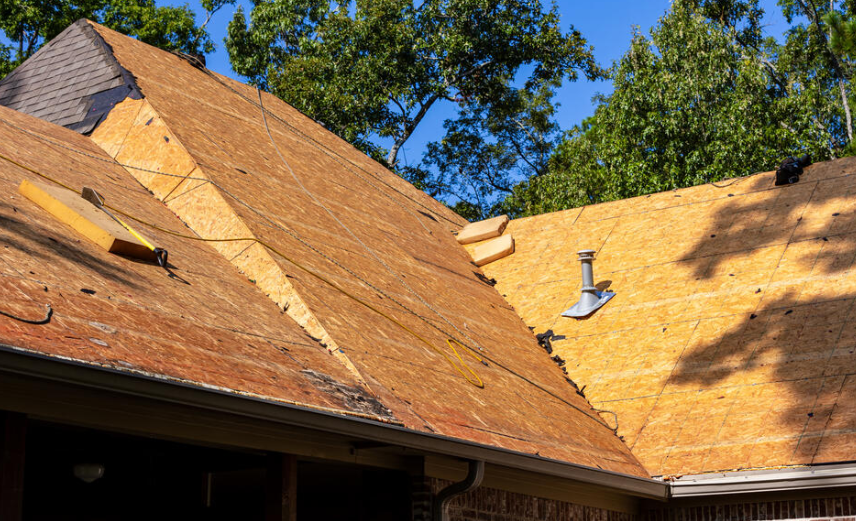
The roof deck is the structural surface underneath the entire roofing system — on most modern homes, that's plywood or OSB sheathing attached to the framing. Once the old shingles come off, the deck becomes visible, and what looked like a perfectly good roof from the ground can look very different once everything's stripped away. Contractors commonly find water-damaged decking, rot, delamination, soft spots, damage from previous leaks, improperly fastened sheathing, old repairs, multiple layers of old roofing material, and damage around valleys or penetrations. This is exactly why a roofing estimate can change after tear-off — you simply can't determine the full condition of the deck from the shingles sitting on top of it.
Why Replacing Damaged Decking Actually Matters
Think of your roof deck as the foundation of the entire roofing system. If a section is soft, deteriorated, or otherwise unsuitable, simply covering it with new shingles doesn't fix the underlying problem — it just hides it under a fresh layer. Replacing damaged decking gives the new roofing system a solid substrate to actually perform on. It's worth asking a specific question up front: what does this contractor actually consider "damaged" decking? A good proposal explains how decking replacement is handled, rather than leaving you with a vague promise that "bad wood will be replaced" without any real definition behind it.
The $20 Sheet of Plywood That Can Become a Much Bigger Problem
This is a bit of an exaggeration as a literal calculation, but it illustrates an important point. The cost of replacing a small section of damaged decking is relatively minor compared to the potential consequences of leaving structural or moisture damage sealed underneath a brand-new roof. If a contractor discovers deteriorated decking during a reroof, the right response isn't "it'll be covered up anyway" — it's "let's address this before installing the new roofing system." That difference in approach is one of the clearest signs of the gap between a real roof replacement and simply putting new shingles on a house.
Drip Edge: Small Component, Big Job
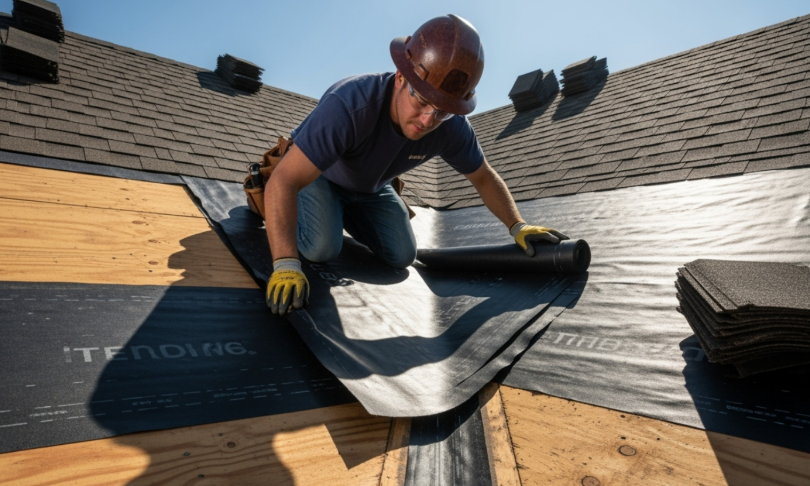
Drip edge is one of those roofing components most homeowners never think about, but it's installed along the roof edges specifically to direct water away from the deck and into the gutter system while protecting the edge of the roofing assembly. It also helps prevent water from getting behind the fascia. A roof without properly functioning edge details can develop water-management problems even when the shingles themselves are installed perfectly correctly.
Why Drip Edge Matters So Much in Austin
Texas storms can deliver a huge amount of water very quickly, and your roof needs to move that water in a clear path — from the roof, to the edge, to the gutter, to the downspout, and away from the house. Drip edge is a key part of that transition. If water is allowed to run behind the gutter or onto the fascia instead, you can eventually see rotting fascia, damaged soffits, peeling paint, water intrusion, and ongoing gutter problems. That's exactly why the roof and gutter system shouldn't be thought of as two separate projects — they work together as one system.
The Gutter Connection
A common mistake is treating the roof edge as though it simply ends at the shingles. It doesn't. The roof edge interacts directly with drip edge, fascia, gutters, gutter hangers, and downspouts, and if those components aren't properly coordinated during a reroof, you can end up with drainage problems that don't become obvious until the next major storm hits. This is also exactly why a reroof can be a great time to evaluate the condition of your gutters at the same time.
Underlayment: The Layer You Hope Never Gets Tested
Shingles are the primary weather-exposed material, but they're not the only thing standing between your home and the weather. Underlayment provides an additional layer of protection beneath the roof covering, and depending on the system, that might mean synthetic underlayment, asphalt-saturated felt, self-adhering underlayment, or specialized membrane products in specific areas. The exact materials and placement depend on the roofing system, manufacturer requirements, roof design, and applicable code. The important takeaway for homeowners: don't compare roofing estimates solely by shingle brand — ask what's actually underneath the shingles too.
Valleys Deserve Special Attention
A roof valley is where two roof planes meet, and it's also one of the places where the most water tends to concentrate during a storm. That makes valleys particularly important to ask about when evaluating a reroof — how is the contractor handling valley underlayment, valley flashing, shingle installation at the valley, water drainage, and manufacturer requirements specific to that detail? A roof can have beautiful shingles across the whole surface and still have a genuinely vulnerable valley if the water-management details there weren't properly addressed.
Flashing Is Not Optional Decoration
Flashing directs water away from vulnerable transitions and penetrations, and you'll find it around chimneys, walls, skylights, roof-to-wall intersections, plumbing penetrations, valleys, vents, and other roof transitions. When you're replacing a roof, it's worth asking directly whether existing flashing is being reused, replaced, or modified — and why. Sometimes existing flashing can legitimately be reused if it's in good condition and compatible with the new roofing system; other situations genuinely call for replacement. The important part is that this decision shouldn't be hidden from the homeowner either way.
Pipe Boots: Small Detail, Common Leak Location
Plumbing vent pipes penetrate the roof and require flashing components commonly called pipe boots, and these can deteriorate over time from constant sun, heat, temperature swings, rain, and UV exposure. A roof replacement is a natural opportunity to inspect these penetrations and replace any components that are no longer holding up — skipping this detail is a common source of leaks that show up well after the main roofing work is finished.
Roof Ventilation: More Isn't Always Better
Ventilation is another line item worth understanding clearly. A properly designed attic ventilation system helps manage heat and moisture in the attic, but simply adding as many vents as possible isn't the goal — the system needs to function as a coordinated whole, with appropriate intake and exhaust ventilation working together and installed correctly. Depending on the home, that might involve soffit intake, ridge vents, static vents, or some other configuration. The right approach depends entirely on the specific roof and attic design, not a one-size-fits-all vent count.
The Austin Heat Factor
Texas roofs deal with an especially demanding environment across the whole year. Summer brings extreme heat and intense UV exposure. Storm season brings wind, hail, and heavy rainfall. Winter can bring occasional freezing temperatures followed by significant swings back the other direction. And year-round, the roof is constantly expanding and contracting with the daily temperature cycle. The roofing system needs to be designed and installed with that actual environment in mind — a roof isn't just sitting there passively, it's constantly responding to what the weather is doing.
Shingles Are Only One Part of the Warranty
This is another area where homeowners commonly get confused. A shingle manufacturer may offer a substantial product warranty, but the warranty on the shingle itself isn't necessarily the same thing as a warranty covering the entire roofing installation. There can be separate coverage for roofing materials, workmanship, installation, flashing, accessories, decking, and other individual components. Ask your contractor to explain exactly what warranty applies to each part of the project, and read the manufacturer's actual warranty terms rather than assuming a "30-year shingle" means the entire roof is guaranteed for 30 years.
Why a "25-Year Roof" Isn't Really a Promise
When homeowners hear "this is a 25-year roof," it's easy to interpret that as "this roof will definitely last 25 years." That's not really how roofing works. Actual service life depends on the roofing material, installation quality, roof slope, ventilation, sun exposure, weather, maintenance, storm damage, foot traffic, and the condition of the existing roof underneath it all. A manufacturer's product warranty and the realistic expected service life of a roof are genuinely two different concepts, and it's worth keeping that distinction in mind.
What Separates a 12-Year Roof From a 25-Year Roof?
There's no single magic component that guarantees one number over the other — instead, think about the entire system working together. A roof that performs well over the long term is more likely to have a sound roof deck with damaged sections addressed before new roofing goes on, proper edge details with drip edge and roof-to-gutter transitions handled correctly, an underlayment system appropriate for the roof and installed to spec, correctly protected flashing at vulnerable transitions, ventilation appropriate for the home's specific design, compatible and appropriate materials throughout, installation that actually follows the manufacturer's instructions, and regular maintenance that catches small problems before they become major ones. That's a far more meaningful conversation than simply asking "what year shingles are you using?"
Questions to Ask When Comparing Roofing Estimates
Before signing anything, it's worth asking each contractor whether the roof deck is included in the price, and if not, how damaged decking gets handled and priced. Ask for the unit price or a clearly defined method for calculating any additional decking work. Ask whether drip edge is included — don't assume it is. Ask specifically what underlayment is included, by product or type, not just a general description. Ask what flashing is being replaced, especially around walls, chimneys, valleys, and penetrations. Ask whether pipe boots are included and whether existing ones are being reused or replaced. Ask what ventilation work is actually included so you understand what you're getting. Ask what happens if hidden damage is found during the project, and get that process in writing. Ask what the workmanship warranty covers, separate from the manufacturer's product warranty. And ask what exactly is excluded — exclusions can matter just as much as what's included.
The Cheapest Roofing Estimate Isn't Always the Cheapest Roof
Imagine three contractors quote the same house: Contractor A comes in at $18,000, Contractor B at $21,000, and Contractor C at $24,000. At first glance, A looks like the obvious choice. But then you discover A doesn't include replacing damaged decking, reuses certain flashing without much explanation, and does minimal ventilation work — while B includes more comprehensive edge and flashing work, and C includes premium materials and upgrades you may not actually need. At that point you're not really comparing three roofs anymore. You're comparing three different scopes of work that happen to share the same general description. That's exactly why homeowners should compare estimates line by line rather than just by the bottom number.
What Should Be in a Good Roofing Proposal?
A detailed proposal should make it relatively easy to understand the roofing material, number of squares, tear-off scope, underlayment, drip edge, flashing, ventilation, pipe boots, a decking allowance or clear unit price, cleanup, disposal, warranty terms, permits where applicable, the payment schedule, and the change-order procedure. The more clearly all of that is spelled out, the easier it is to actually compare contractors against each other rather than just comparing dollar totals.
Frequently Asked Questions
Does every roof replacement include decking replacement?
Not automatically. Many proposals include an allowance or unit price for decking replacement only if damage is found during tear-off, since the full condition of the deck usually can't be confirmed until the old roofing comes off.
How do I know if my roofing estimate includes drip edge?
Don't assume it's included just because it's a standard component — ask directly, since some lower-priced estimates may omit it or reuse existing drip edge without mentioning it.
Is a 30-year shingle warranty the same as a 30-year roof warranty?
No. The shingle manufacturer's product warranty typically covers the shingle itself, while workmanship, flashing, decking, and other components may carry separate or shorter coverage from the contractor.
Why did my roofing estimate go up after tear-off started?
This usually happens when hidden decking damage, rot, or previous leak damage is discovered once the old shingles are removed — conditions that couldn't be fully assessed from the surface beforehand.
What's the difference between roofing code minimum and best practice?
Code minimum establishes the lowest acceptable standard for safety and basic performance. Best practice often includes additional attention to decking condition, flashing details, and ventilation that go beyond what code strictly requires.
Can old flashing be reused during a roof replacement?
Sometimes, if it's in good condition and compatible with the new roofing system. Other situations call for replacement — the contractor should be able to explain which applies to your specific roof and why.
Why does roof ventilation matter so much in Texas?
Proper attic ventilation helps manage heat and moisture buildup, which is especially relevant given how much heat Central Texas roofs absorb during the summer months.
How often should pipe boots be replaced?
There's no fixed schedule, but they're a common source of leaks since they deteriorate from UV and temperature exposure faster than the surrounding shingles. A reroof is a natural time to inspect and replace them if needed.
Should I always choose the cheapest roofing estimate?
Not without comparing scope first. A lower price may exclude decking replacement, flashing work, or ventilation improvements that a higher estimate includes, making the two proposals difficult to compare directly.
What should I ask about if hidden damage is found during my reroof?
Ask how the contractor documents and communicates hidden damage, what the approval process looks like before additional work begins, and how that additional cost is calculated — ideally get this process explained in writing before the project starts.
The Bottom Line
A roof is more than the shingles you see from the street. The components underneath and around those shingles — decking, underlayment, drip edge, flashing, ventilation, and water-management details — can have a major effect on how the whole system performs over time. Code compliance matters, but homeowners shouldn't stop their evaluation at "does it meet code?" The better question is: what exactly am I getting, and how is this roof actually designed to manage Austin's heat, storms, water, and long-term exposure? That's the conversation that separates a basic reroof from a well-executed roofing system.
At JP Exteriors, we provide roof replacements throughout Austin and Central Texas and believe homeowners should understand what they're paying for — not just the color and brand of the shingles. If you're comparing roofing estimates, we'd be happy to walk through the scope with you and explain the components that actually matter.
Get Started With a Free Roofing Consultation
Remember: When you refer a friend or neighbor for windows, siding, roofing, or door replacement, you can earn up to $250 through the JP Exteriors Referral Program.
Subscribe to JP Exteriors's Blog


Comments