Gutter guards sound like a simple solution: install a cover over your gutters and never clean them again. Unfortunately, it doesn't quite work that way. Austin homeowners deal with plenty of leaves, seed pods, pine needles, roof grit, pollen, and storm debris, and the right gutter protection system can reduce maintenance and help keep water moving — but no gutter guard is completely maintenance-free.
There's another issue homeowners don't always think about, too: how the guard is installed can matter just as much as the guard itself. Some installation methods can interfere with shingles, drip edge, gutter attachment, or existing warranties. In Austin's WUI areas, gutter guards have specific requirements: the current code requires gutters and downspouts to be noncombustible, with non-corrosive, noncombustible leaf guards. So before you spend money on gutter guards, here's what to know.
What Do Gutter Guards Actually Do?
A gutter guard is designed to keep leaves and larger debris out of the gutter while letting rainwater in. That's the basic idea, but different types of debris behave very differently — a guard that handles large oak leaves well may struggle with pine needles, tiny seeds, pollen, roof granules, small twigs, and mud or sediment. Austin has plenty of all of it. That's exactly why choosing a gutter guard shouldn't be based solely on an ad claiming it will make your gutters "maintenance-free."
The Most Common Types of Gutter Guards
No single gutter guard is perfect for every house. The major categories are screens, perforated covers, micro-mesh systems, and solid-surface or reverse-curve designs.
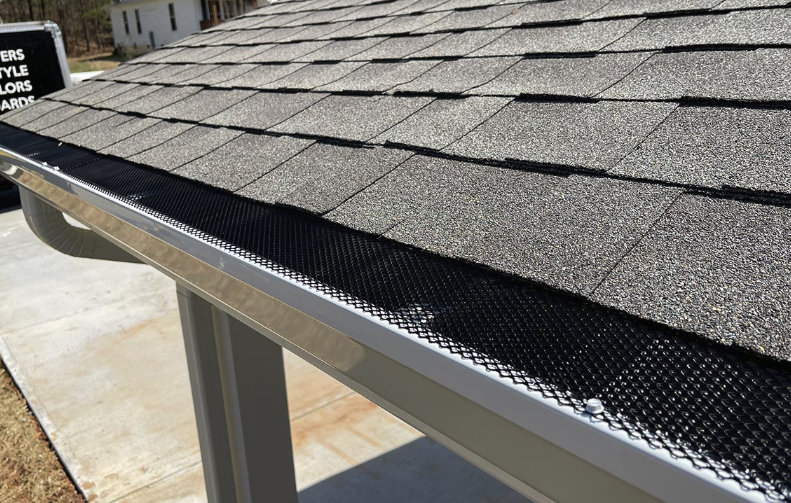
Gutter screens are among the simplest options — a screen sits over the gutter, letting water through while blocking larger leaves and debris. They're relatively inexpensive and reduce large debris, but smaller material can still get through or pile up on top. Screens can work fine in the right situation, but they're not necessarily the best choice for a heavily wooded property.
Perforated gutter covers use a solid panel with openings sized to let water through while blocking larger debris. They give a cleaner appearance, but the size and shape of those openings matter — small debris can still accumulate on top, and fine material can work its way through.
Micro-mesh gutter guards use a very fine mesh designed to keep smaller debris out while still letting water through, and they're often marketed as premium protection because they handle finer particles than traditional screens. That doesn't make them maintenance-free, though — dust, pollen, roof granules, and other fine material can still accumulate on the surface, and the system still needs periodic inspection.
Reverse-curve or surface-tension guards use the shape of the cover itself to direct rainwater into the gutter while leaves and larger debris fall away. They can work well in some applications, but performance depends heavily on the roof, gutter configuration, rainfall intensity, and the type of debris around the home. The lesson across all four types is the same: a gutter guard has to match the house.
So Which Gutter Guard Is Best for Austin?
There's no single answer — the best system depends entirely on what's actually falling onto your roof. A home surrounded by mature oak trees has a different problem than one dealing mostly with pine needles, and a steep roof with heavy runoff has different requirements than a low-slope, single-story home. Before recommending a guard, a contractor should be looking at your tree coverage and type, roof pitch and size, gutter size, downspout configuration, existing gutter and fascia condition, drip edge, typical debris, and how easily the gutters can actually be accessed for maintenance. That's a far more useful conversation than simply asking "what's the best gutter guard?"
The Biggest Gutter Guard Gimmick: "Maintenance Free"
Be skeptical any time you hear "you'll never have to clean your gutters again." Even high-quality gutter protection systems can require inspection and occasional maintenance — fine debris collects on top of mesh or covers, roof granules accumulate, and leaves can sit on top of a guard and slow water from reaching the openings efficiently. A gutter guard is better thought of as maintenance reduction, not maintenance elimination. That's a much more realistic expectation to walk in with.
Gutter Guards Don't Fix Bad Gutters
This is one of the biggest mistakes homeowners make. If your gutters are sagging, improperly sloped, pulling away from the fascia, rusted, leaking, undersized, missing sections, or connected to inadequate downspouts, putting a guard on top isn't going to solve any of that — and it can actually make diagnosing the underlying problem harder. Austin's property-maintenance requirements call for roof drainage systems, including gutters and downspouts, to be kept in good repair and free of obstructions. Fix the gutter system first. Add protection second.
What About Gutter Guards and Heavy Texas Rain?
This is another area where marketing can mislead homeowners. A gutter guard doesn't increase the capacity of your gutter — if your roof produces more water than the gutter and downspouts can actually handle, covering the gutter won't fix that. Overflow can come from insufficient gutter capacity, too few downspouts, poor gutter pitch, blocked downspouts, improperly positioned downspouts, valley runoff, or just extremely heavy rainfall. The guard needs to let enough water through quickly enough to keep up with the roof's actual runoff, not just look good doing it.
Can Gutter Guards Cause Roof Leaks?
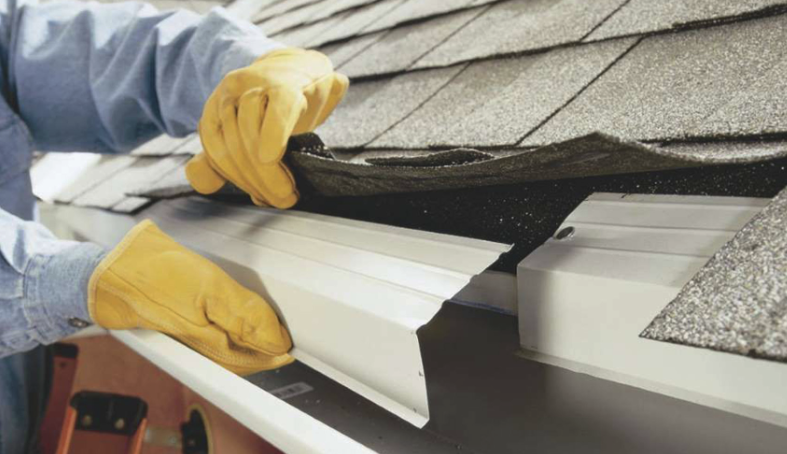
They can, if they're improperly installed — especially with systems that require the installer to manipulate roofing materials to attach them. Some gutter guard systems attach directly to the gutter; others involve brackets or installation methods around the roof edge. Homeowners should be cautious about any installation that unnecessarily lifts shingles, removes roofing components, penetrates roofing materials, damages drip edge, interferes with flashing, or creates new pathways for water. The goal should always be protecting the gutter without creating a new roofing problem in the process.
Can Gutter Guards Void My Roof Warranty?
Potentially, depending on the product, installation method, and manufacturer requirements. That's exactly why homeowners should check the roofing manufacturer's installation and warranty requirements before allowing any gutter protection system to go in. Don't assume "it's just a gutter guard, so it can't affect my roof" — if the installation involves modifying or disturbing roofing components, you need to know whether that specific method is actually approved. The same principle applies to your gutter manufacturer's warranty, since coverage varies by product. The real question is simply: is this installation method allowed under my existing warranties?
What About the Gutter Warranty Itself?
The gutter may carry its own separate product or workmanship warranty, and installing accessories or modifying the gutter can potentially affect that coverage depending on the manufacturer's terms. A reputable contractor should be able to tell you who manufactured the gutter, who manufactured the guard, how the guard will actually be attached, what warranty covers the guard, what warranty covers the gutter, what warranty covers the installation itself, and whether any of it affects your existing roofing coverage. Get those answers before installation, not after something goes wrong.

The Drip Edge Problem
The drip edge is a small component doing a genuinely important job — it helps direct water from the roof edge toward the gutter while protecting the edge of the roof assembly. A gutter guard installation shouldn't compromise that system. If someone proposes sliding a guard underneath shingles or manipulating the drip edge to make it fit, ask exactly how that installation will be performed. The cheapest gutter guard isn't a bargain if the installation creates a roofing problem down the line.
Austin WUI Homes Have Another Consideration
This matters specifically for homeowners in Austin's Wildland-Urban Interface. The city's current WUI code requires gutters and downspouts to be built from noncombustible materials, paired with leaf guards that are both non-corrosive and noncombustible. That means you shouldn't assume any gutter guard sold online automatically meets the requirements for a WUI property — vinyl leaf guards, for example, generally wouldn't qualify, since they can deform or melt under heat exposure. If you're remodeling a home in an Austin WUI zone, confirm the product is appropriate for your applicable code requirements before installation, not after.
Do You Need Gutter Guards?
Not necessarily. For some homes, regular gutter cleaning is genuinely the most economical solution. For others — especially homes surrounded by mature trees — gutter protection can make a lot of sense. It's worth considering when your gutters clog frequently, your property has significant tree coverage, cleaning the gutters is difficult or dangerous, you're replacing your gutters anyway, you want to reduce routine maintenance, and your existing gutter system is properly sized and already functioning correctly. But if your gutters aren't working correctly right now, fix the drainage problem first — a guard on top of a broken system just hides the issue.
How Much Do Gutter Guards Cost?
There isn't one meaningful number that applies to every home, since cost depends on linear footage, number of corners, roof configuration, number of downspouts, gutter size, guard type, existing gutter condition, accessibility, and installation complexity. A basic screen system and a professionally installed premium micro-mesh system can land at dramatically different price points. Instead of comparing only the sticker price, compare what you're actually getting for it.
Questions to Ask Before Buying Gutter Guards
Before signing anything, it's worth asking what type of debris the system is actually designed to handle — don't accept "everything" as an answer; ask specifically about leaves, pine needles, pollen, roof granules, and small debris. Ask how the guard is attached, and whether installation requires lifting or modifying shingles — if so, why, and whether that method is approved by the roofing manufacturer. Ask what happens if the gutters overflow anyway, and what the contractor's responsibility is if the system doesn't perform as expected. Ask who handles future maintenance, since even premium systems need occasional cleaning or inspection. Get the guard's warranty in writing, and specifically ask whether installing it affects your existing gutter or roof warranty — that question should be answered before installation, not after a problem develops. And if your home is in an applicable Austin WUI zone, verify the product's compliance directly.
The Bottom Line
Gutter guards can be a great investment, but they're not magic. The right system can dramatically reduce the amount of debris entering your gutters and cut down how often they need cleaning. The wrong system can clog anyway, overflow during heavy rain, or create installation and warranty headaches. And no gutter guard can compensate for gutters that are improperly sized, poorly pitched, damaged, or connected to inadequate downspouts.
For Austin homeowners, the best approach is looking at the entire roof drainage system as one chain — roof, drip edge, gutters, gutter guards, downspouts, ground drainage — since every component needs to work together for any of it to actually perform.
At JP Exteriors, we install and replace gutters as part of our exterior remodeling services and can help homeowners determine whether gutter guards make sense for their particular home. If you're considering gutter installation, gutter replacement, or gutter guards in Austin, we'll look at the existing system first rather than automatically recommending an expensive add-on.
Frequently Asked Questions
Do gutter guards really eliminate the need for gutter cleaning?
No. Even premium systems reduce debris buildup, but fine material like pollen, roof granules, and dust can still accumulate and require occasional cleaning or inspection.
Can gutter guards damage my roof if installed incorrectly?
Yes. Installation methods that lift shingles, penetrate roofing materials, or interfere with flashing and drip edge can create new problems, even if the guard itself is a quality product.
Will adding gutter guards void my roof warranty?
It depends on the roofing manufacturer's specific requirements and the installation method used. Always confirm with the manufacturer or your contractor before installation.
Are all gutter guards approved for use in Austin's WUI zones?
No. Austin's WUI code requires noncombustible gutters and downspouts with non-corrosive, noncombustible leaf guards, so products like standard vinyl guards typically wouldn't qualify. Verify compliance before installation.
What type of gutter guard works best for oak trees?
Larger-opening screens or perforated covers can handle big oak leaves reasonably well, but Austin's mix of debris — including small seeds and pollen — often makes a finer mesh system worth considering too.
Do gutter guards help during heavy Texas rainstorms?
They don't increase your gutter's capacity. If your existing system is undersized or your downspouts can't keep up with runoff, a gutter guard won't fix that on its own.
Can I install gutter guards myself without affecting my warranties?
It's possible for some products, but self-installation can still affect roof or gutter warranties depending on the manufacturer's terms. Check the specific requirements before starting.
How often should gutter guards be inspected even if they're low-maintenance?
A general rule is at least once or twice a year, and after any major storm, to check for debris buildup, damage, or areas where water isn't flowing through properly.
Are micro-mesh gutter guards worth the extra cost?
For heavily wooded properties dealing with fine debris like pine needles and pollen, they can be worth it. For homes with less debris, a simpler screen system may perform just as well for less money.
Should I fix my gutters before or after installing gutter guards?
Always before. Installing a guard over sagging, undersized, or improperly sloped gutters just hides the underlying problem rather than solving it.
Get Started With a Free Consultation
If you're considering gutter installation, gutter replacement, or gutter guards in Austin, let's start with an honest look at your existing system.
Remember: When you refer a friend or neighbor for windows, siding, roofing, or door replacement, you can earn up to $250 through the JP Exteriors Referral Program.
Subscribe to JP Exteriors's Blog





Comments