If you've ever picked up an Andersen 400 Series brochure, you've probably run into a wall of numbers and trademarked glass names — U-Factor, SHGC, SmartSun™, HeatLock®, StormWatch® — without much explanation of what any of it means once the window is actually installed on your house. That's the gap we want to close. The 400 Series is Andersen's most popular window line, and for good reason, but "popular" doesn't tell you whether it's the right performance package for a west-facing wall in Austin. Here's what the spec sheet is actually telling you, translated for Central Texas.
The Numbers That Actually Matter
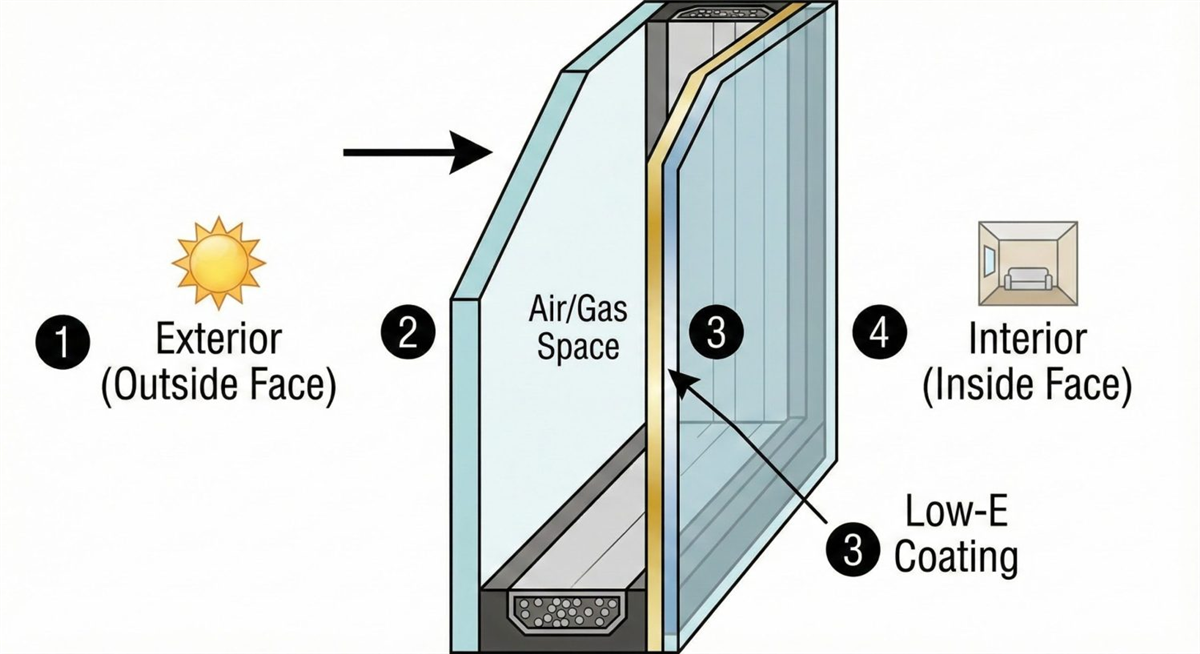
Andersen's 400 Series brochure centers on a handful of core numbers: U-Factor, Solar Heat Gain Coefficient (SHGC), Visible Transmittance (VT), and — if you're looking at the StormWatch® upgrade — impact resistance and design pressure ratings. The standard 400 Series with Low-E4 dual-pane glass typically lands in a U-Factor range of roughly 0.27 to 0.30 and an SHGC range of roughly 0.30 to 0.49, depending on the specific glass package and unit configuration. Upgrading to SmartSun™ glass brings SHGC down meaningfully, generally into the 0.23 to 0.29 range, while keeping visible light transmittance close to that of clear glass.
What Those Numbers Mean on an Austin Wall
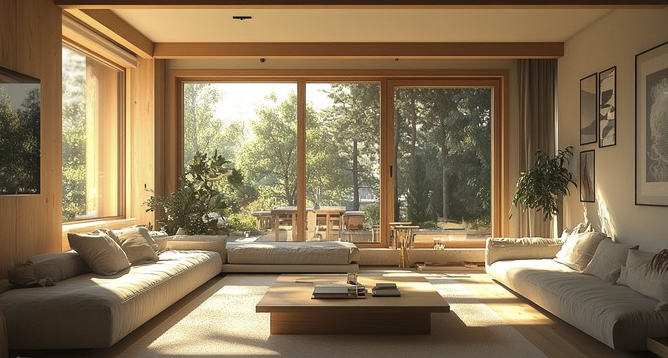
U-Factor tells you how much heat moves through the entire window assembly — frame and all — with a lower number meaning better insulation. In Austin, our winters are short enough that U-Factor usually isn't the number driving your energy bill. SHGC is the one that matters more here, since it measures how much solar heat actually passes through the glass. A south- or west-facing 400 Series window with standard Low-E4 glass and an SHGC near 0.45 is going to let a lot more afternoon heat into the room than the same window with SmartSun glass at roughly 0.28. That's not a marginal difference during a July afternoon — it's the difference between a room that stays comfortable and one that fights your air conditioner all day.
Andersen positions SmartSun specifically for markets like Texas, where the priority is blocking solar heat while keeping the glass looking clear rather than tinted. It also blocks a large share of UV rays, which matters for furniture, flooring, and fabric fading on rooms that get consistent direct sun.
Product Line Differences: Where the 400 Series Fits
Andersen's window lineup runs from the 100 Series (a Fibrex® composite entry-level line) up through the 200 Series, 400 Series, A-Series, and E-Series. The 400 Series sits in the middle — a wood-core window with a rigid vinyl exterior cladding, rather than the Fibrex composite used in Andersen's 100/200 Series or Renewal by Andersen products. That construction gives it a traditional wood interior look with lower exterior maintenance than an all-wood window, at a price point below the A-Series and E-Series lines, which move to thermally broken frames and more extensive customization.
The tradeoff: the 400 Series isn't thermally broken the way Andersen's A-Series is, so if you're chasing the absolute best insulation numbers available from Andersen, the A-Series edges it out. For most Austin homeowners weighing performance against budget, though, the 400 Series tends to be the sweet spot — strong energy performance, real wood interior, and a lower cost per opening than the premium lines above it.
The Texas Angle
For a Central Texas home, the 400 Series conversation really comes down to three decisions: glass package, impact resistance, and orientation. On glass, SmartSun is worth serious consideration for any south- or west-facing opening, since the lower SHGC directly reduces the solar heat load your AC has to fight. On impact resistance, Andersen offers StormWatch® protection with impact-resistant glass options on the 400 Series, which is relevant both for hail exposure and for homeowners closer to the coast dealing with wind-borne debris requirements. On orientation, it's worth remembering that a north-facing 400 Series window and a west-facing one aren't really the same product decision — the same glass package that's perfectly fine on a shaded north wall may be underperforming on an unshaded west wall getting hit by direct afternoon sun for hours.
Triple-pane glass is also available on the 400 Series, but for most Austin applications, the return on triple-pane is more relevant to cold-climate heat retention than Central Texas cooling loads — that upgrade tends to matter more in northern climates than here.
Warranty: What It Actually Covers
Andersen's warranty on the 400 Series is broken into distinct pieces, and it's worth understanding each one separately rather than assuming "20-year warranty" covers everything equally.
Glass coverage runs 20 years from the date of purchase, covering manufacturing defects, seal failure, and any resulting obstruction of vision, and it's transferable to a new owner if you sell the home. Notably, if you upgrade to StormWatch impact-resistant glass, that glass carries a separate, shorter warranty — typically 10 years rather than 20 — so it's worth confirming which glass package you're actually getting quoted and what warranty applies to it specifically.
Components other than glass — things like locks, hinges, balances, weatherstripping, and screens — are covered for 10 years from purchase. Wood components and the exterior finish carry a shorter 5-year warranty, which reflects that wood, even with a protective cladding, is a different material category than the vinyl exterior or the glass itself.
It's also worth separating Andersen's manufacturer warranty from your contractor's workmanship warranty. The manufacturer warranty covers defects in the product itself; a proper installation warranty from your contractor covers whether the window was set, flashed, and sealed correctly — and a perfectly warrantied window can still leak or perform poorly if the installation was done wrong.
What the Brochure Doesn't Tell You
A window's published performance numbers describe the product tested in a lab, not the product sitting in your specific wall. A 400 Series window with excellent SHGC and U-Factor numbers can still underperform if it's improperly measured, flashed, sealed, or installed — and none of that shows up on a spec sheet. The brochure also won't tell you whether an insert or full-frame installation is appropriate for your specific opening, whether your existing rough opening is square, or whether hidden water damage around your current window needs to be addressed before the new one goes in. Those are installation-and-condition questions, not product questions, and they matter just as much to how the window performs over the next 20 years.
Which Homeowners Should Choose the 400 Series?
The 400 Series tends to make the most sense for homeowners who want a genuine wood-interior look without full custom pricing, who are replacing multiple windows and need strong performance at a moderate cost per opening, and who want the flexibility to choose SmartSun or StormWatch upgrades for specific problem windows rather than paying premium pricing across the whole house. It's less of a fit for homeowners chasing the absolute best available insulation numbers (where the A-Series is the stronger option) or for very tight budgets where the 100 Series Fibrex line may be more appropriate.
Frequently Asked Questions
Is the Andersen 400 Series a good fit for Austin's climate?
Yes, particularly with the SmartSun glass upgrade on sun-exposed openings. The standard SHGC range is fine for many applications, but south- and west-facing windows benefit meaningfully from the lower-SHGC option.
What's the difference between Low-E4 and SmartSun glass?
Low-E4 is Andersen's standard energy-efficient glass, with a moderate SHGC suited to climates with both heating and cooling seasons. SmartSun specifically lowers SHGC further while keeping the glass visually clear, making it a better fit for hot, sun-heavy climates like Central Texas.
Does the 400 Series use Fibrex material?
No. Fibrex is used in Andersen's 100 Series, 200 Series, and Renewal by Andersen products. The 400 Series uses a wood interior with a rigid vinyl exterior cladding.
Is StormWatch protection worth it for hail-prone areas?
It's worth discussing for homes with significant hail exposure or specific wind-borne debris requirements. Keep in mind the impact-resistant glass carries a different (typically shorter) warranty term than standard glass.
How does the 400 Series compare to the A-Series?
The A-Series uses thermally broken frame construction and generally achieves stronger insulation numbers, along with more extensive customization options, but at a higher price point than the 400 Series.
What does the 20-year glass warranty actually cover?
It covers manufacturing defects, seal failure, and resulting obstruction of vision for standard glass options, and it's transferable if you sell your home. It does not cover accidental damage or issues caused by improper installation.
Why is my wood component warranty shorter than my glass warranty?
Wood is a different material category with different failure modes than glass or vinyl cladding, which is why Andersen breaks out separate coverage periods — 5 years for wood components and finish versus 20 years for glass.
Does a lower U-Factor matter as much in Texas as it does up north?
Less so. Texas has a shorter heating season than northern climates, so SHGC (solar heat gain) tends to have a bigger day-to-day impact on comfort and cooling costs here than U-Factor alone.
Is triple-pane glass worth it on a 400 Series window in Austin?
For most Central Texas applications, triple-pane's biggest benefit is cold-climate heat retention, which is less relevant here than it would be in a northern climate. It's not usually the first upgrade we'd recommend for Austin homeowners over SHGC-focused glass options.
Does the manufacturer warranty cover installation problems?
No. The manufacturer warranty covers defects in the product itself. Installation quality is typically covered separately under your contractor's workmanship warranty, which is why both matter.
Get Started With a Free Consultation
Thinking about Andersen 400 Series windows for your Austin home? We can walk through glass packages, impact-resistance options, and whether an insert or full-frame installation makes sense for your specific openings.
Remember: When you refer a friend or neighbor for windows, siding, roofing, or door replacement, you can earn up to $250 through the JP Exteriors Referral Program.
Subscribe to JP Exteriors's Blog


Comments