If you've ever assumed your siding is what keeps water out of your walls, here's the uncomfortable truth: it isn't, not entirely. Every type of siding — fiber cement, vinyl, wood, even brick — is expected to let some water past it. Wind-driven rain finds its way through seams, laps, and fastener holes no matter how well the siding is installed.
That's not a defect. It's the reason a second layer exists behind the siding in the first place, and on a lot of Austin-area homes, that layer is either the wrong material, badly deteriorated, or missing entirely.
That second layer is called a water-resistive barrier, and the system it's part of is called a drainage plane. It's arguably the most important part of your exterior wall that you'll never see — and it's not something a siding replacement automatically fixes unless someone actually checks it.
What's a Drainage Plane, and Why Does Water Get Behind Your Siding On Purpose?
Building codes don't assume siding is waterproof. The International Residential Code's water-resistive barrier requirement (Section R703.2) exists specifically because incidental water intrusion behind siding is treated as normal, expected, and something the wall assembly has to be designed to handle. The code requires a layer of water-resistive material — historically a minimum of one layer of asphalt felt, or another approved barrier like housewrap — installed directly over the wall sheathing, before the siding goes on.
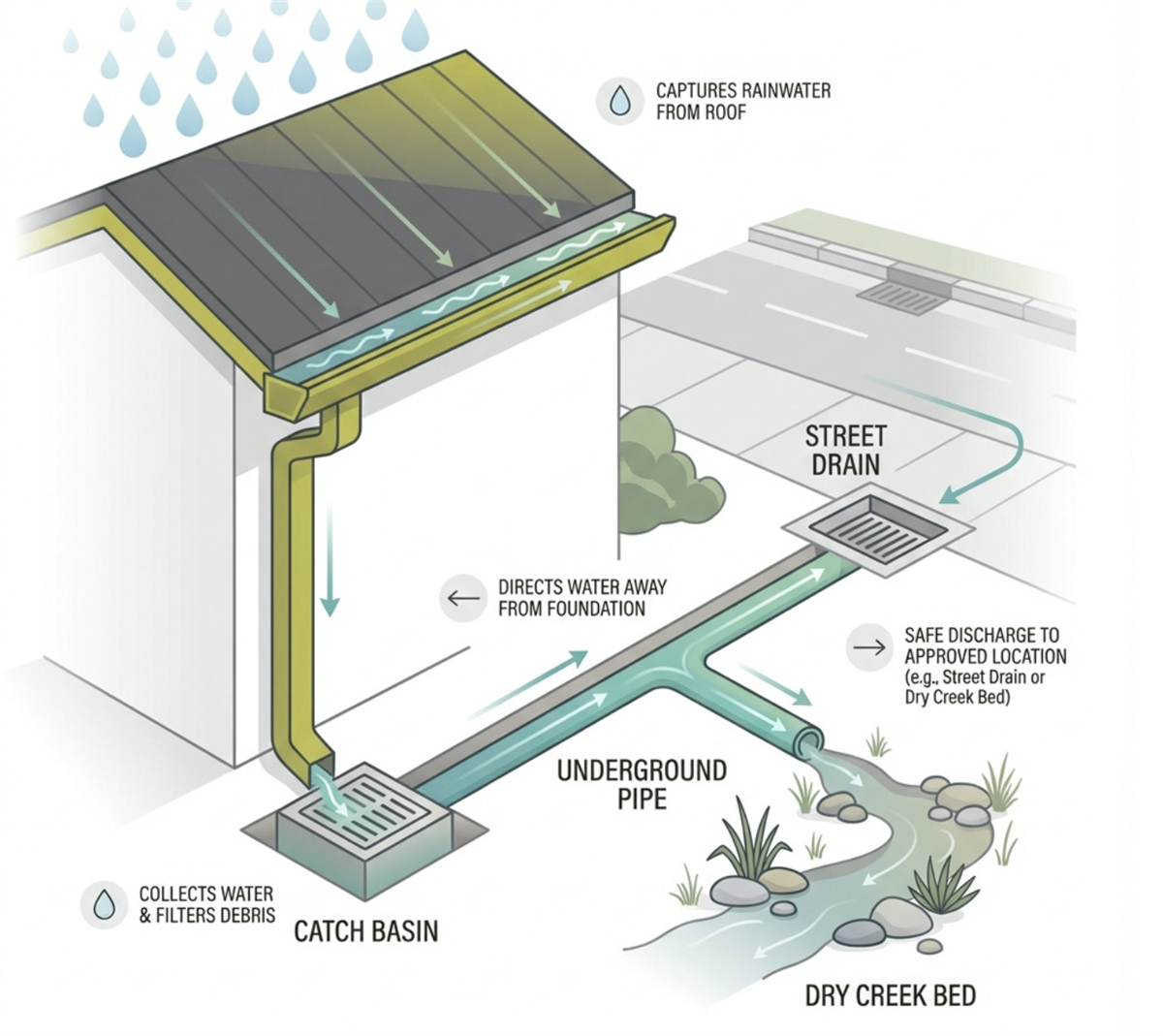
That barrier's job isn't to stop 100% of water from ever getting behind the siding. It's to catch what gets through, keep it off the sheathing and framing, and — combined with proper flashing at windows, doors, and penetrations — direct it back out and down, away from the structure. That's the "drainage" in drainage plane: a designed path for water to exit, not just a barrier hoping to block it.
Housewrap, Felt, or Nothing: What's Actually Back There?
What's behind your siding right now generally falls into one of three categories.
Number 15 asphalt felt is the older, code-baseline material — the same product family used under roofing, adapted for wall use. It's still code-compliant, but it wasn't originally engineered for vertical wall applications, and it degrades over time, especially with prolonged UV or moisture exposure before the siding goes on. A lot of older Austin homes were built with felt, and depending on the home's age and the quality of the original installation, that felt may be well past its useful life.
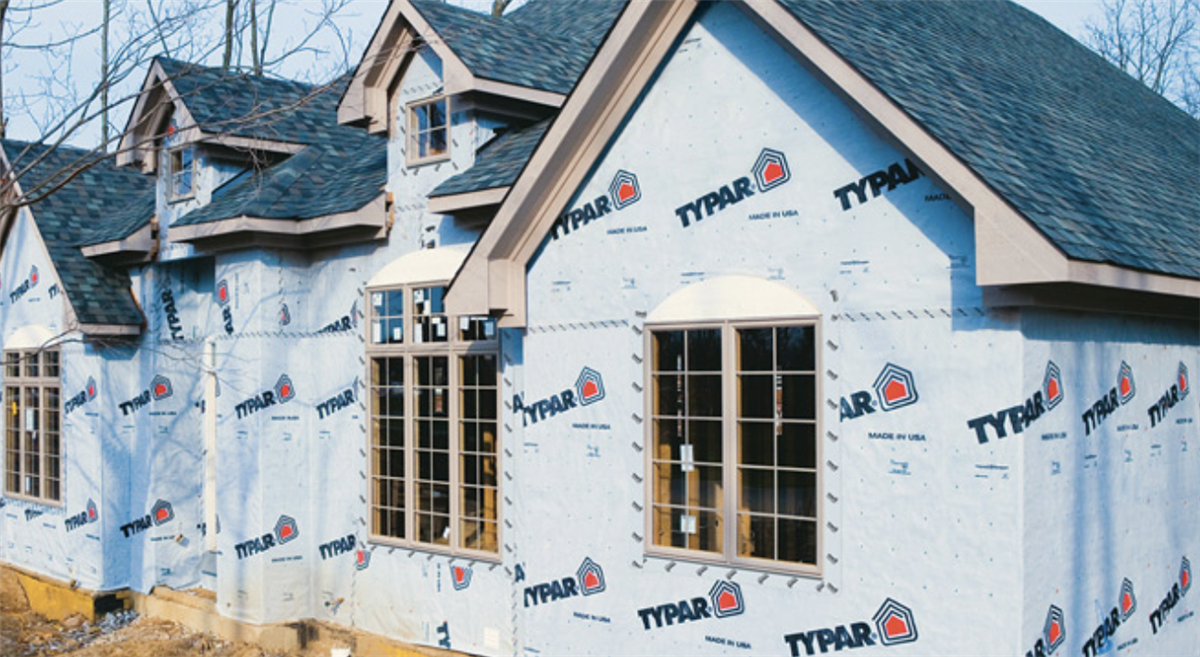
Synthetic housewrap — products like Tyvek, Typar, or James Hardie's own Hardie™ Weather Barrier line — is the modern standard. It's engineered specifically for wall assemblies rather than adapted from a roofing product, holds up more consistently over time, and is available in different vapor-permeability options depending on the wall design. James Hardie sells its own housewrap, flashing tape, and sealing products specifically because getting the water-management layer right is part of a correct fiber cement installation, not an optional extra.
Nothing is the third, less obvious category — and it's more common than most homeowners assume. It shows up in older homes built before consistent code enforcement, in homes that have been re-sided before without anyone replacing the barrier underneath, and occasionally in work done by contractors who skipped the step because it's invisible once the siding goes back on. A missing water-resistive barrier is a code violation, and it means there's no designed path for incidental water to go anywhere except into the sheathing and framing behind it.
Why This Matters More in Central Texas
Austin's climate is a tougher test for this system than a lot of the country. Humidity stays high for long stretches, storms bring wind-driven rain rather than straight-down rain, summer UV exposure is intense enough to accelerate the breakdown of older felt, and the region gets occasional hard freezes that stress any moisture already trapped in a wall assembly. Add in that Central Texas homes span many different decades and code eras — and that felt degrades faster here than in milder climates — and the odds that an older home's barrier is doing its job today are lower than homeowners typically assume.
How Do You Know What's Behind Your Existing Siding?
You generally can't tell without removing a section of siding, which is exactly why this gets missed. A few signs are worth watching for in the meantime: soft or spongy siding near the base of walls, dark staining or streaking at seams and butt joints, siding that's visibly warped or pulling away from the wall, or a musty smell on an interior wall that shares an exterior with older siding. None of these guarantee a failed barrier, but they're reasons to have it checked rather than ignored.
If you're getting quotes for a siding replacement, this is also the moment to ask directly: will the contractor be inspecting and, if needed, replacing the water-resistive barrier underneath, or just installing new siding over whatever's already there? That distinction rarely shows up on a basic estimate, but it's one of the more consequential decisions in the whole project.
What About the Gap? Rainscreens and Drainage
Beyond the barrier itself, a small air gap between the water-resistive barrier and the siding — a rainscreen — gives any water that does get through somewhere to drain and a way for the wall to dry out faster. It isn't universally required by code the way the barrier itself is, but it's increasingly recommended by manufacturers and considered best practice, particularly in humid climates like Central Texas. It's another detail worth asking about when you're comparing installation approaches, not just siding materials.
Felt vs. Housewrap vs. No Barrier
Asphalt Felt | Synthetic Housewrap | No Barrier | |
|---|---|---|---|
Code compliant | Yes, minimum standard | Yes, when approved | No |
Designed for wall use | No — adapted from roofing | Yes | N/A |
Typical durability | Degrades with age and UV exposure | More consistent long-term performance | N/A |
Common era | Older homes, pre-2000s common | Modern standard, current installs | Older homes or corner-cut re-sides |
Risk if left in place too long | Moisture intrusion as it breaks down | Low, if installed correctly | High — no designed drainage path |
Why JP Exteriors
We don't sell a siding replacement as just new panels going up. When we quote or install fiber cement siding, checking what's behind the existing material — and correcting it if it's degraded felt or a missing barrier entirely — is part of the process, not an upsell we spring on you afterward. We install using James Hardie's own weather barrier and flashing systems where fiber cement is involved, because getting the water-management layer right is what actually determines whether a siding job holds up in Central Texas weather for the long term.
Frequently Asked Questions
1. Does every home have a water-resistive barrier behind the siding?It should, under current code, but older homes and past re-siding jobs don't always have one that's intact — or present at all.
2. Can I tell if my barrier is failing without removing the siding?
Not directly, but soft spots, staining at seams, warped siding, or musty interior smells near exterior walls are signs worth having checked.
3. Is felt still acceptable, or does it need to be housewrap?
Asphalt felt is still code-compliant, but it degrades faster than modern synthetic housewrap, especially in Central Texas heat and humidity.
4. Does a rainscreen gap actually matter?
It helps water drain and the wall dry faster. It's not always code-required, but it's increasingly recommended, especially in humid climates.
5. If I replace my siding, does that automatically fix the barrier underneath?
No — unless your contractor specifically inspects and replaces it as part of the job. Ask before you sign.
6. Does every house need housewrap behind siding?
Most modern siding installations require a properly designed water-resistive barrier or drainage system, although the exact requirements depend on the home's construction and applicable building code.
7. Can you install James Hardie siding without housewrap?
James Hardie siding is not itself a substitute for the wall's water-resistive barrier. The wall assembly should include the appropriate weather protection behind the siding.
8. What happens if water gets behind siding?
If water cannot properly drain or dry, it can contribute to rot, damaged sheathing, mold, and deterioration of the wall assembly over time.
9. Is housewrap enough to prevent water damage?
Not by itself. Proper flashing, drainage, installation details, penetrations, and siding installation all work together to manage water.
10. Should housewrap be replaced when replacing siding?
If the existing weather barrier is damaged, missing, improperly installed, or no longer provides adequate protection, siding replacement can be an opportunity to correct the wall assembly.
Get Started With a Free Consultation
Considering a siding project in Austin or anywhere in Central Texas?
What's behind your siding matters as much as what's on the outside. If it's been more than a couple of decades since your home's exterior was last opened up, it's worth finding out what's actually back there before your next project.
Remember: When you refer a friend or neighbor for windows, siding, roofing, or door replacement, you can earn up to $250 through the JP Exteriors Referral Program.
Subscribe to JP Exteriors's Blog




Comments