When you're replacing windows in an Austin home, the hardest part isn't finding a window company.
It's figuring out what you're actually paying for.
One contractor recommends Burris.
Another recommends Andersen.
Someone else says Marvin is the only window worth buying.
Then you start looking at prices and realize the three aren't necessarily competing in the same part of the market.
That's because window brands don't have one single "quality level."
Andersen has multiple product families. Marvin has multiple collections. Burris has different products as well.
So instead of asking:
"Which brand is best?"
A better question is:
"Which window is the right fit for my house, budget, and priorities?"
For an Austin homeowner, that usually comes down to four things:
Price
Frame material
Performance and appearance
Warranty and long-term service
Here's how Burris, Andersen, and Marvin generally stack up.
The Short Version: Good, Better, Best
If you want the quick answer:
Tier | Brand | Typical Positioning | Best For |
|---|---|---|---|
Good | Burris | Value-oriented | Homeowners wanting a quality replacement window without paying premium-brand prices |
Better | Andersen | Broad range from value to premium | Homeowners wanting a major national brand, strong product selection, and transferable warranty coverage |
Best | Marvin | Premium | Homeowners prioritizing materials, architectural appearance, customization, and premium construction |
But there's an important catch.
Andersen can overlap both the "good" and "best" categories depending on the series.
An Andersen 100 Series composite window and a premium Marvin Ultimate window aren't direct competitors.
And even within Marvin, an Essential window and an Ultimate window are designed for different buyers.
So think of the table as a general price/positioning guide, not a ranking where every Burris is worse than every Andersen or every Andersen is worse than every Marvin.
Burris: The Value-Focused Choice
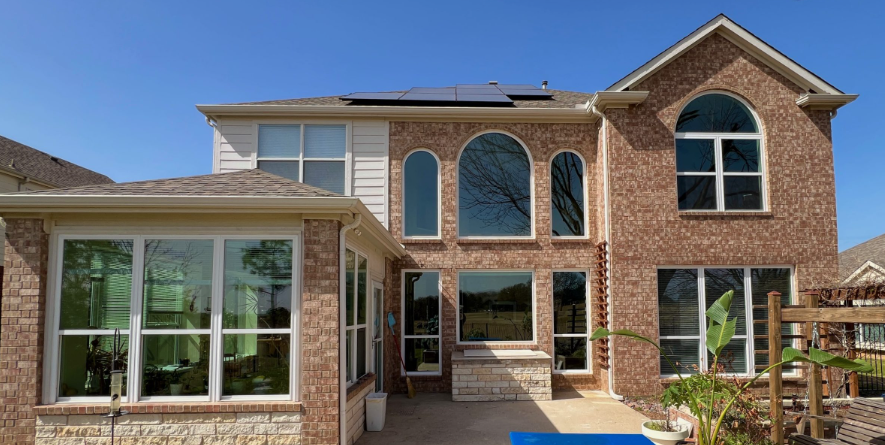
Burris is a Texas-based window manufacturer, and its published warranty documentation includes vinyl frames and sashes with lifetime coverage against manufacturing defects such as chipping, cracking, peeling, or blistering, subject to the warranty's terms and limitations. Its published warranty also provides lifetime coverage for many other components and lifetime insulated-glass coverage for certain issues, while some items have shorter coverage periods.
That makes Burris particularly interesting for homeowners who want a solid replacement window without automatically moving into the premium price category.
What Burris Gets Right
Vinyl construction
Burris's published warranty specifically addresses vinyl frames and sashes.
For many Austin homeowners, vinyl makes sense because it requires relatively little exterior maintenance and doesn't require the ongoing painting associated with traditional wood windows.
Value
The biggest advantage of a value-oriented vinyl window is straightforward:
You can replace more windows without putting as much money into each opening.
That's important when you're replacing 15, 20, or 30 windows.
Spending another $500 or $1,000 on every opening adds up quickly.
Practical replacement projects
Burris can make sense when the homeowner's primary goals are:
Replacing aging windows
Improving operation
Reducing drafts
Improving appearance
Getting better insulated glass
Staying within a reasonable budget
You don't necessarily need a premium architectural window to accomplish those things.
Where Burris Makes the Most Sense
Burris is particularly attractive for the homeowner who says:
"I want good windows, but I don't need the most expensive window available."
That's a completely reasonable position.
If you're replacing an entire house, the difference between a value-oriented window and a premium window can become tens of thousands of dollars.
The question is whether you'll actually notice and benefit from the additional investment.
Andersen: The Middle Ground With a Huge Range
Andersen is more difficult to put into one category because its product lineup covers a large range.
Andersen's current families include the 100, 200, 400, and A-Series, as well as E-Series and other products.
That means you can buy an Andersen window without necessarily buying a premium Andersen window.
This is one reason the brand can fit into the "better" category for many homeowners.
But some Andersen products can compete directly with premium brands.

Andersen 100 Series: The Value Side
Andersen's 100 Series uses its proprietary Fibrex® composite material rather than conventional all-vinyl construction. Andersen says Fibrex is stronger than vinyl and designed to perform better under temperature extremes.
For an Austin homeowner, that's an interesting proposition.
You get a composite frame without moving all the way into a premium wood-window product.
It's especially worth considering if you want:
A contemporary appearance
Narrower frame aesthetics than some vinyl windows
Low maintenance
Composite construction
A nationally recognized brand
Andersen 200 and 400 Series: The Traditional Wood-Core Approach
Andersen's 200 and 400 Series are primarily wood windows with exterior cladding.
The 400 Series, for example, uses wood for the core with Perma-Shield exterior cladding. Andersen describes the combination as providing the insulation and appearance of wood while reducing exterior maintenance.
That makes these windows very different from a typical all-vinyl replacement window.
You're buying a different type of product.
And you're also paying for a different aesthetic.
Andersen A-Series: The Premium Side
The A-Series sits higher in Andersen's product range and combines wood interiors with fiberglass-clad exteriors.
Andersen positions the A-Series as a high-performance, architecturally authentic product line.
This is where an Andersen comparison starts overlapping with premium Marvin products.
So saying:
"Andersen is the mid-range brand."
would be misleading.
A better statement is:
Andersen has products ranging from value-oriented composite windows to premium architectural windows.
Marvin: The Premium Choice
Marvin generally enters the conversation when the homeowner cares about more than simply replacing an old window.
They're looking at:
Architectural appearance
Larger openings
Premium materials
Custom configurations
Wood interiors
High-end finishes
Design flexibility
Premium performance
Marvin's current product families include different material combinations and performance characteristics.
For example, Marvin's Ultimate products use wood interiors with extruded aluminum exteriors, while Marvin's Modern collection uses high-density fiberglass exteriors.
That's a very different product philosophy from a basic vinyl replacement window.
Why Marvin Costs More
Premium windows aren't expensive simply because of the logo.
You're often paying for:
More expensive frame materials
More complex manufacturing
Custom sizing and configurations
Premium hardware
More finish choices
Architectural detailing
Larger or specialty openings
More customization
Premium exterior finishes
Marvin's Ultimate line, for example, uses extruded aluminum on the exterior and wood on the interior. Marvin describes the extruded aluminum as thicker and more durable than roll-formed aluminum and offers premium finish options.
That's a fundamentally different window from an all-vinyl replacement unit.

Price: How Much More Are We Talking About?
This is where homeowners need to be careful.
There isn't a reliable single "Burris price" or "Marvin price."
Window cost changes dramatically depending on:
Size
Style
Material
Glass package
Number of panes
Grid pattern
Interior finish
Exterior color
Installation method
Full-frame vs. insert replacement
Structural modifications
Trim work
Number of windows
Accessibility
Labor
For a rough market-positioning discussion, think about the brands this way:
Burris
Lower-to-middle price tier
A practical choice when keeping the project budget under control is important.
Andersen
Middle to premium
The series matters enormously. An Andersen 100 Series isn't comparable to an E-Series.
Marvin
Premium to luxury
Especially when you're looking at higher-end collections, custom configurations, wood interiors, and architectural designs.
The actual installed price should come from the specific window configuration rather than a generic "per-window" number.
A $1,000 Window Isn't Necessarily a $1,000 Window
This is one of the biggest mistakes homeowners make when comparing proposals.
Two contractors might both say:
"$1,000 per window."
But one could be selling a basic vinyl replacement.
The other could be selling a premium fiberglass or wood-clad window.
The price alone doesn't tell you enough.
Ask for the exact product line and specifications.
For example:
Brand: Andersen
Series: 100
Style: Double-hung
Glass: Specific Low-E package
Color: Specific exterior/interior
Installation: Insert or full-frame
That's much more useful than simply writing "Andersen window" on a proposal.
Frame Materials: Vinyl vs. Composite vs. Wood-Clad
The frame material may be more important than the logo on the glass.
Vinyl
Vinyl is popular because it's relatively affordable, low maintenance, and widely available.
It's often the most economical way to replace a large number of windows.
But vinyl also has limitations, particularly as designs get larger or homeowners want extremely narrow sightlines and premium architectural aesthetics.
Composite
Composite materials try to combine some of the advantages of different materials.
Andersen's Fibrex is one example.
Andersen says Fibrex is stronger than vinyl and designed for performance under temperature extremes.
For homeowners who want something beyond conventional vinyl but don't necessarily want a wood window, composite can be a compelling middle ground.
Wood
Wood remains attractive because of its appearance, feel, and thermal properties.
But wood isn't maintenance-free.
That's why manufacturers such as Andersen and Marvin pair wood interiors with exterior cladding or other protective materials.
Andersen's clad-wood products use materials including vinyl cladding, aluminum, and fiberglass depending on the product line.
Marvin similarly offers wood interiors with premium exterior materials on several product lines.
Warranty: The Fine Print Matters More Than the Headline
This is where comparing brands gets interesting.
A homeowner might see:
"Lifetime Warranty"
and assume that's automatically better than:
"20-Year Warranty."
Not necessarily.
You need to know:
What component is covered?
For how long?
Is it transferable?
Does it cover labor?
Does it cover glass?
Does it cover the frame?
What exclusions apply?
Who handles the claim?
Burris Warranty
Burris's published limited lifetime warranty provides lifetime coverage for certain vinyl frame and sash components and other components, while insulated glass coverage and other components have specific terms. The warranty is for the original purchaser in single-family residential applications; if the property is sold, the warranty reverts to a 20-year warranty from the original purchase date. The warranty also states that it does not obligate Burris to cover labor or transportation for replaced or repaired products.
That's a perfect example of why the phrase "lifetime warranty" doesn't tell the whole story.
Lifetime does not necessarily mean:
"Everything is covered forever, including labor."
Read the actual warranty.
Andersen Warranty
Andersen's current warranty structure varies by product line, but its comparison information lists 20 years for glass and 10 years for non-glass components across its major non-coastal residential series, with Owner-to-Owner® transferability.
Andersen also provides specific warranty documents for each product family.
So again, the series matters.
A homeowner shouldn't compare "Burris lifetime" against "Andersen 10-year" without understanding what each warranty actually covers.
Marvin Warranty
Marvin's current limited warranty is also product-specific.
Marvin's warranty materials explain that warranty claims generally begin with the retailer from whom the homeowner purchased the product. If the retailer or distributor doesn't respond within the specified timeframe, Marvin provides an escalation process.
Marvin's published warranty information also emphasizes that installation, flashing, sealing, drainage, and water-management design are responsibilities of the appropriate construction professionals—not automatically the manufacturer.
That's an important reminder:
A great window cannot compensate for a bad installation.
The Installation Matters More Than the Logo
You can buy an expensive window and still have problems if it is installed incorrectly.
Window performance depends on more than the factory product.
Installation can affect:
Water infiltration
Air leakage
Operation
Insulation
Flashing
Drainage
Trim
Structural support
Long-term durability
That's why a homeowner should compare the window and the installation.
Not just the brand.
So Which One Is Actually Right for an Austin Home?
Here's where the "Good, Better, Best" comparison becomes useful.
Choose Burris if...
You're primarily looking for:
Good value
Vinyl construction
Lower overall project cost
Straightforward replacement
Low exterior maintenance
A practical solution for a larger number of openings
Burris can be a very reasonable choice when the goal is to improve an aging home's windows without turning the project into a luxury renovation.
Choose Andersen if...
You want:
A wide range of product options
Composite or wood-core construction
A nationally recognized manufacturer
More architectural choices
Transferable warranty coverage
The ability to choose a product line based on budget
Andersen's biggest advantage may actually be choice.
The homeowner can move up or down the product range rather than being locked into one material philosophy.
Choose Marvin if...
You're willing to spend more because you care about:
Premium materials
Architectural appearance
Wood interiors
Custom configurations
Premium finishes
Large or specialty openings
High-end renovation work
Marvin makes more sense when the windows are part of the architecture—not simply a maintenance replacement.
Austin Changes the Equation
Windows in Austin don't live in a mild, predictable climate.
They deal with:
Intense summer sun
High temperatures
Rapid weather changes
Humidity
Heavy rain
Occasional severe storms
Hail
Long periods of air-conditioning use
That makes glass selection and solar performance especially important.
The brand name alone doesn't tell you whether a particular window is right for your house.
Ask about the actual performance specifications.
Don't Shop by U-Factor Alone
U-Factor tells you about how well the window resists heat transfer.
Lower is generally better.
But in Austin, SHGC can be especially important because solar heat gain matters during a long cooling season.
A window with a very low U-Factor isn't automatically the best window for every room and every exposure.
South- and west-facing windows may have different needs from shaded north-facing windows.
That's why window selection should consider the house rather than simply choosing the lowest number on the brochure.
What About Black Windows in Austin?
Dark window frames are extremely popular.
They're also exposed to more solar heating.
That doesn't mean:
"Never buy black windows in Texas."
It means the material, product design, glass, exposure, and manufacturer's specifications matter.
This is another situation where comparing a premium composite or fiberglass product with a basic vinyl product can be more useful than comparing brand names alone.
If you're considering dark frames, ask the manufacturer and installer what the specific product is designed to handle.
What About Hail?
A window's frame material isn't the same thing as its glass's resistance to impact.
If you're in a hail-prone Central Texas area, ask about the actual glass package and available impact-resistant options if that is a priority.
Don't assume:
"Premium window = impact-resistant window."
It doesn't work that way.
Impact performance is a product-specific specification.
Full-Frame vs. Insert Replacement Matters Too
You can have a premium window brand installed as an insert and still have an old frame surrounding it.
That can be perfectly appropriate when the existing frame is sound.
But if the existing frame has:
Rot
Water damage
Structural problems
Poor previous installation
Significant deterioration
then an insert may not address the underlying problem.
A full-frame replacement removes more of the existing assembly and can provide a better opportunity to inspect and correct the opening.
That's one reason the installation method should be included in every window comparison.
The Best Window Isn't Always the Most Expensive One
A $2,500 premium window isn't automatically a better investment than a $1,000 window.
It depends on the house.
If you're renovating a historic or high-end home where interior wood, architectural proportions, and custom detailing matter, Marvin may be worth the additional investment.
If you're replacing 25 aging windows in a typical Austin home and want good performance without dramatically increasing the project budget, a quality vinyl window such as Burris may make more sense.
And if you want something between those extremes, Andersen gives you a large range of options.
That's why the right question isn't:
"Which brand wins?"
It's:
"What problem am I trying to solve?"
Our Good, Better, Best Take
GOOD — Burris
Best for: Budget-conscious homeowners who want a practical replacement window.
Material focus: Vinyl
Big advantage: Value
Watch for: Don't judge the warranty by the word "lifetime" alone; understand the actual coverage and labor exclusions.
BETTER — Andersen
Best for: Homeowners who want a broad range of materials and price points from an established national manufacturer.
Material focus: Fibrex composite, wood with cladding, fiberglass, aluminum depending on series
Big advantage: Product selection and transferable warranty structure
Watch for: Always identify the exact series. "Andersen" isn't one window.
BEST — Marvin
Best for: Premium renovations where materials, architecture, customization, and appearance justify a higher investment.
Material focus: Wood, fiberglass, aluminum-clad wood, and other premium combinations depending on collection
Big advantage: Premium materials and architectural flexibility
Watch for: Higher cost and the importance of finding an installer who understands the specific product.
What to Ask Before Buying Any of the Three
Before signing a window contract, ask:
What exact brand and product line am I buying?
What frame material does it use?
What glass package is included?
What are the U-Factor and SHGC ratings?
Is the glass Low-E?
What is the installation method?
Is this insert or full-frame?
What happens if the existing frame is rotten?
Who handles installation warranty issues?
What does the manufacturer warranty actually cover?
Is the warranty transferable?
Does the warranty cover labor?
What happens if a glass seal fails?
What is the expected lead time?
What is the total installed cost—not just the window price?
If the salesperson can't answer these questions, you don't have enough information to compare the bids.
Final Verdict
There's no single winner between Burris, Andersen, and Marvin.
They're better thought of as different solutions for different homeowners.
Burris makes sense when value and practical vinyl replacement are the priorities.
Andersen makes sense when you want a broad range of materials, styles, and price points.
Marvin makes sense when you're willing to spend more for premium materials, architectural design, and customization.
And there's one final point that's easy to overlook:
The installer matters.
A properly selected, properly installed mid-range window can be a better investment than an expensive window installed poorly.
So when you're comparing three window proposals for an Austin home, don't ask only:
"Which brand is best?"
Ask:
"Which specific window, with which glass, installed how, for what price, and backed by what warranty?"
That's the comparison that actually helps you make a good decision.
Frequently Asked Questions
1. Is Burris cheaper than Andersen and Marvin?
Generally, Burris is positioned more toward the value side of the market, while Andersen spans mid-range through premium products and Marvin is generally positioned higher. Actual pricing depends heavily on the specific window series, size, glass, configuration, and installation.
2. Is Burris a good window for Austin?
Burris can be a practical choice for homeowners looking for a value-oriented replacement window, particularly when replacing many openings and keeping the overall project budget under control.
3. Are Andersen windows better than Burris windows?
Not automatically. The specific Andersen series matters. Andersen offers everything from composite 100 Series products to premium wood-based product lines, so a meaningful comparison requires looking at the exact product being quoted.
4. Are Marvin windows worth the extra money?
They can be for the right project. Marvin becomes more compelling when premium materials, architectural appearance, customization, large openings, and wood interiors are important. For a basic replacement project, the additional cost may not provide enough benefit for every homeowner.
5. Which brand has the best warranty?
There isn't a simple winner. Burris publishes substantial lifetime coverage for certain components, Andersen offers transferable Owner-to-Owner warranties with product-specific coverage, and Marvin offers a current limited warranty with product-specific terms. The important comparison is what is covered, for how long, whether labor is included, and how claims are handled.
6. Are Burris windows vinyl?
Burris's published warranty specifically covers vinyl frames and sashes. Always confirm the exact product and specifications included in your proposal.
7. What material does Andersen use?
It depends on the series. Andersen uses materials including Fibrex composite, wood, vinyl cladding, aluminum, and fiberglass across its product families.
8. What material does Marvin use?
It depends on the collection. Marvin offers products using materials such as wood, fiberglass, and extruded aluminum in different combinations. For example, Marvin Ultimate products use wood interiors with extruded aluminum exteriors, while Modern products use high-density fiberglass exteriors.
9. Which window material is best for Texas heat?
There isn't one universal answer. Vinyl, composite, fiberglass, and wood-clad windows can all work in Texas when properly designed and installed. The specific product's thermal performance, solar characteristics, color, exposure, glass package, and installation matter.
10. Are black windows a bad idea in Austin?
Not necessarily. Dark frames absorb more solar energy, so homeowners should consider the specific frame material, product specifications, exposure, and manufacturer's recommendations rather than assuming all black windows will perform the same way.
11. Should I choose full-frame or insert replacement windows?
It depends on the condition of the existing window frame. Insert replacement can be appropriate when the existing frame is sound. Full-frame replacement can make more sense when there is rot, water damage, deterioration, structural problems, or a need to change the opening.
12. Does a more expensive window save more money on energy?
Not automatically. Energy performance depends on the entire window configuration, including glass, frame, installation, orientation, shading, and air leakage. The most expensive window isn't necessarily the most cost-effective choice for every Austin home.
13. Which is better for a large window opening: vinyl, composite, fiberglass, or wood?
Large openings can place greater demands on frame strength and design. The best material depends on the exact opening, window configuration, structural requirements, glass weight, and manufacturer's tested specifications.
14. Does the installer matter as much as the window brand?
Yes. Even a high-quality window can perform poorly if it is improperly installed. Flashing, sealing, shimming, drainage, fastening, and integration with the existing wall assembly all matter.
15. What should I compare when getting window quotes?
Compare the exact product line, frame material, glass package, U-Factor, SHGC, installation method, included trim and labor, warranty coverage, lead time, and total installed price. Comparing only the brand name or price per window isn't enough.
Get Started With a Free Roofing Consultation
Remember: When you refer a friend or neighbor for windows, siding, roofing, or door replacement, you can earn up to $250 through the JP Exteriors Referral Program.
Subscribe to JP Exteriors's Blog



Comments