Getting three estimates for an exterior remodeling project sounds simple.
You give each contractor the same address, ask for the same work, and compare the numbers.
But then something strange happens.
One contractor quotes $28,000.
Another says $35,000.
The third comes in at $43,000.
Now you're looking at a $15,000 difference for what appears to be the same job.
So who's right?
The answer may be that you're not actually comparing the same job.
Exterior remodeling estimates can vary significantly because contractors may be including different materials, different amounts of preparation, different allowances for hidden damage, different warranties, or simply different levels of detail in their proposals.
That's why the lowest number isn't necessarily the least expensive project.
And the highest number isn't automatically the most comprehensive.
Before comparing the price, compare what each contractor is actually promising to do for that price.

The Biggest Problem: “Same Job” Doesn't Always Mean Same Scope
Imagine three homeowners asking contractors:
“How much would it cost to replace my siding?”
That sounds like a straightforward question.
But the contractor still has to determine:
Is the existing siding being removed?
Is the housewrap being replaced?
Is damaged sheathing included?
What happens if rotten framing is discovered?
What siding product is being installed?
What trim is included?
Are windows and doors being retrimmed?
Is painting included?
Is caulking included?
What happens at roof-to-wall transitions?
Are gutters being removed and reinstalled?
Is disposal included?
What warranty applies?
If one contractor includes all of those items and another only includes the basic siding installation, the two numbers aren't really competing on the same scope.
They're competing on two different projects.
1. Scope Gaps Can Create a Huge Price Difference
The biggest differences between bids often aren't visible from the street.
They are buried in the scope of work.
One proposal might say:
“Remove existing siding and install new Hardie siding.”
Another might spell out:
Remove and dispose of existing siding
Inspect wall substrate
Replace damaged sheathing as needed
Install weather-resistive barrier
Install new siding
Install new corner trim
Replace window and door trim
Flash applicable transitions
Caulk joints
Paint exposed siding and trim
Clean up and haul away debris
Those descriptions may produce very different prices.
And neither contractor necessarily has to be doing anything dishonest.
They may simply be pricing different amounts of work.
The Question to Ask
Instead of asking:
“Why are you $10,000 more?”
Ask:
“Can you walk me through exactly what is included in your scope that may not be included in the other estimate?”
That question gets you much closer to a useful comparison.
2. Material Grade Matters More Than Homeowners Expect
“New siding” isn't one universal product.
Even within a single manufacturer's product family, there can be different profiles, textures, finishes, trim packages, and accessory requirements.
The same applies to roofing, windows, doors, gutters, and other exterior materials.
For siding, ask:
What manufacturer?
What product line?
What profile?
What exposure?
What thickness or product specification?
What finish?
Is it factory-finished or field-painted?
What trim product is being used?
Two quotes can both say “James Hardie siding” while still specifying different products or different levels of trim and finish.
The same principle applies to roofing.
“Architectural shingles” doesn't tell you everything you need to know.
The actual manufacturer, product line, impact rating where applicable, underlayment, flashing, ventilation, and installation details can all affect the scope.
3. Sheathing Allowances Can Make a Cheap Quote Look Cheaper
This is one of the biggest things homeowners should understand before signing an exterior remodeling contract.
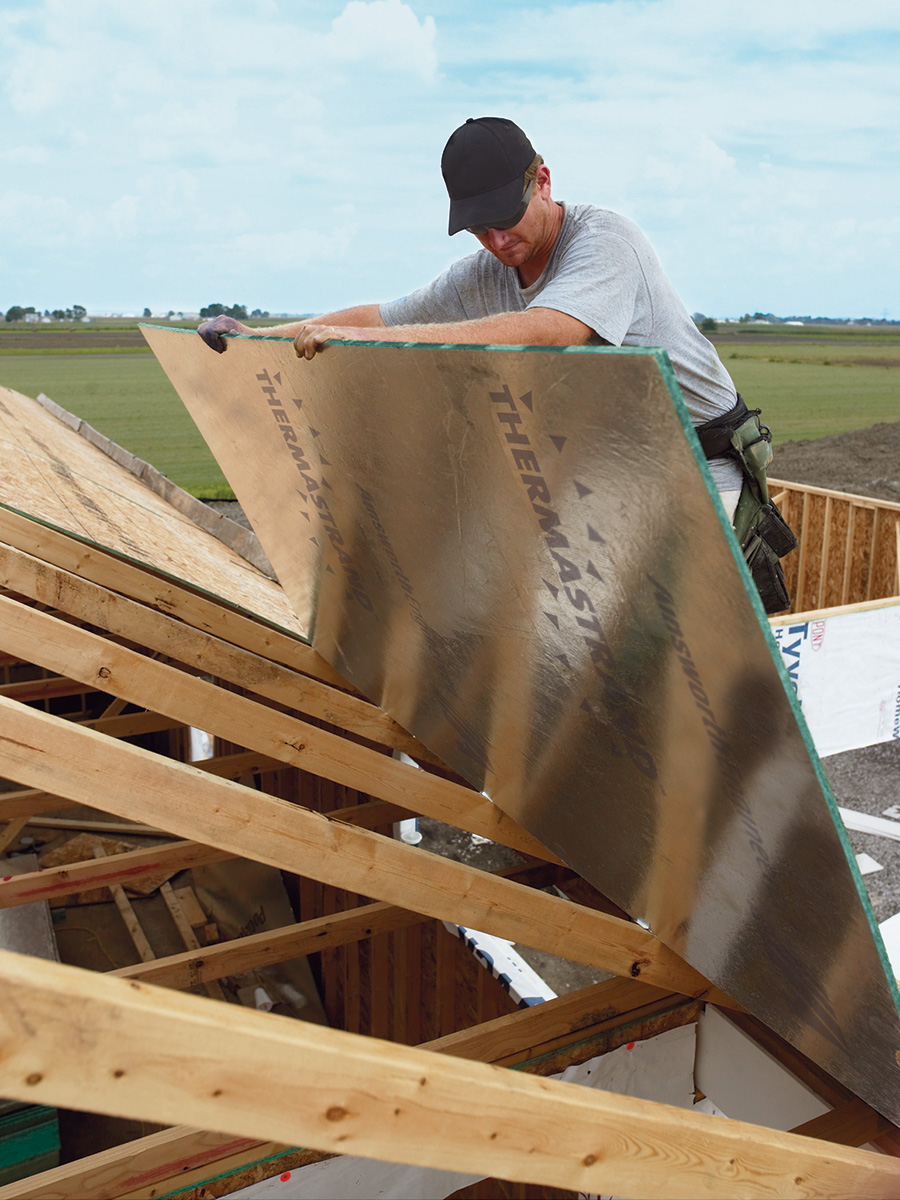
You can't always see what's underneath the existing siding or roofing.
Once the existing material comes off, the contractor may discover:
Rotten sheathing
Water-damaged plywood or OSB
Deteriorated framing
Previous repairs
Improperly installed materials
Areas that need additional preparation
So contractors have to decide how they're going to handle unknown conditions.
One proposal might include a certain amount of replacement sheathing.
Another might say:
“Sheathing replacement not included. Additional charges apply if needed.”
Another might include a per-sheet or per-square-foot allowance.
Those are three very different pricing structures.
Why This Matters
Suppose Contractor A includes 20 sheets of replacement sheathing.
Contractor B includes none.
Contractor B may appear substantially cheaper on paper.
But if the house ultimately needs 20 sheets, the final project cost could move much closer together.
That doesn't make Contractor B's estimate automatically wrong.
It simply means the homeowner needs to understand what happens when hidden conditions are discovered.
4. Ask What Happens When Rotten Wood Is Found
This deserves its own conversation because exterior remodeling frequently exposes conditions that couldn't be fully seen beforehand.
Ask every contractor:
“What happens if you remove the existing material and find damaged sheathing or framing?”
Then ask:
“How is that work priced?”
You might receive answers such as:
Included up to a specified amount
Charged per sheet
Charged per linear foot
Charged per square foot
Time and materials
Requires a change order
Not included at all
There isn't necessarily one correct way to structure the allowance.
The important thing is that you know before the project starts.
5. Preparation Is Part of the Job
A new exterior material doesn't simply get installed onto a house without preparation.
Depending on the project, preparation may involve:
Removing existing materials
Removing old fasteners
Repairing substrate
Replacing damaged wood
Installing or repairing weather-resistive barriers
Flashing
Adjusting trim
Preparing transitions
Protecting windows and landscaping
Hauling away debris
Two contractors can use the same siding product and still have significantly different labor costs because they're doing different amounts of preparation.
This is one reason a quote that looks “expensive” at first glance can sometimes include substantially more work.
Again, the way to determine that isn't by guessing.
Read the scope.
6. Trim Can Change the Price Quickly
Homeowners often focus on the large surface-area material.
But trim can add a surprising amount of labor and material.
Consider a house with:
25 windows
3 exterior doors
4 corners
Multiple gables
Garage openings
Several roof-to-wall transitions
That's a lot of individual details.
If one contractor is replacing or upgrading the trim around those openings and another is simply siding up to the existing trim, the proposals aren't equivalent.
Ask:
“Does your price include all of the trim?”
Then ask what type.
7. One Contractor May Be Pricing the Whole Exterior Envelope
This is particularly important with siding.
Siding isn't supposed to be the home's only water-management system.
The exterior wall assembly may include:
Siding → drainage plane/weather-resistive barrier → flashing → wall sheathing → framing
The exact assembly varies by construction and product requirements, but the basic point is important:
The visible siding is only one layer of the exterior wall.
If a quote focuses only on the visible siding and another contractor is addressing flashing, weather-resistive barrier, transitions, and substrate conditions, you're looking at different scopes.
That's not a reason by itself to choose one or the other.
It's a reason to understand the difference.
8. Roofing Quotes Have the Same Problem
The exact same comparison issue happens with roofing.
You might receive three quotes for:
“Replace my roof.”
But one could include:
Tear-off
New underlayment
Ice-and-water protection where required
New flashing
Pipe flashing
Ridge vent
Starter shingles
Ridge caps
Drip edge
Decking allowance
Cleanup
Haul-off
Another proposal might simply state:
“Install new architectural shingles.”
Those two descriptions are not enough to determine whether the projects are equivalent.
That's why comparing only the total price can be misleading.
9. Windows Have Scope Gaps Too
Windows are another good example.
Two contractors can quote “replacement windows” while specifying completely different products and installation approaches.
Ask:
What manufacturer?
What product line?
What frame material?
What glass package?
What energy-performance specifications?
Is the installation replacement or full-frame?
Is interior trim included?
Is exterior trim included?
Is disposal included?
Are rotten framing or sill conditions included?
Are permits included when applicable?
A $1,000 window and a $2,000 window aren't necessarily competing products.
They may have different specifications and different installation scopes.
10. Labor Quality Is Difficult to Compare on a Spreadsheet
This is one of the hardest things to put into a bid comparison.
You can compare:
$30,000 vs. $38,000.
You can compare:
Hardie Plank vs. another specified siding product.
But it's much harder to compare the actual execution of the work.
Questions worth asking include:
Who performs the installation?
How long has the contractor been installing this product?
How are changes handled?
Who supervises the project?
Who is responsible if a problem is discovered?
How are warranty issues handled?
Who should you call after the project is complete?
The proposal is important.
But the company standing behind the proposal matters too.
11. Warranty Differences Can Be Hidden in the Fine Print
A proposal may advertise a manufacturer's warranty, but that isn't necessarily the same thing as the contractor's workmanship warranty.
Those are separate questions.
Ask:
“What warranty does the manufacturer provide?”
And:
“What warranty do you provide on the installation?”
Then ask:
“If there is a problem, who do I call first?”
You want to understand the process before there's a problem.
12. The $15,000 Difference May Be Real
This is the part homeowners sometimes don't want to hear.
A $15,000 price difference isn't automatically evidence that someone is overcharging.
If one contractor is providing:
More extensive preparation
Better or different materials
More trim
More flashing
A larger sheathing allowance
More detailed water management
More extensive cleanup
A different warranty
More labor-intensive installation
then the projects may legitimately cost different amounts.
The reverse is also true.
A higher price doesn't automatically mean the proposal contains more value.
You have to compare the scope.
The Apples-to-Apples Exterior Bid Checklist
Before choosing between estimates, put each contractor's proposal next to this checklist.
Basic Project Scope
Exact work being performed
Areas included
Areas specifically excluded
Tear-off/removal included
Debris disposal included
Cleanup included
Materials
Manufacturer
Product line
Profile
Grade/specification
Color/finish
Trim product
Accessories
Wall/Roof Preparation
Weather-resistive barrier/underlayment
Flashing
Substrate preparation
Rotten wood allowance
Sheathing allowance
Framing repairs
How additional repairs are priced
Details
Windows and doors
Corners
Gables
Roof-to-wall transitions
Penetrations
Gutters/downspouts where applicable
Trim replacement
Project Management
Who supervises the work?
Who handles change orders?
Estimated schedule
Payment schedule
Permit responsibilities where applicable
Final cleanup
Warranty
Manufacturer warranty
Workmanship warranty
Who handles warranty claims?
What is excluded?
Once you fill this out, that $15,000 difference may start making a lot more sense.
The Five Questions I'd Ask Every Contractor
If you don't want to go through a 40-line checklist, start here.
1. “Can you walk me through everything included in this price?”
Don't settle for the one-sentence answer.
2. “What isn't included?”
This may be even more important.
3. “What happens if you find rotten sheathing or framing?”
Get the answer before demolition starts.
4. “Are the materials in your proposal exactly specified?”
Get the manufacturer and product line, not just “premium siding” or “architectural shingles.”
5. “If I put your proposal next to another contractor's, what differences should I be looking for?”
A reputable contractor should be able to explain their scope without simply criticizing the competitor.
Don't Let a Contractor Compare Their Own Quote for You
There's another useful rule:
Don't let a contractor tell you that another bid is “missing everything” without showing you exactly what's different.
Take both proposals and compare them yourself.
If Contractor A says:
“They aren't including housewrap.”
Find that line in the other proposal.
If Contractor B says:
“They are charging extra for sheathing.”
Find the allowance or exclusion.
If someone says:
“Our materials are better.”
Ask for the exact product specification.
Turn vague claims into specific comparisons.
That's how you get an apples-to-apples comparison.
A Lower Bid Can Become a Higher Final Bill
This is why the original price isn't always the most useful number.
Imagine:
Contractor A: $30,000
Contractor B: $37,000
Contractor A's proposal excludes damaged sheathing and charges for additional repairs.
Contractor B includes a reasonable sheathing allowance and more extensive preparation.
If Contractor A discovers significant damage after demolition, the final numbers may end up much closer than the original bids suggested.
That's why homeowners should ask about allowances, exclusions, and change orders before work begins.
What a Good Exterior Proposal Should Make Easy to Understand
A good proposal doesn't necessarily need to be 30 pages long.
But you should be able to answer basic questions without calling the contractor three times.
You should know:
What are they removing?
What are they installing?
What products are being used?
What preparation is included?
What happens when hidden damage is discovered?
What isn't included?
Who is responsible for the work?
What warranty applies?
How are changes handled?
If you can't answer those questions from the proposal and a conversation with the contractor, the price alone isn't enough information to make a useful comparison.
The Best Way to Compare Exterior Remodeling Quotes
Don't start with the bottom line.
Start with the scope.
Then compare:
Materials → Preparation → Installation → Allowances → Exclusions → Warranty → Final Price
Once you understand those seven things, the price difference becomes much easier to evaluate.
You may discover that the $15,000 difference is mostly explained by scope.
You may discover that two contractors really are offering very similar work.
Or you may discover that you need to ask both contractors for clarification before you can make a fair comparison.
That's exactly what an apples-to-apples comparison is supposed to do.
The goal isn't to find the cheapest number. It's to understand what you're actually buying for the number you're being quoted.
Frequently Asked Questions
Why can two contractors charge $15,000 more for the same exterior project?
Usually, the projects aren't actually identical in scope. Differences in materials, preparation, trim, sheathing allowances, flashing, labor, exclusions, and warranties can all affect the final price.
Should I always choose the lowest exterior remodeling bid?
The price alone doesn't tell you whether two proposals are equivalent. Compare the scope, materials, allowances, exclusions, installation details, and warranties before comparing the totals.
What is a sheathing allowance?
A sheathing allowance establishes how much damaged or deteriorated sheathing replacement is included in the quoted price. The proposal should explain what happens if the actual amount exceeds the allowance.
What happens if a contractor finds rotten wood?
It depends on the contract. Some contractors include a specified allowance, while others price the additional work separately through a change order. Ask before signing.
Why do siding quotes vary so much?
Siding estimates can differ because of the siding product, profile, trim, tear-off, wall preparation, flashing, weather barrier, painting, labor, and treatment of damaged sheathing or framing.
Does a more expensive quote mean a contractor is better?
Not necessarily. A higher price may reflect a larger scope or different materials, but price alone doesn't establish installation quality. The proposals need to be compared in detail.
Should all contractors use the same siding or roofing material when I compare bids?
If you're trying to compare prices directly, specifying the same or genuinely equivalent products can make the comparison more meaningful. Otherwise, material differences may account for part of the price difference.
What should be included in a siding estimate?
At minimum, you should understand the siding product, removal, disposal, preparation, weather-resistive barrier where applicable, flashing, trim, treatment of damaged materials, painting or finish, cleanup, and warranty.
How can I compare contractor bids fairly?
Put the proposals side by side and compare the exact scope, products, preparation, allowances, exclusions, labor, project responsibilities, and warranties before comparing the total price.
Should I get three exterior remodeling estimates?
Getting multiple estimates can help you understand the range of pricing and scope available for your project. The important part is making sure you're comparing comparable work rather than simply collecting three different numbers.
What is the biggest mistake homeowners make when comparing contractor estimates?
Focusing on the total price before understanding what is included. A $5,000 difference in the initial quote may be explained by materials, preparation, allowances, exclusions, or other scope differences.
Should I ask a contractor to match another company's bid?
You can certainly ask contractors to review competing proposals, but first make sure the scopes are actually comparable. If they aren't, simply matching the total price may result in one contractor removing work or changing materials to reach the number.
The Bottom Line
A $15,000 difference between exterior remodeling estimates can look alarming when you're staring at three numbers on a page.
But those numbers don't tell the whole story.
The real comparison is everything underneath them:
What material?
What preparation?
What flashing?
What sheathing allowance?
What trim?
What exclusions?
What happens when something unexpected is found?
What warranty?
Who is responsible for the finished work?
Once you answer those questions, you're no longer comparing three numbers.
You're comparing three scopes of work.
And that's how you get much closer to an apples-to-apples comparison.
Get Started With a Free Consultation
Good exterior remodeling starts with understanding exactly what your home needs. If you're considering siding, roofing, windows, doors, or another exterior project in the Austin area, JP Exteriors can walk you through the scope, material options, and questions you should be asking before you make a decision.
Remember: When you refer a friend or neighbor for windows, siding, roofing, or door replacement, you can earn up to $250 through the JP Exteriors Referral Program.
Subscribe to JP Exteriors's Blog




Comments