A front door can look fantastic in a showroom and still become a maintenance headache a few years later.
That is especially worth considering if your front entrance faces west. In Austin, a west-facing door can take direct afternoon sun during the hottest part of the day, putting its finish, hardware, weatherstripping, and overall fit through repeated cycles of heating and cooling.
When homeowners shop for replacement doors, the conversation usually starts with appearance and price. A basic steel door may cost considerably less than a premium fiberglass door designed to resemble real wood. But what does that price difference actually get you? And what might you notice after ten summers?
Let's compare three common tiers: builder-grade steel, mid-tier fiberglass, and premium wood-look fiberglass.
The goal isn't to say every expensive door is better or every steel door is a bad investment. It's to understand what each tier offers, what can wear over time, and which details matter most for a west-facing Austin entry.
Why West-Facing Doors Deserve Extra Attention
A door facing west has a different exposure pattern than one tucked beneath a deep, shaded porch.
Afternoon sunlight heats the exterior surface. Darker finishes generally absorb more solar energy than lighter ones, and the amount of exposure depends on the surrounding trees, roof overhang, porch depth, and nearby structures.
That heat can affect the door's surface temperature and contribute to finish wear. On some doors, uneven heating can also contribute to temporary thermal movement that affects how the slab fits within its frame.
The material matters, but it isn't the whole story.
A door with a good finish, a properly installed frame, functioning weatherstripping, and adequate protection from the elements may perform differently from a similar-looking door with less suitable specifications.
Before comparing price tiers, look at how much direct sun the entrance receives, whether rain reaches the door, and whether the existing entry has a covered porch.
Those details help determine where spending more may make a meaningful difference.
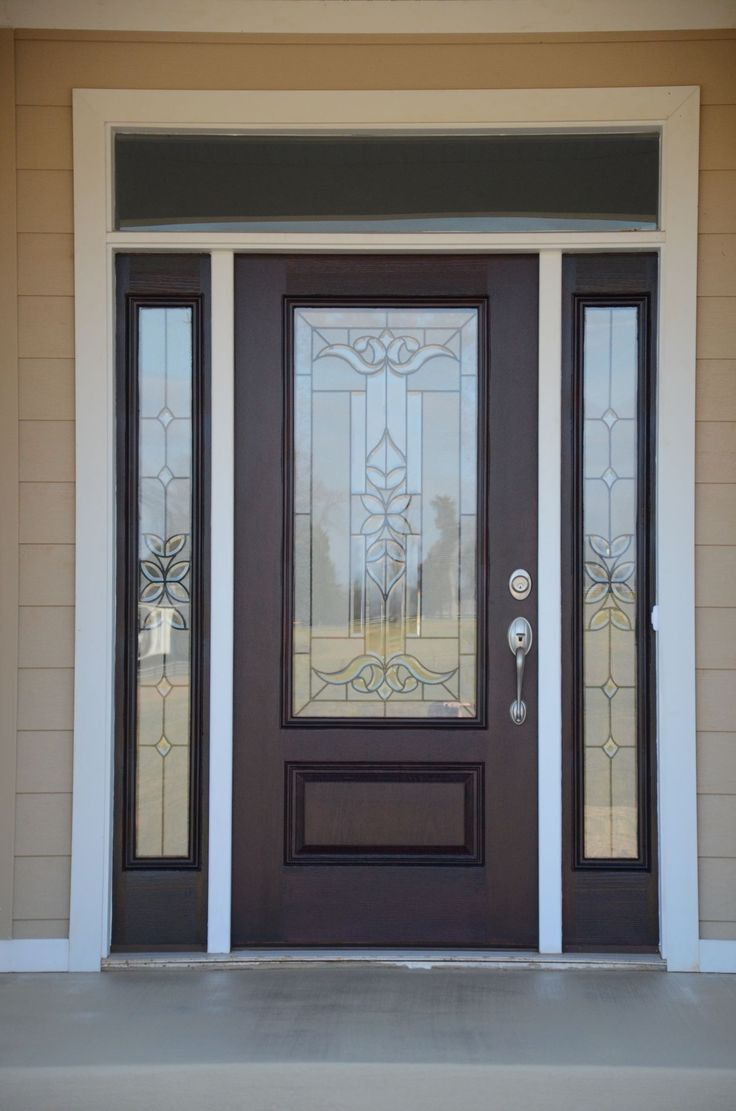
Tier One: Builder-Grade Steel
The priority: Affordable replacement with a clean, practical appearance.
Steel entry doors are popular for a reason. They can offer an insulated core, a straightforward painted finish, and a lower initial cost than many fiberglass alternatives.
For homeowners replacing a worn-out door on a tight budget, a basic steel unit may be a perfectly reasonable option.
The important question is whether the particular door is suited to the conditions at your entrance.
What you get at year one
A new builder-grade steel door can look crisp and fresh, especially with a simple painted finish. It can provide a noticeable improvement over an old, poorly sealed door when the replacement includes proper weatherstripping, threshold adjustment, and frame installation.
Steel doors can also provide good insulation when properly constructed. The material alone doesn't determine the energy performance of the complete door system.
At this stage, the door's overall quality, installation, and hardware alignment will have a major influence on how it operates.
What you may notice at year ten
A steel door doesn't automatically have a ten-year expiration date. A well-maintained unit can remain serviceable for many years.
However, several potential trouble spots deserve attention:
Dents: Steel skins can dent from impacts, and a dent may be difficult to repair invisibly.
Scratches and chipped paint: Damage to the protective finish should be addressed before corrosion develops.
Finish wear: Direct sun and weather exposure can gradually affect the appearance of the finish.
Fit and sealing: Worn weatherstripping, loose hardware, or frame movement can create drafts or make the door harder to latch.
Dark finishes and heavy afternoon sun can make finish selection particularly important. If the door is exposed, check the manufacturer's limitations for the selected color and product.
Where steel makes sense
Steel can be a sensible choice when the budget is the primary consideration, the entrance is reasonably sheltered, and the homeowner prefers a painted appearance.
It's also worth considering for secondary exterior entrances where a premium decorative finish isn't a priority.
For a west-facing front door, the key is to compare the specific product's construction, finish options, and exposure requirements rather than assuming all steel doors perform alike.
Tier Two: Mid-Tier Fiberglass
The priority: A balance of appearance, durability, and maintenance.
Fiberglass doors typically use a molded exterior skin over an insulating core. Depending on the product line, they may have a smooth surface or a textured wood-grain finish.
Their main practical advantage over steel is that fiberglass doesn't rust when scratched and is generally resistant to dents, rot, and moisture-related deterioration. It can also provide a convincing wood-inspired appearance without requiring a real wood exterior.
For a west-facing entry, those characteristics can make fiberglass worth considering.
What you get at year one
A mid-tier fiberglass door can offer a noticeable upgrade in appearance without reaching the price of a more elaborate decorative model.
Depending on the manufacturer and series, you may have options for:
Smooth or wood-grain textures
Factory-painted or stainable finishes
Decorative glass inserts
Different panel designs
Matching sidelites or coordinating entry components
The exact selection varies by product line, so compare the specifications rather than relying on the term "fiberglass" alone.
A well-installed fiberglass door should open and close smoothly, seal consistently, and complement the home's exterior without requiring the upkeep associated with a traditional wood finish.
What you may notice at year ten
Fiberglass can be a practical long-term choice, but it isn't maintenance-free.
The slab itself may remain in good condition while the finish gradually fades, chalks, or shows uneven color from sun exposure. Hardware, weatherstripping, the threshold, and the surrounding frame still experience normal wear.
Depending on the product and finish, maintenance may involve cleaning, inspecting seals, touching up damage, or refinishing when the manufacturer permits it.
One important distinction: a fiberglass skin is not a guarantee against every kind of damage. Severe impacts can crack or damage the surface, and repairs may be more involved than touching up a painted steel door.
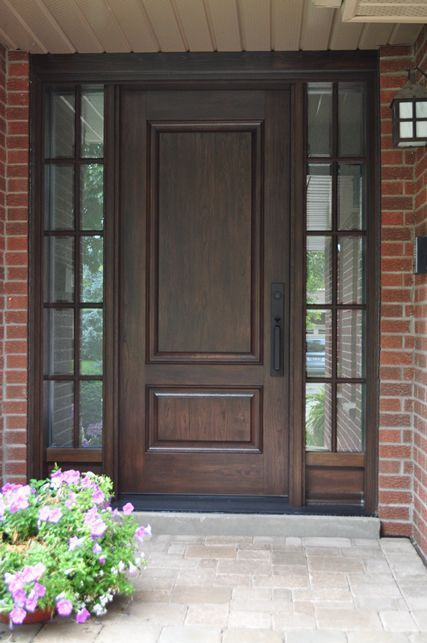
Where mid-tier fiberglass makes sense
This tier can suit homeowners who want a more durable exterior surface, a wood-inspired appearance, and less concern about rust or dents than they would have with steel.
For a west-facing entry, it may be a useful middle ground when the homeowner wants better material characteristics without paying for a highly detailed premium design.
Tier Three: Premium Wood-Look Fiberglass
The priority: A more realistic wood appearance with carefully selected details and finishes.
Premium wood-look fiberglass aims to capture the depth, grain, and visual character of a stained wood door while retaining the practical advantages of a fiberglass exterior.
The difference between mid-tier and premium fiberglass isn't necessarily the core material. Both may use fiberglass skins and insulating cores.
The upgrade may instead come from the molded grain pattern, panel definition, finish quality, decorative glass, available sizes, hardware options, and overall design.
That distinction matters when you're comparing quotes.
What you get at year one
A premium wood-look fiberglass door can provide a more convincing wood appearance, especially when the grain texture, color variation, and panel details are well executed.
Depending on the product, premium options may include:
Deeper, more detailed wood-grain textures
More sophisticated stain colors
Greater variation in panel designs
Decorative glass and coordinating sidelites
More elaborate hardware and entry configurations
These details can make the entrance feel more integrated with the home's architecture, particularly when the front door is a major visual feature.
But don't assume every premium line includes every feature. Review the actual model, finish, glass package, and hardware specifications.
What you may notice at year ten
A premium fiberglass slab can retain its structural advantages while the exterior finish gradually shows the effects of sunlight and weather.
A stain that looked rich and uniform when installed may develop some color variation as different areas receive different levels of sun exposure. That is not necessarily a product defect; the manufacturer may specifically identify normal finish variation as an expected characteristic.
The finish warranty matters here.
Some manufacturers offer different coverage periods for factory-painted and factory-stained finishes. For example, Woodgrain's published fiberglass-door warranty lists different coverage periods for certain pre-colored and pre-stained factory finishes. The exact warranty for your selected door should always be reviewed before ordering.
Premium doesn't mean the finish will never change. It means you should understand exactly what finish you're purchasing, how it should be maintained, and what the warranty covers.
Where premium wood-look fiberglass makes sense
This tier is worth considering when the front door is a prominent architectural feature and the homeowner values a convincing wood appearance without choosing a traditional exterior wood door.
It's particularly relevant when the entrance receives substantial afternoon sun, provided the specific finish and door configuration are approved for the exposure.
The extra investment is primarily about appearance, available features, and the complete product specification—not a guarantee that the door will look exactly the same ten years later.
Year One vs. Year Ten: What Changes?
Here's a practical way to compare the three tiers.
Consideration | Builder-grade steel | Mid-tier fiberglass | Premium wood-look fiberglass |
|---|---|---|---|
Initial investment | Generally lower | Generally higher than basic steel | Often higher, depending on design |
Appearance at installation | Clean, painted look | Smooth or wood-grain options | More detailed wood-inspired appearance |
Dent resistance | Can dent | Generally more resistant to dents | Generally more resistant to dents |
Rust risk | Possible if protective finish is breached | Fiberglass skin doesn't rust | Fiberglass skin doesn't rust |
Finish over time | Can fade, chip, or wear | Can fade or weather | Can fade or show color variation |
Maintenance | Inspect paint, seals, and hardware | Inspect finish, seals, and hardware | Inspect finish, seals, and hardware |
West-facing exposure | Product and finish selection matter | Product and finish selection matter | Product and finish selection matter |
Main reason to choose it | Lower upfront cost | Material balance and practical appearance | More refined wood-look design |
These are general material and product-tier comparisons, not guarantees for every door. Construction details, finish chemistry, glass, installation, exposure, and maintenance can change the result considerably.
The Door Slab Isn't the Whole Door System
Here's a detail that often gets overlooked during a replacement project: the slab is only one part of the entry.
The frame, threshold, weatherstripping, hinges, lockset, glass, and installation all influence how the door performs.
A premium fiberglass slab installed into a damaged or poorly sealed frame can still have problems.
Likewise, an affordable steel door installed correctly in a sheltered entrance may serve its owner well for many years.
When comparing proposals, look at the complete assembly.
The frame and jamb
Check the condition of the existing frame and surrounding wood. If the old entry has moisture damage or rot, replacing only the slab may leave the underlying problem in place.
Ask whether the proposal includes a new frame or is based on retaining the existing one.
Weatherstripping and threshold
A good seal helps limit drafts and water intrusion. Weatherstripping can compress or wear over time, and thresholds may need adjustment as the door system settles or components wear.
If a door feels drafty or difficult to latch, the cause may be the seal, alignment, frame, or hardware rather than the door material itself.
Glass and sidelites
Glass inserts and sidelites change the appearance of the entrance, but they also affect the complete door system's thermal performance, privacy, and cost.
If energy performance is a priority, compare the specifications for the complete assembly rather than focusing only on the insulated core.
Installation
Correct measurements, plumb framing, secure fastening, appropriate flashing, and proper sealing all matter.
A door should close consistently without requiring excessive force, and the surrounding assembly should be detailed to manage water appropriately.
Installation quality is one of the reasons two quotes for what appear to be identical doors can differ.
What About Color on a West-Facing Door?
Color is more than an aesthetic decision when the door receives direct afternoon sunlight.
Darker colors generally absorb more solar energy than lighter colors. That can raise surface temperatures and may increase the risk of heat-related finish issues or thermal movement, depending on the door's construction.
Before choosing a dark stain or paint color, ask the manufacturer:
Is this color approved for a west-facing, sun-exposed entrance?
Are there restrictions on dark finishes?
Does the finish have a specific warranty?
Are there overhang or exposure requirements?
What cleaning and maintenance products are permitted?
Don't assume a fiberglass door can use any color without restrictions. The skin material is only part of the equation.
A lighter finish, a deeper porch, or additional shade may change the exposure conditions, but the correct choice depends on the actual entry.
Can a More Expensive Door Save Money Over Ten Years?
Potentially, but the answer isn't as simple as comparing the purchase prices.
Imagine two proposals: one for a basic steel door and another for premium wood-look fiberglass.
The fiberglass option costs more upfront. Whether that extra investment makes sense depends on what you're getting for the difference.
Are you paying for a more detailed design? A different finish? Decorative glass? A better frame? Additional hardware? A stronger warranty on the finish?
Or are the two proposals offering nearly identical configurations at different prices?
Those are different situations.
A higher-priced door may offer features you value, but you shouldn't assume it will automatically pay for itself through lower energy bills or fewer repairs. That depends on the products, installation, exposure, and how long you keep the door.
Instead, compare the full installed price, the maintenance instructions, the warranty, and the appearance you want to maintain.
Then decide whether the upgrade is worth the difference to you.
Seven Questions to Ask Before Ordering a Replacement Entry Door
Before choosing a door for a west-facing Austin home, ask:
What is the exact manufacturer and product series? "Fiberglass" or "steel" alone isn't a complete specification.
What finish is included? Confirm whether it is factory-painted, factory-stained, or intended for field finishing.
Is the selected color approved for this exposure? Pay particular attention to dark colors and direct afternoon sun.
What does the warranty cover? Separate the slab warranty from finish, glass, frame, hardware, and installation coverage.
Is the frame being replaced? Confirm whether the price includes the jamb, threshold, weatherstripping, and exterior trim.
What happens if hidden damage is discovered? Ask how rot or water damage around the opening will be handled.
What maintenance will the manufacturer require? Get the care instructions for the exact finish and model.
These questions make it easier to compare proposals without getting distracted by the showroom appearance alone.
The Bottom Line: Match the Door to the Exposure and Your Priorities
A builder-grade steel door, a mid-tier fiberglass door, and a premium wood-look fiberglass door each serve a different set of priorities.
Steel can be a practical budget-conscious option. Mid-tier fiberglass offers another balance of appearance and durability. Premium wood-look fiberglass adds design detail for homeowners who want the character of a stained wood door without choosing a traditional wood exterior.
On a west-facing Austin entry, the material matters, but so do the finish, shade, frame, weatherstripping, glass, and installation.
Think about what you want the door to look like when it's new—and what you're willing to maintain as the years pass.
The best comparison isn't simply the price today. It's the complete door system, the finish you're buying, the conditions it will face, and the care it needs over time.
Get Started With a Free Consultation
Thinking about replacing your front door? JP Exteriors can help you review door styles, compare material options, and discuss the details that matter for your home's exterior.
Remember: When you refer a friend or neighbor for windows, siding, roofing, or door replacement, you can earn up to $250 through the JP Exteriors Referral Program.
Subscribe to JP Exteriors's Blog





Comments