Replacing an exterior door can make a bigger difference to your home than you might expect. A new front door can improve curb appeal, security, and everyday functionality. A new patio door can make a backyard feel more connected to your living space while bringing in additional natural light.
But door replacement costs can vary considerably. A basic steel entry door is a very different investment from a custom fiberglass front door with decorative glass. Likewise, replacing a standard two-panel sliding patio door is not the same project as installing a large multi-slide system that opens an entire wall.
So what should Central Texas homeowners expect to spend in 2026?
Let's compare the most common door materials and styles, look at typical installed costs, and explain what to consider before choosing a replacement.
Entry Doors: Steel vs. Fiberglass vs. Wood
Your front door is one of the first things visitors notice about your home. It also plays an important role in security, weather protection, and insulation.
The three materials homeowners most commonly compare are steel, fiberglass, and wood. Each has advantages, but the best choice depends on your budget, preferred appearance, maintenance expectations, and the conditions around your entryway.
1. Steel Entry Doors: The Budget-Friendly Option
Steel doors are generally the most affordable of the three materials.
They commonly feature an insulated core surrounded by a steel exterior skin. They are available in smooth or textured finishes and can be painted in a variety of colors.
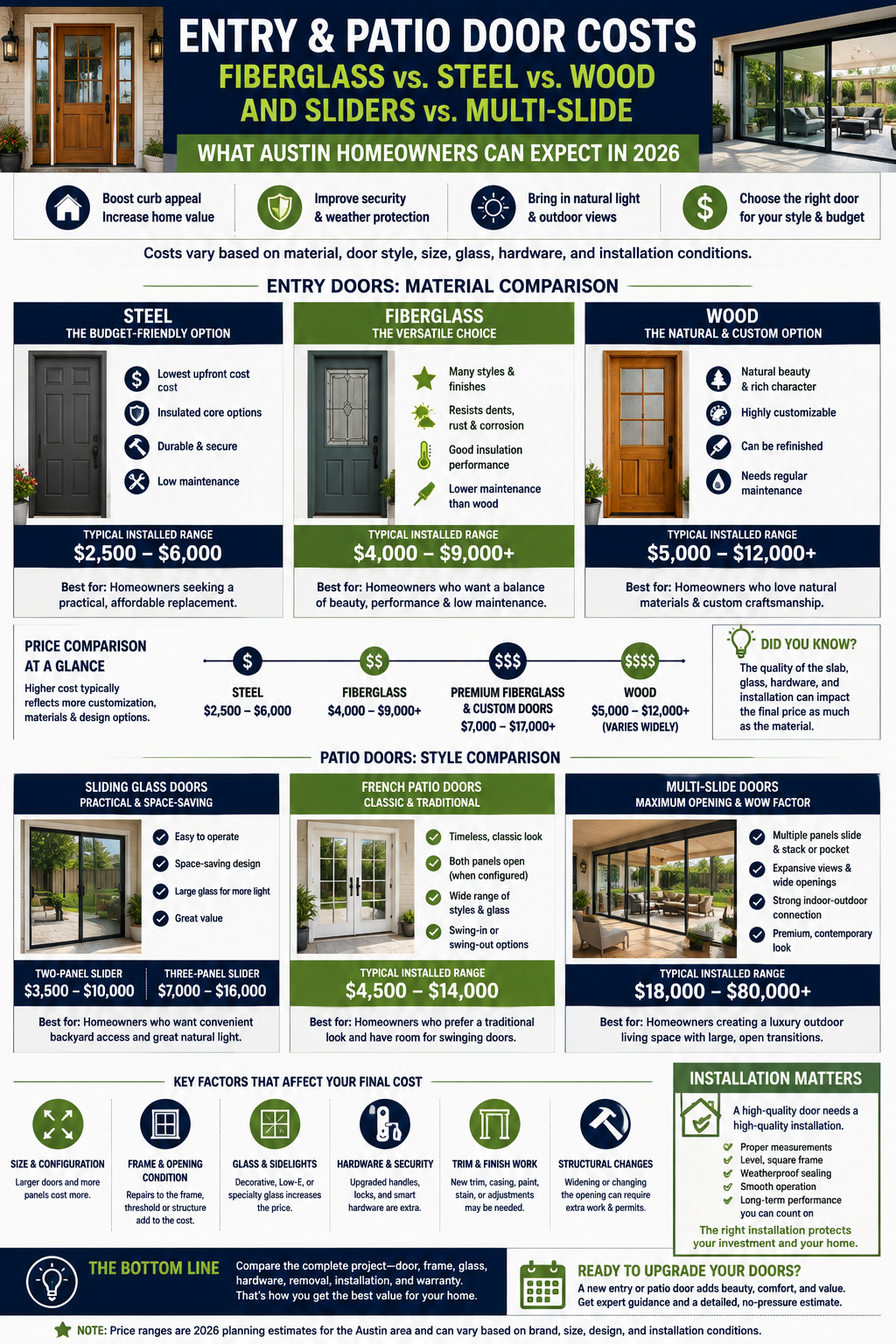
Typical 2026 installed planning range: $2,500–$6,000
Advantages:
Generally lower upfront cost.
Solid, secure construction when paired with appropriate hardware and a properly installed frame.
Insulated core options.
Available in multiple styles and finishes.
Relatively straightforward maintenance.
Things to consider: Steel can dent if struck hard, and scratches that expose the underlying metal should be repaired to help prevent corrosion. The door's finish and the quality of its installation also matter, especially in areas exposed to direct sunlight and rain.
Best for: Homeowners who want a practical, affordable replacement, particularly for side or rear entrances where a premium decorative appearance is less important.
2. Fiberglass Entry Doors: A Versatile Choice for Texas Homes
Fiberglass doors are popular because they can combine attractive designs with relatively low maintenance.
Many fiberglass models are designed to resemble painted or stained wood. They can include decorative glass, raised panels, sidelights, and other features that make them suitable for prominent front entrances.
Typical 2026 installed planning range: $4,000–$9,000 for many standard fiberglass options. Premium models can cost more.
Advantages:
Resists many dents and corrosion issues associated with metal doors.
Available in wood-look finishes and traditional styles.
Can provide good insulation when properly specified.
Generally requires less maintenance than natural wood.
Offers a wide range of decorative and glass options.
Things to consider:
Not all fiberglass doors are constructed the same way. The quality of the slab, frame, finish, glass package, and hardware can affect both performance and price.
Direct sunlight can also affect exterior finishes over time. Ask about the manufacturer's recommendations for cleaning, maintenance, and refinishing.
Best for: Homeowners who want a balance of appearance, insulation, durability, and manageable maintenance.
3. Wood Entry Doors: Traditional Appearance and Customization
Wood doors offer a natural appearance that can be difficult to duplicate perfectly with other materials.
They are available in many wood species, panel designs, stains, and custom configurations. For some architectural styles, especially traditional or custom homes, a genuine wood door may be exactly the look the homeowner wants.
Typical 2026 installed planning range: Highly variable, often $5,000–$12,000 or more for premium custom installations.
Advantages:
Natural wood grain and distinctive appearance.
Extensive customization possibilities.
Can be refinished when the surface begins to show wear.
Works well with traditional, craftsman, and custom architectural styles.
Things to consider:
Wood requires more attention to maintenance than many fiberglass alternatives. Moisture, direct sunlight, and temperature changes can affect the finish and the material itself.
In Central Texas, a wood door that receives strong afternoon sun may need more frequent finish maintenance. Proper sealing, installation, and ongoing care are important.
Best for: Homeowners who prioritize natural materials, custom appearance, and are comfortable with additional maintenance.
Entry Door Cost Comparison
| Door Material | Typical Installed Planning Range | Main Advantage |
|---|---|---|
| Steel | $2,500–$6,000 | Lower upfront cost |
| Fiberglass | $4,000–$9,000 | Balance of appearance and maintenance |
| Premium fiberglass or custom door | $7,000–$17,000 | More customization and finish options |
| Wood | Varies widely; premium projects can exceed $12,000 | Natural appearance and customization |
These are broad 2026 planning ranges, not guaranteed quotes. Decorative glass, sidelights, transoms, custom sizing, frame replacement, and finish selections can move the final price significantly.
Patio Doors: Sliders vs. French Doors vs. Multi-Slide Systems
Patio doors do more than provide access to your backyard. They affect natural light, views, ventilation, and how easily your indoor and outdoor spaces connect.
The three configurations homeowners most often compare are standard sliding doors, French doors, and multi-slide systems.
1. Standard Sliding Glass Doors
Sliding patio doors are a practical option for many Central Texas homes.
One panel typically remains stationary while the other moves along a track. This design allows homeowners to open the patio entrance without needing additional floor or patio space for a swinging door.
Typical 2026 installed planning ranges:
Two-panel sliding door: $3,500–$10,000
Larger three-panel sliding door: $7,000–$16,000
Advantages:
Space-saving operation.
Large glass areas for natural light.
Convenient access to patios and backyards.
Available in several frame materials and finishes.
Often a more affordable option than a large multi-slide system.
Things to consider:
The condition of the track, rollers, frame, and weatherstripping affects how well a sliding door operates. A quality installation is important to help the door move smoothly and seal properly.
Also consider the glass package. Low-E glass and appropriate solar heat-gain characteristics can help manage the amount of heat entering your home.
Best for: Homeowners who want a practical connection to their backyard without changing the entire layout of the home.
2. French Patio Doors
French doors typically use two hinged panels that swing inward or outward. They provide a traditional appearance and can create a wider opening than a standard single-panel entry door.
Typical 2026 installed planning range: $4,500–$14,000
Advantages:
Classic appearance.
Wide range of glass and panel designs.
Can complement traditional and transitional home styles.
Both panels can open when the configuration allows.
Things to consider:
French doors require enough clearance for the panels to swing. Furniture placement, patio space, and the direction of the swing should be considered before selecting this style.
The threshold, weatherstripping, and installation details are especially important in areas exposed to wind-driven rain.
Best for: Homeowners who prefer a traditional look and have enough room for hinged doors to operate comfortably.
3. Multi-Slide Patio Doors
Multi-slide doors are designed for larger openings. Instead of a single sliding panel, multiple panels move along a track and may stack or disappear into a pocket, depending on the system.
When fully open, they can create a much larger connection between the home and an outdoor living area.
Typical 2026 installed planning range: $18,000–$80,000+
Advantages:
Large openings and expansive views.
Strong indoor-outdoor connection.
Multiple panel configurations.
Contemporary appearance.
Can be an architectural focal point in a custom home.
Things to consider:
Multi-slide systems are more involved than standard patio door replacements. The number of panels, overall opening size, frame material, glass specifications, and installation requirements all affect the price.
If the project requires widening an existing opening, additional structural work may be necessary. That can involve engineering, permits, and modifications to the surrounding wall.
Best for: Homeowners planning a premium outdoor living space who want to open a large portion of the wall to the patio or backyard.
Patio Door Cost Comparison
| Door Style | Typical Installed Planning Range | Main Advantage |
|---|---|---|
| Two-panel sliding door | $3,500–$10,000 | Practical and space-efficient |
| Three-panel sliding door | $7,000–$16,000 | Wider opening |
| French patio doors | $4,500–$14,000 | Traditional appearance |
| Multi-slide system | $18,000–$80,000+ | Large indoor-outdoor opening |
The price ranges reflect different sizes and configurations. A standard replacement in an existing opening is generally less involved than a project that changes the size or structure of the opening.
What Actually Affects the Cost of a Door Replacement?
The material and door style are only part of the estimate. Several other factors can affect the final project price.
1. Door Size and Configuration
A standard single entry door is a much different installation than a double entry door or a large multi-panel patio system.
Larger doors require more material, more handling, and sometimes additional installation support.
2. Existing Frame and Opening Condition
The existing frame may be damaged, out of square, or affected by moisture.
If the surrounding framing or threshold has deteriorated, repairs may be needed before the new door can be installed.
This is especially important at exterior door openings, where water can enter around the threshold and cause hidden damage.
3. Glass and Sidelights
Decorative glass, full-lite panels, sidelights, and transoms can significantly change the price of an entry door.
For patio doors, larger glass areas and specialty glass packages can also increase the cost.
4. Hardware and Security Features
Door hardware affects both appearance and everyday operation.
Options may include:
Standard deadbolts and handles.
Decorative hardware finishes.
Multi-point locking systems.
Keyless entry and smart locks.
Upgraded handles and pulls for patio doors.
Ask which hardware is included in the proposal and which items are upgrades.
5. Trim and Finish Work
The installation may require new exterior trim, interior casing, paint, stain, or adjustments to the surrounding finishes.
A complete estimate should identify whether these items are included.
6. Structural Changes
Replacing a door within an existing opening is generally simpler than creating a wider opening.
Changing the opening size may require additional framing, structural review, engineering, and permits depending on the scope and local requirements.
Do not assume that a larger door can simply be installed in the existing wall without evaluating the structure.
Why Installation Matters as Much as the Door Itself
A high-quality door cannot perform as intended if it is installed incorrectly.
Proper installation includes more than attaching a door to a frame. The opening must be measured accurately, the frame must be properly aligned, and the threshold and surrounding areas must be detailed to manage water.
Poor installation can lead to:
Doors that stick or do not latch correctly.
Uneven gaps around the slab.
Drafts and air leakage.
Water intrusion around the frame or threshold.
Difficulty locking or operating the door.
This is why comparing estimates based only on the brand or door material can be misleading.
Ask each contractor what the installation includes, how existing damage will be addressed, and what workmanship warranty is provided.
Which Door Is Right for Your Home?
The right choice depends on what you want the door to accomplish.
Choose steel if:
Your priority is keeping the initial investment lower.
You want a straightforward replacement.
You prefer a simple, durable entry option.
Choose fiberglass if:
You want a balance of appearance and performance.
You like the look of wood but prefer less maintenance.
You want several decorative and finish options.
Choose wood if:
You prefer genuine natural materials.
You want a distinctive custom appearance.
You are comfortable maintaining the finish.
Choose a standard sliding patio door if:
You want convenient backyard access.
You have limited space for a swinging door.
You want a practical replacement in an existing opening.
Choose French doors if:
You prefer a traditional style.
You have enough clearance for the panels to swing.
You want a hinged patio door configuration.
Choose a multi-slide system if:
You want a much larger opening.
You are creating a premium indoor-outdoor living area.
Your budget and home design support a more involved installation.
The Bottom Line: Compare the Complete Project, Not Just the Door
Entry and patio doors come in a wide range of materials, styles, and price points. A basic steel entry door may be a practical solution, while a custom fiberglass door can offer more design flexibility. A standard slider may be all your backyard needs, while a multi-slide system can transform the way you use your outdoor living space.
Before making a decision, compare the complete installed cost, not just the price of the door itself.
Make sure the estimate explains the door configuration, frame, glass, hardware, trim, removal, installation, and any repairs that may be necessary. Understanding those details helps you compare proposals accurately and avoid surprises during the project.
Helpful Resources
Get Started With a Free Roofing Consultation
A new entry or patio door can improve the appearance, comfort, and functionality of your home. JP Exteriors helps Central Texas homeowners compare door styles, materials, and installation options to find a solution that fits their home and budget.
Schedule a free consultation to discuss your project and explore available options.
Frequently Asked Questions
How much does a new front door cost in Austin?
A steel entry door may cost approximately $2,500–$6,000 installed, while many fiberglass options fall around $4,000–$9,000. Premium entry doors can cost $7,000–$17,000 or more, depending on the brand, design, glass, and installation requirements.
Are fiberglass doors better than steel doors?
Neither is automatically better for every home. Steel is generally more affordable upfront, while fiberglass offers more design flexibility and can resist dents and corrosion better. The right choice depends on budget, appearance, exposure, and maintenance preferences.
Are wood doors a good choice in Texas?
Wood doors can be beautiful, but they need appropriate sealing and maintenance. Direct sunlight, moisture, and temperature changes can affect the finish, so homeowners should consider how much upkeep they are comfortable with.
How much does a sliding patio door cost?
A typical two-panel sliding patio door may cost approximately $3,500–$10,000 installed. Larger three-panel systems may range from $7,000–$16,000. Size, frame material, glass, and installation conditions affect the final price.
Are multi-slide doors worth the investment?
They can be worthwhile for homeowners who want a large opening between indoor and outdoor living areas. However, they are a premium product and may require structural modifications. The value depends on the home's design, the intended use, and the project budget.
Is replacing a door more expensive if the frame is damaged?
Yes. If the existing frame, threshold, or surrounding structure has rot or other damage, those areas may need repair before the new door is installed. This is one reason an in-person assessment is helpful.
How long does it take to install a new exterior door?
Many standard door replacements can be completed in a day, although custom products, frame repairs, and larger patio systems may require more time. Manufacturing and delivery lead times are separate from the actual installation.
Do I need a permit to replace an exterior door in Austin?
Permit requirements depend on the scope of the work. A straightforward replacement may be treated differently from a project that changes the opening size or involves structural modifications. Check with the local building department before work begins.
Remember: When you refer a friend or neighbor for windows, siding, roofing, or door replacement, you can earn up to $250 through the JP Exteriors Referral Program.
Subscribe to JP Exteriors's Blog

Comments